The Poleng
In Bali, the iconic checkerboard pattern is known as Poleng, with fabrics bearing this design referred to as saput poleng. These distinctive textiles visually express a foundational principle of Balinese thought: Rwa Bhineda. Immersing yourself in this concept is the key to truly understanding the depth of Balinese traditions, especially during your trip to Bali.
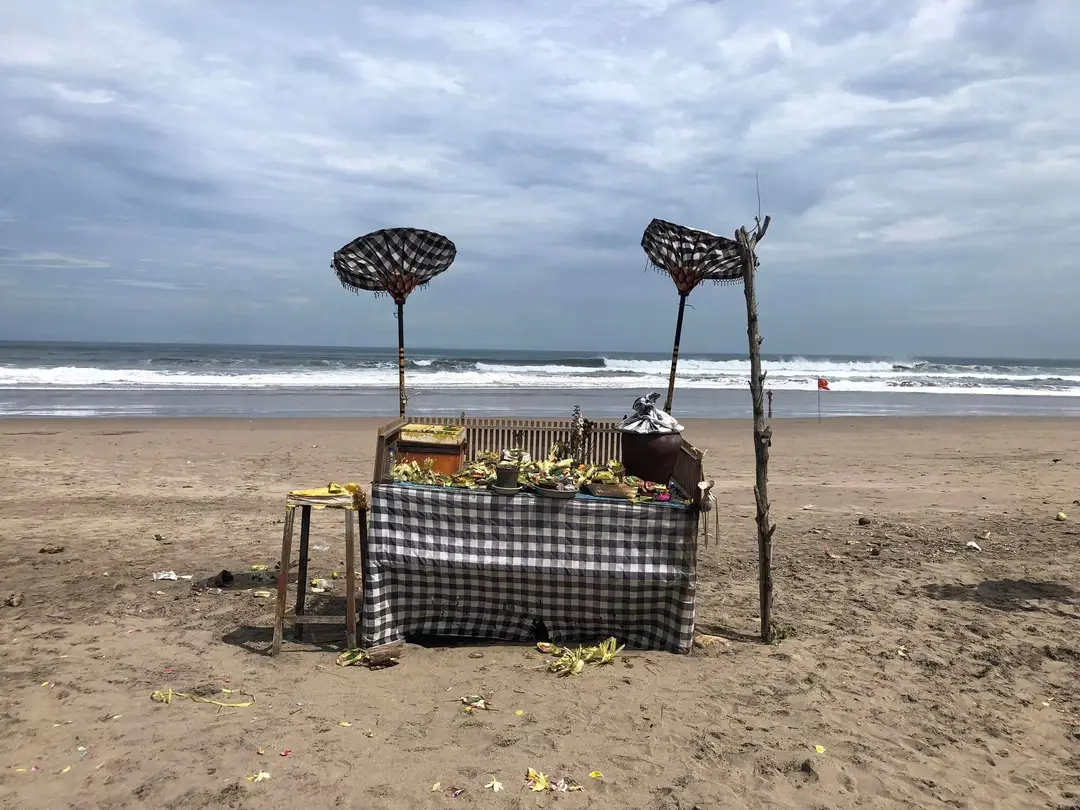
Offering altar on a beach in Bali © Shanti Travel
The term poleng translates simply as “square.” However, it goes far beyond a simple decorative motif. As a spiritual symbol, it is seen everywhere: temples, altars, statues, ceremonial attire, and even the smallest day-to-day details. The omnipresence of poleng across Bali serves as a constant reminder of the core duality that shapes the Balinese worldview.
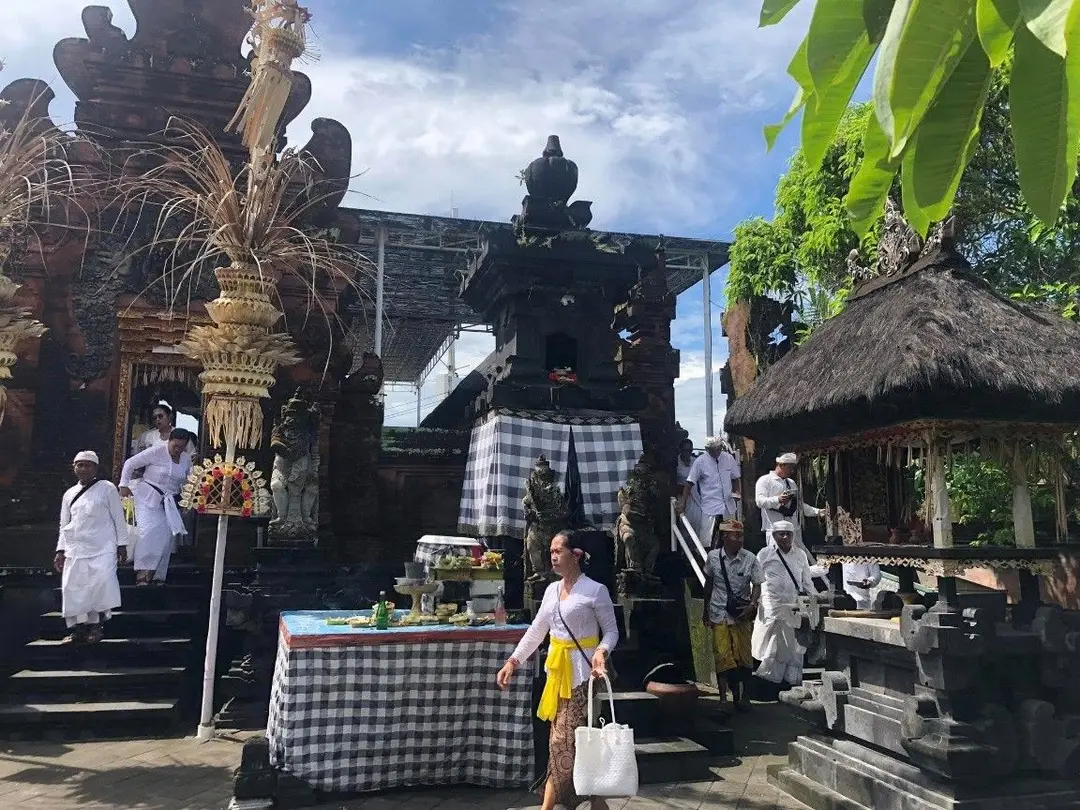
Saput poleng in a Balinese temple © Shanti Travel
At the center of this worldview is Rwa Bhineda, a philosophical and religious notion. Its name, rooted in Old Javanese and Sanskrit, means “two differences.” The teaching is straightforward yet profound: everything exists through its opposite, and harmony stems from balanced coexistence, not dominance. Black represents evil, chaos, or night; white, goodness and light. The two acquire meaning only together. This is a logic of complementarity—good and evil, masculine and feminine, sacred and profane are all interconnected.
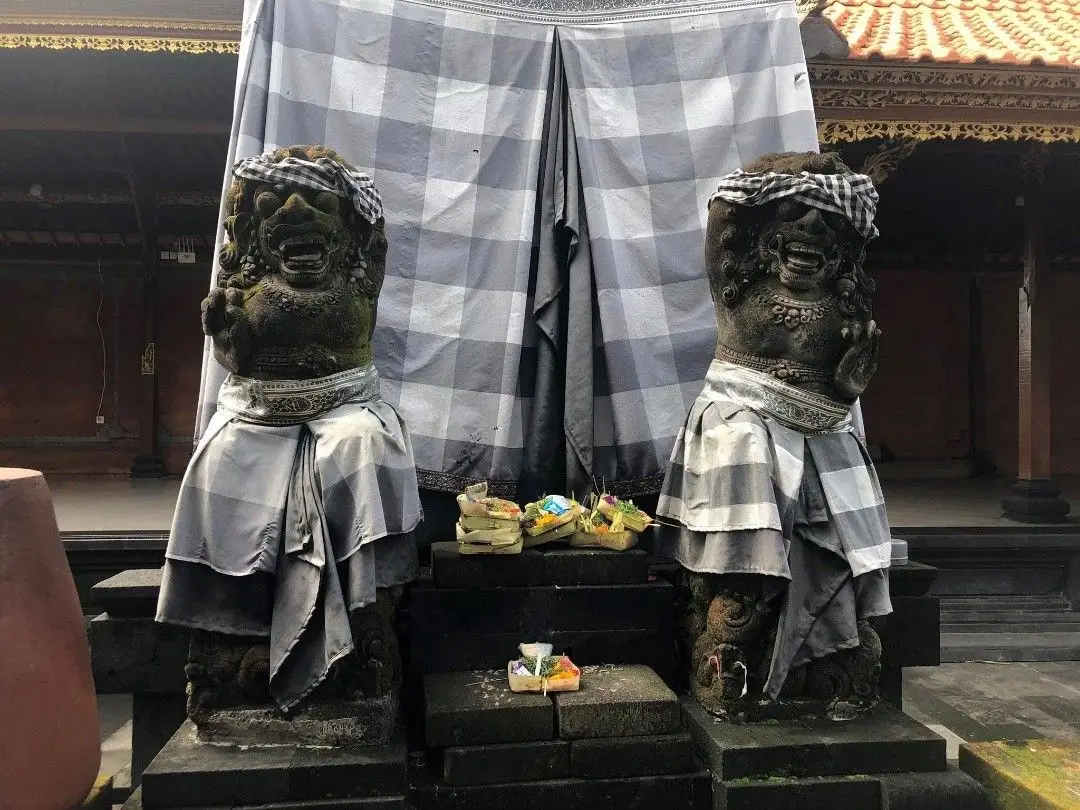
Poleng band on protective statues © Shanti Travel
Saput poleng—the textile adorned with the poleng motif—typically features black and white, directly reflecting Rwa Bhineda. Other unique variations exist, such as the poleng Sudhamala with gray, and the poleng Tridatu, which adds red to represent the Hindu trimurti: Brahma, Vishnu, and Shiva.
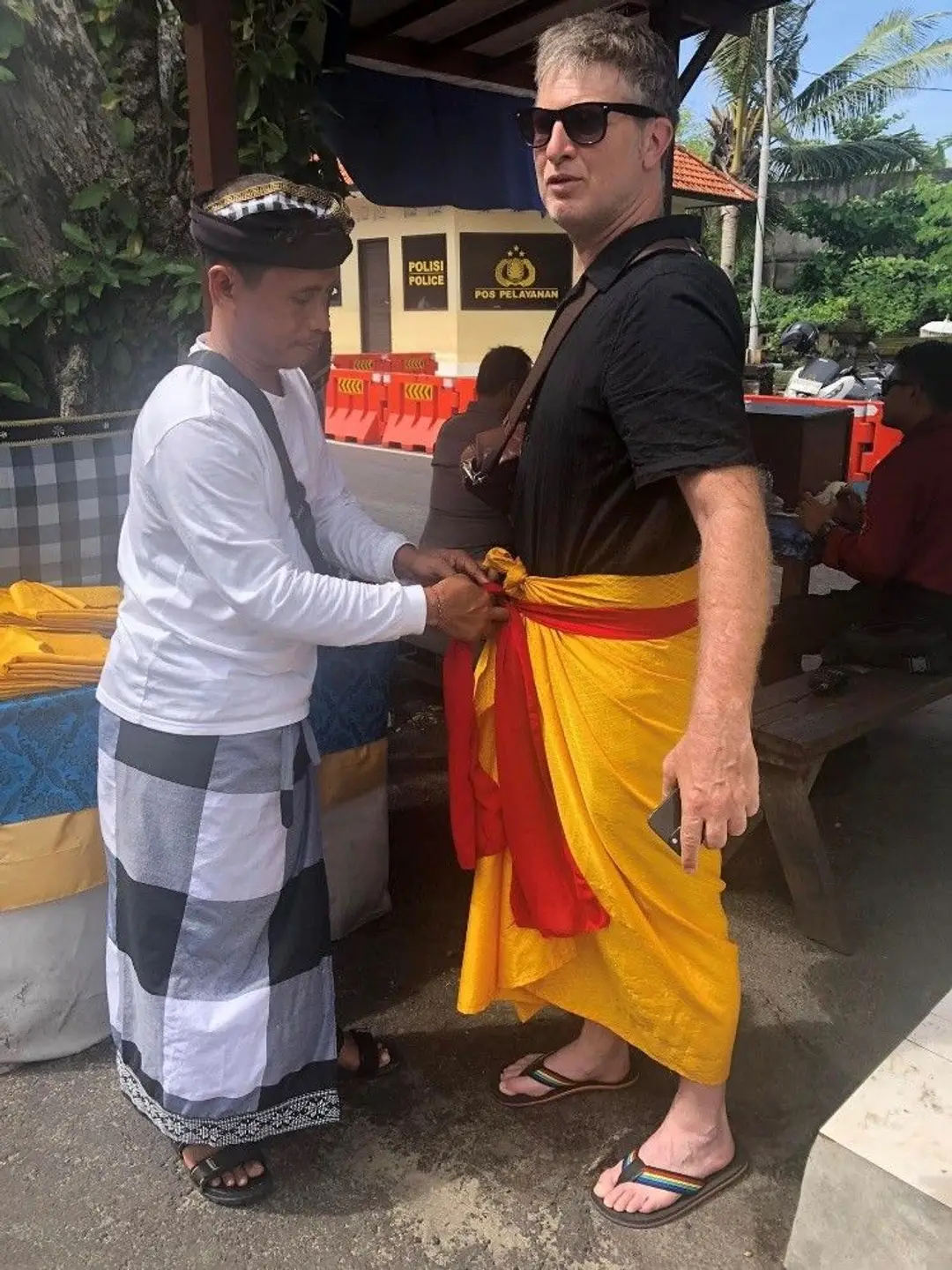
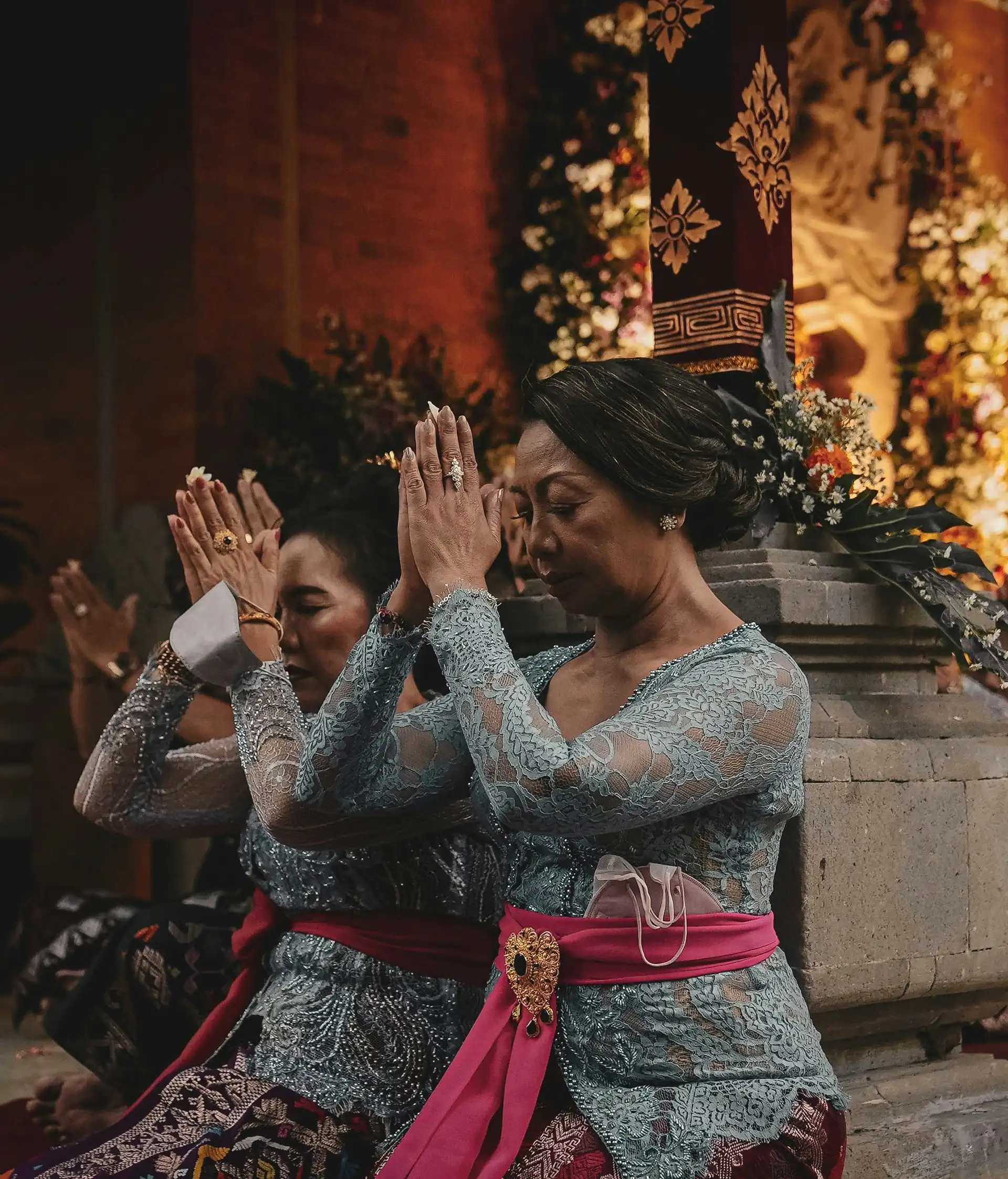
A temple officiant prepares a tourist for a visit © Shanti Travel
In certain Balinese villages—especially around Gianyar and Klungkung—local artisans still hand-weave poleng fabrics, using age-old methods passed down through generations. Visitors discovering these villages near Ubud can witness this meticulous craft, with each perfectly aligned square symbolizing both aesthetic and spiritual harmony.
Today, poleng extends well beyond the ritual context to become an emblematic marker of Balinese identity. Sacred trees such as the pohon pusering jagat, the foreheads of mythical Barong creatures, and statues of guardian animals at temple entrances are all adorned with these checked fabrics, indicating the presence of the sacred in everyday life.
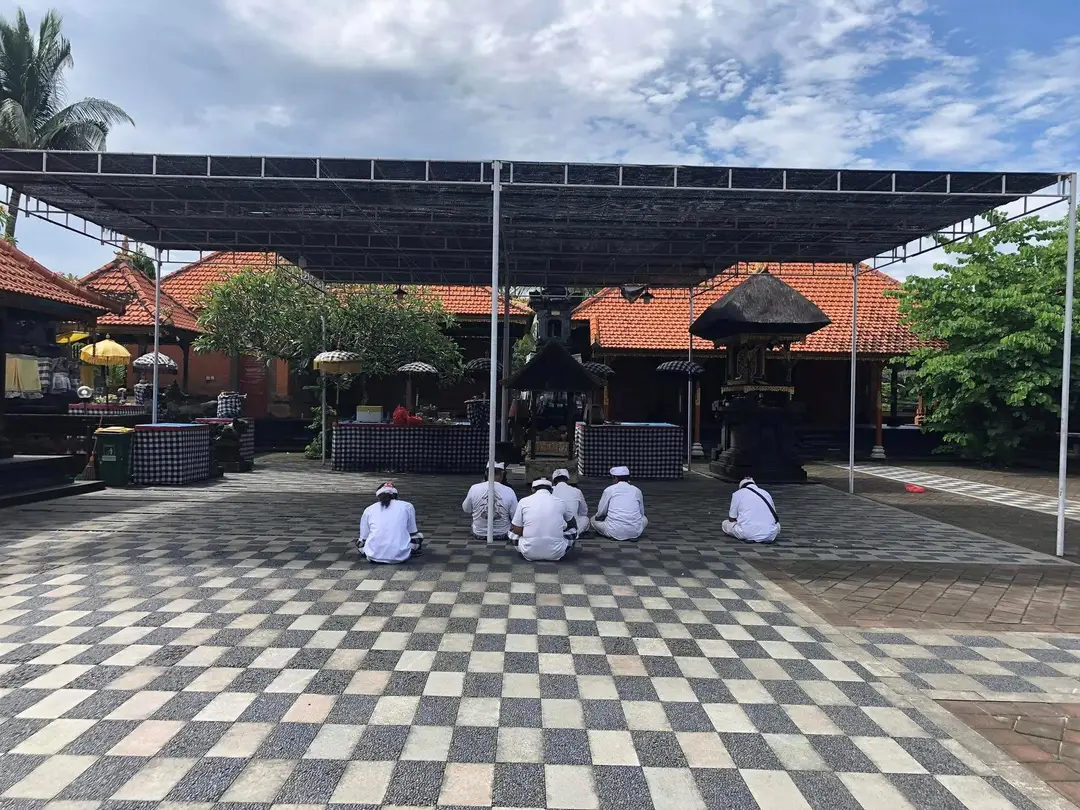
Checkered floor in a Bali temple © Shanti Travel
For many Westerners, the philosophy of Rwa Bhineda may seem paradoxical at first, as it emphasizes balance over victory or competition. Even seasoned travelers and local experts of Shanti Travel in Bali find themselves reflecting on its meaning. One memorable moment of clarity came during a casual meeting near the local office in Bali. In a modest restaurant, a rainbow sign proclaimed: "Like a Rainbow we need both, Sun and Rain, to make our colour appear."
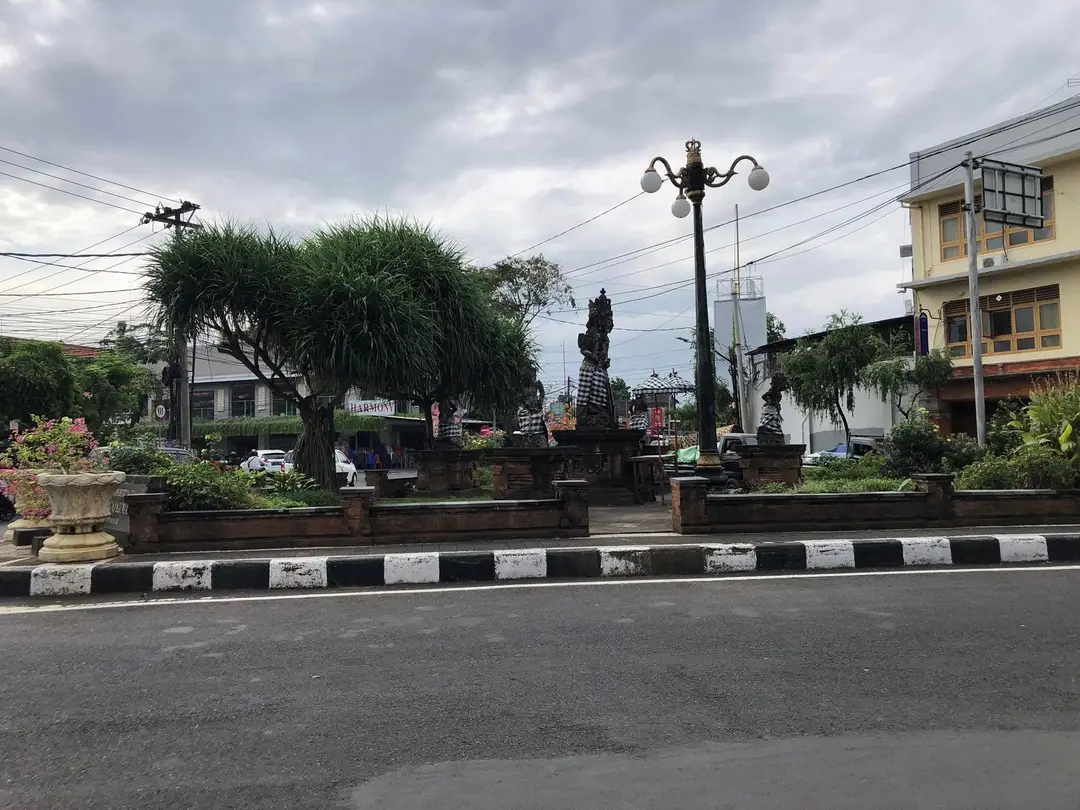
Pavement under the sign of poleng © Shanti Travel