Your expert on destination Myanmar
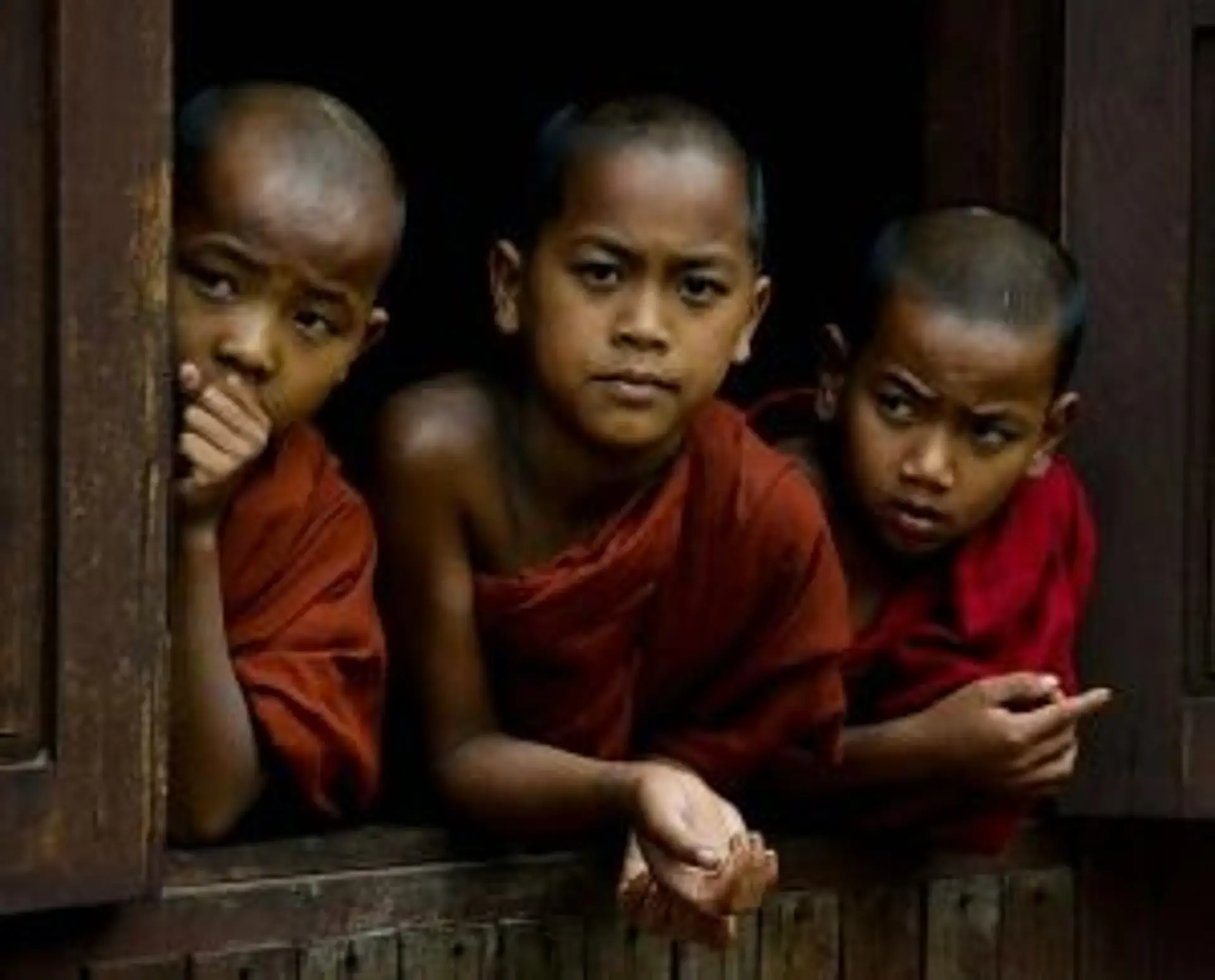
Buddhism dominates Myanmar religion. In the official 2014 census, 87.9% of people counted were Buddhist, 6.2% Christian, 4.3% Muslim, 0.8% animist and 0.5% Hindu. Most Buddhists follow the Theravada school, blended with nat spirit worship. The census left out Rohingya communities, so these shares are approximate.
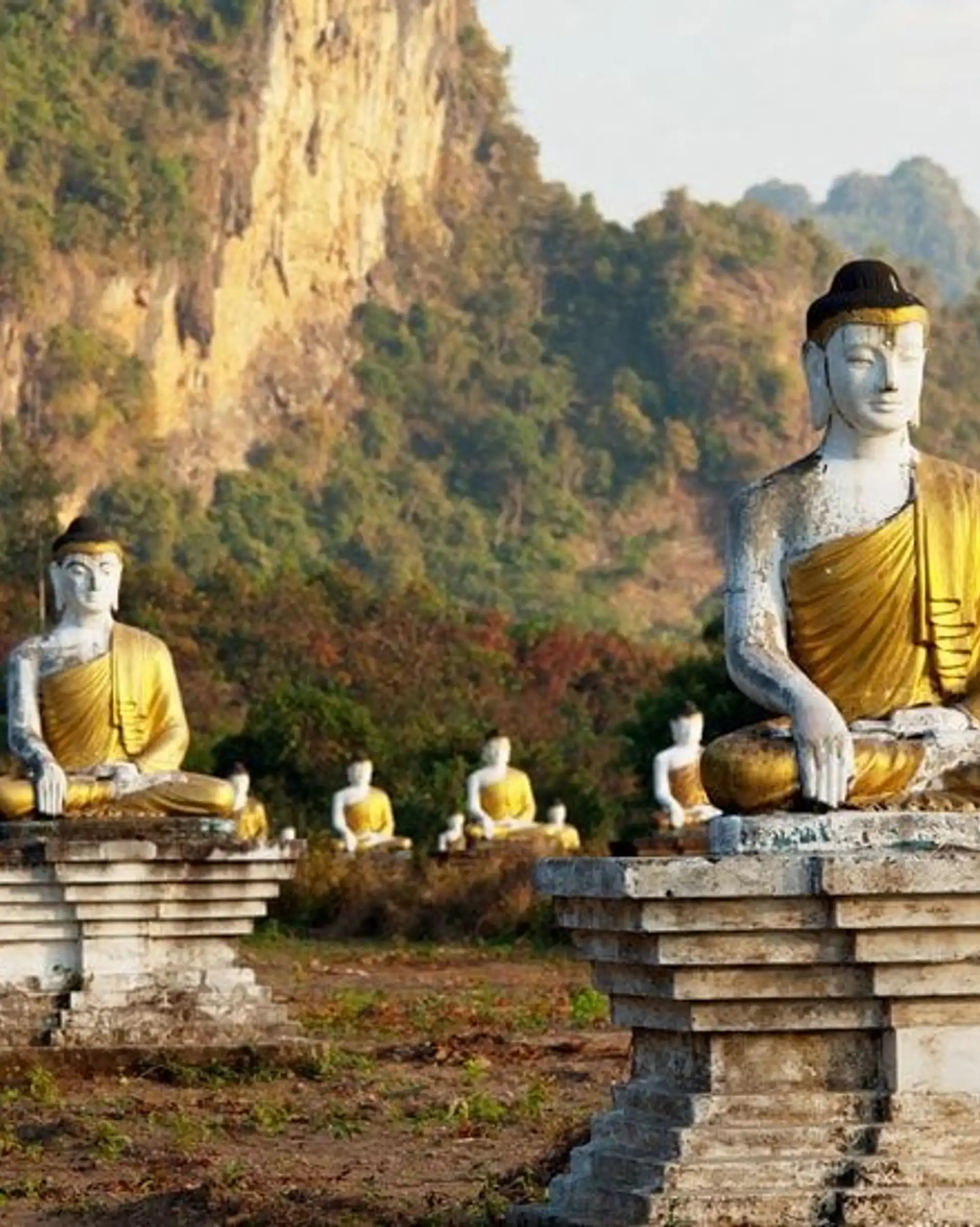
Travel almost anywhere in the country and you'll see what those numbers mean: a pagoda and a monastery at the centre of the village, gilded spires above the rooftops. Our Myanmar travel guide covers the rest of the country; this page explains the faiths behind what you'll see.
The most recent census with a full religious breakdown is the 2014 count, with main results published in May 2015. Religion in Myanmar looks like this in it:
| Religion | Share of people counted |
|---|---|
| Buddhist | 87.9% |
| Christian | 6.2% |
| Muslim | 4.3% |
| Animist | 0.8% |
| Hindu | 0.5% |
Source: 2014 Myanmar census, religion report hosted by UNFPA Myanmar.
The US State Department's 2022 religious freedom report gives about 88% Buddhist, 6% Christian and 4% Muslim for a population of 57.5 million (mid-2022 estimate), and notes that the 2014 census excluded Rohingya. Read the table as a close guide, not an exact headcount. You can read the State Department report yourself.
Buddhism in Burma follows the Theravada branch, the oldest and more conservative school. It rests on the Buddha's teachings as kept in the Four Noble Truths: the truth of suffering, its cause, its end, and the path that leads to that end.
Here it's less a set of beliefs than a way of life, running through education, social customs and national identity. Daily practice means dana (charity), temple visits and offering food, to monks and to animals alike. These are acts of merit-making, meant to build good karma.
Burmese Buddhism also absorbed older beliefs. Nats are indigenous spirits of nature and ancestors, and their worship is still woven into Buddhist observance. Most pagodas hold both Buddha shrines and nat altars, a blend that goes back to King Anawrahta in the 11th century.
A village typically centres on its pagoda and monastery. They're places of devotion, but also of festivals and community life. Monasteries work as schools and offer moral guidance and social support. Myanmar is said to have the highest ratio of monks to laity in the world, and monks often play influential roles in society, sometimes in political activism.
Women can't take full ordination as monks. Many become thilashin (female renunciants) and carry much of the merit-making, festival and charity work.
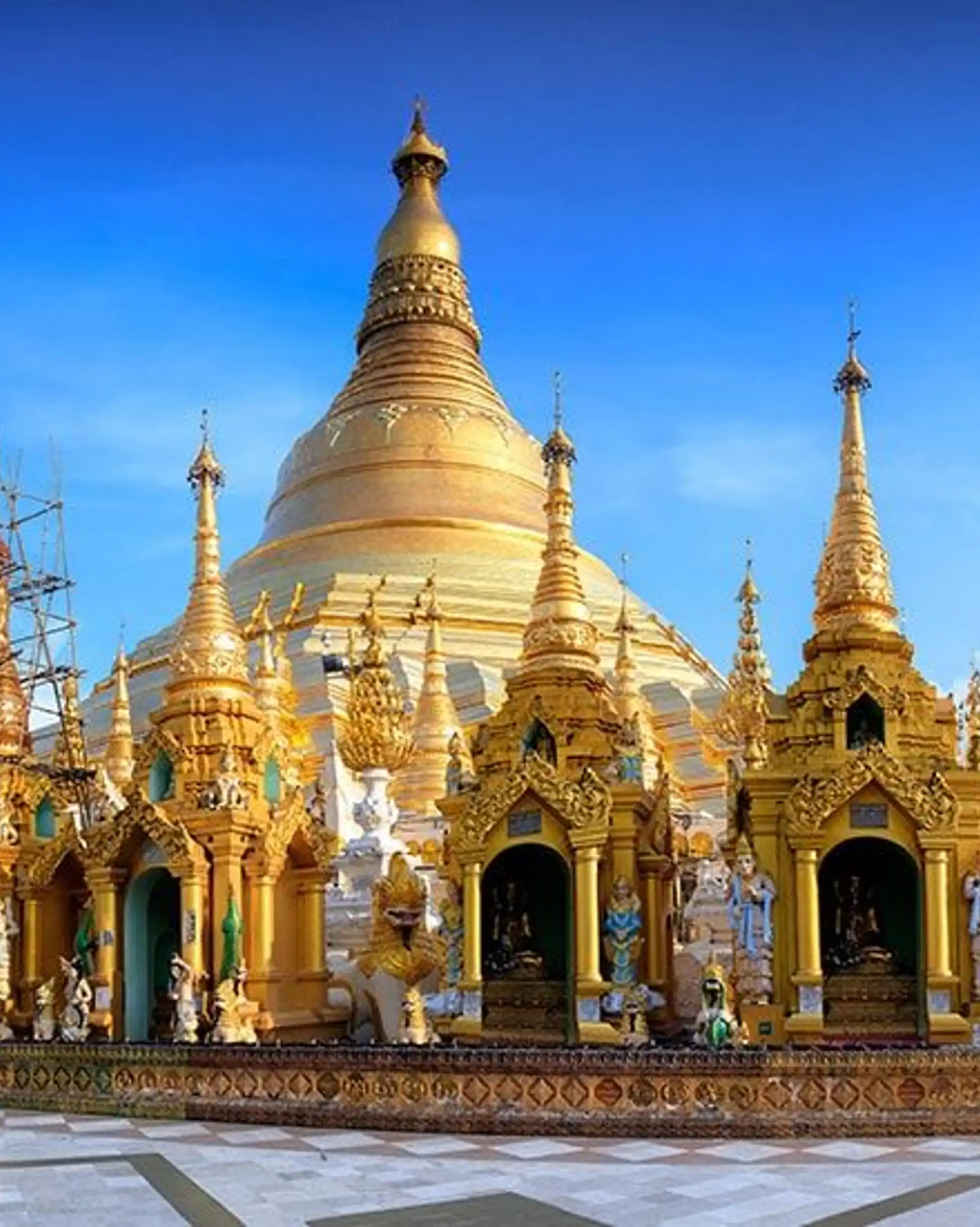
The buildings carry meaning too. Stupas and pagodas are decorated with astrological motifs, images from Buddhist cosmology and symbols such as the hti, the gilded umbrella finial at the top. Many religious sites also mix Buddhist, animist, Hindu and astrological symbols, from the carvings to the layout, so that a site such as the golden stupa of Shwedagon lines up with a cosmic order. For five of the most striking examples, see our pick of beautiful temples to visit in Myanmar.
Christians make up 6.2% of the people counted in the 2014 census, which makes Christianity the second largest religion. It arrived with Catholic missions in the 16th century, and Protestant missionaries consolidated it in the 19th. It took hold above all among the Chin, Kachin, Karen and Naga peoples, often merging with older animist customs into local forms of faith.
Churches are the centre of community life, spiritual and social, especially in Chin, Kayah and Kachin states. Christian festivals, charity work and schooling anchor the week there.
The history is not easy. Christian minorities have faced discrimination, especially under nationalist Buddhist policies: limits on building churches, seized property, and demands that children join Buddhist rituals at school. Since the political turmoil that followed the 2021 military coup, Christians have faced more violence, displacement and insecurity. Communities have answered with strong solidarity.
Islam reached Myanmar as early as the 9th century. Muslims were 4.3% of people counted in 2014, a census that excluded Rohingya according to the State Department's 2022 report. Long-established communities such as the Pathi and the Panthay (Chinese Muslims) live alongside descendants of Indian Muslims brought over by the British. Mosques and Islamic schools are religious and social hubs.
Interfaith life can be tense. A powerful Buddhist nationalist movement has driven discrimination and exclusion, most sharply against the Rohingya of Rakhine State, who have faced atrocities and are stateless under Myanmar law. Outside the conflict zones, though, many Muslims keep working relationships with neighbours of other faiths, and Eid is celebrated within their communities.
Faith often follows ethnicity, so it helps to know who's who. Our page on the ethnic groups of Myanmar sets that out.
Animists are 0.8% of the 2014 count and Hindus 0.5%. The small numbers hide a lot of overlap. Many ethnic groups, among them some Karen and Naga, keep animist and ancestor worship, often blended with Buddhism or Christianity. Many Buddhists also keep nat worship alongside their Buddhist practice.
You see the layering in household shrines, festival customs and life-cycle rituals. In cities such as Yangon, a temple, a church and a mosque can stand within walking distance of each other. In times of unrest, minority communities have sought protection in their religious spaces, kept up interfaith dialogue where they could, and supported each other through religious and cultural events.
Religion and politics have been tied together for a long time. The Berkley Center's timeline picks out a few turning points: U Nu and Buddhism as the state religion, the 1962 coup, the 1988 uprising, the 2007 Saffron Revolution and the 2008 constitution. Monks have often been part of that story, which is why a robe doesn't mean a person stays out of politics.
Outside observers also track how freely people can practise. The US State Department has designated Burma a Country of Particular Concern for religious freedom since 1999, and its 2022 report is the best place to read the detail.
Religious calendars set the rhythm of the year. The main ones are Thingyan (the Buddhist Water Festival), Thadingyut (the Lighting Festival), Christmas and Easter for Christians, Eid for Muslims and the Taungbyone Nat Festival. Joining in respectfully, or watching with care, shows you more about Burmese spiritual life than most museums can. Our page on the festivals of Myanmar goes through them.
The same simple rules work at almost any religious site in Myanmar.
For more on everyday manners, see cultural differences in Myanmar.
Our local experts in Myanmar can build a route that includes monasteries, pagodas and festivals at the right time, and brief you on etiquette before each stop. Browse our Myanmar trips or tell us about your trip.
At Shanti Travel, we've spent two decades guiding travellers through Myanmar, and understanding Myanmar religion is what makes a pagoda visit more than a photo stop. Ask us anything before you go.
David
Your expert on destination Myanmar
Check the official advice before you plan anything. The US State Department lists Burma at Level 4, Do Not Travel (reviewed 8 May 2026, no change). The UK FCDO advises against all travel to parts of Myanmar and calls the situation "increasingly volatile" (updated 4 August 2026). Read the US State Department's Burma travel advisory, the UK advice and our essential information for Myanmar.
No source we found names a fastest-growing faith, and no official count tracks growth by religion. A secondary source reports 2024 census shares of 91.3% Buddhism, 4.6% Christianity, 3.3% Islam and 0.6% Hinduism, but that count covered fewer areas, so it can't be compared directly with 2014.
They come from different years and surveys. The 2014 census gives 87.9%, the US State Department's 2022 report rounds to about 88%, and the 91.3% from the 2024 census, as reported by a secondary source, covers fewer areas. Rohingya were also left out in 2014, which moves every percentage a little.
Subscribe and receive our travel inspirations and practical advice twice a month.
Wanting to share your trip with a group?