3 Days at the Wheel - in Jeju
Jeju is South Korea's little paradise. An island buffeted by the winds at the far south of the country, where small green mountains meet the shores of the East China Sea. Here, I share my 3-day itinerary behind the wheel of your own car (yes, it's possible!).
How to get organised?
First of all, it is important to understand that Jeju is not the most easily accessible destination. The most practical way is still to take a flight from one of the main mainland cities (Seoul, Busan, Daegu...) but once on site, how do you get around?
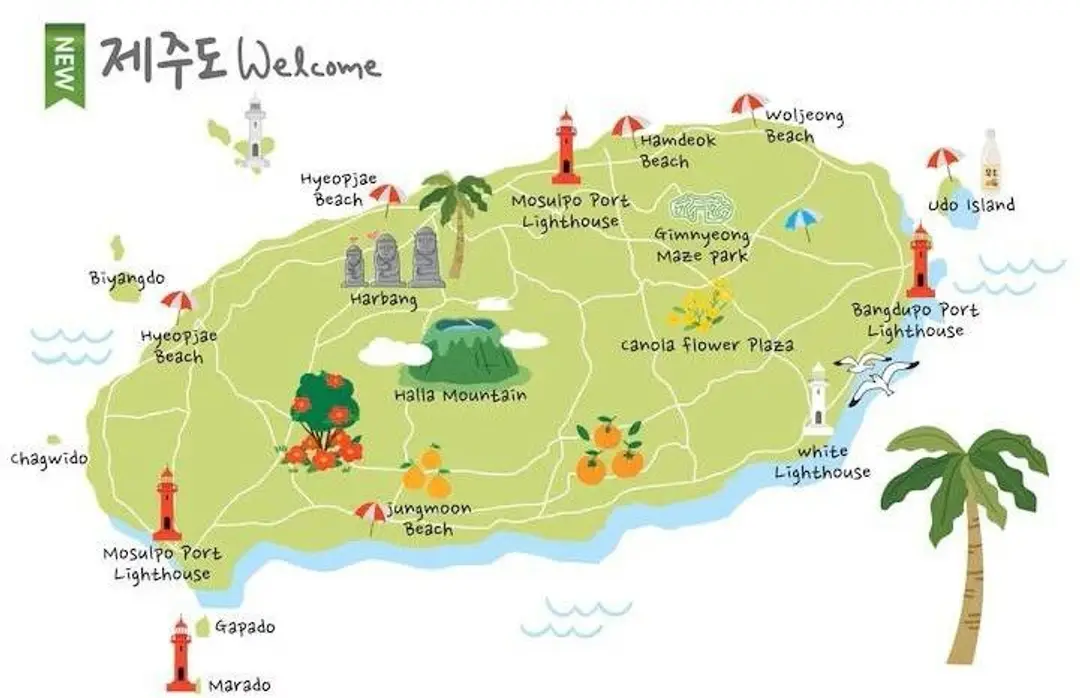
I personally chose to rent a car for more freedom and flexibility, given that the island is quite widespread and the public transport network is limited. Many companies offer high-quality rental cars just a few steps from the airport… a small heads-up beforehand, and much to my surprise, they are all automatic!
It all starts in the South!
In order to stay organised and optimise my time, I decided as soon as I arrived on the island in the late afternoon to take the road (about a 1h30 drive) from the airport to the town of Seogwipo. This small town would be my first base for the night, featuring numerous comfortable and welcoming hotels and homestays.
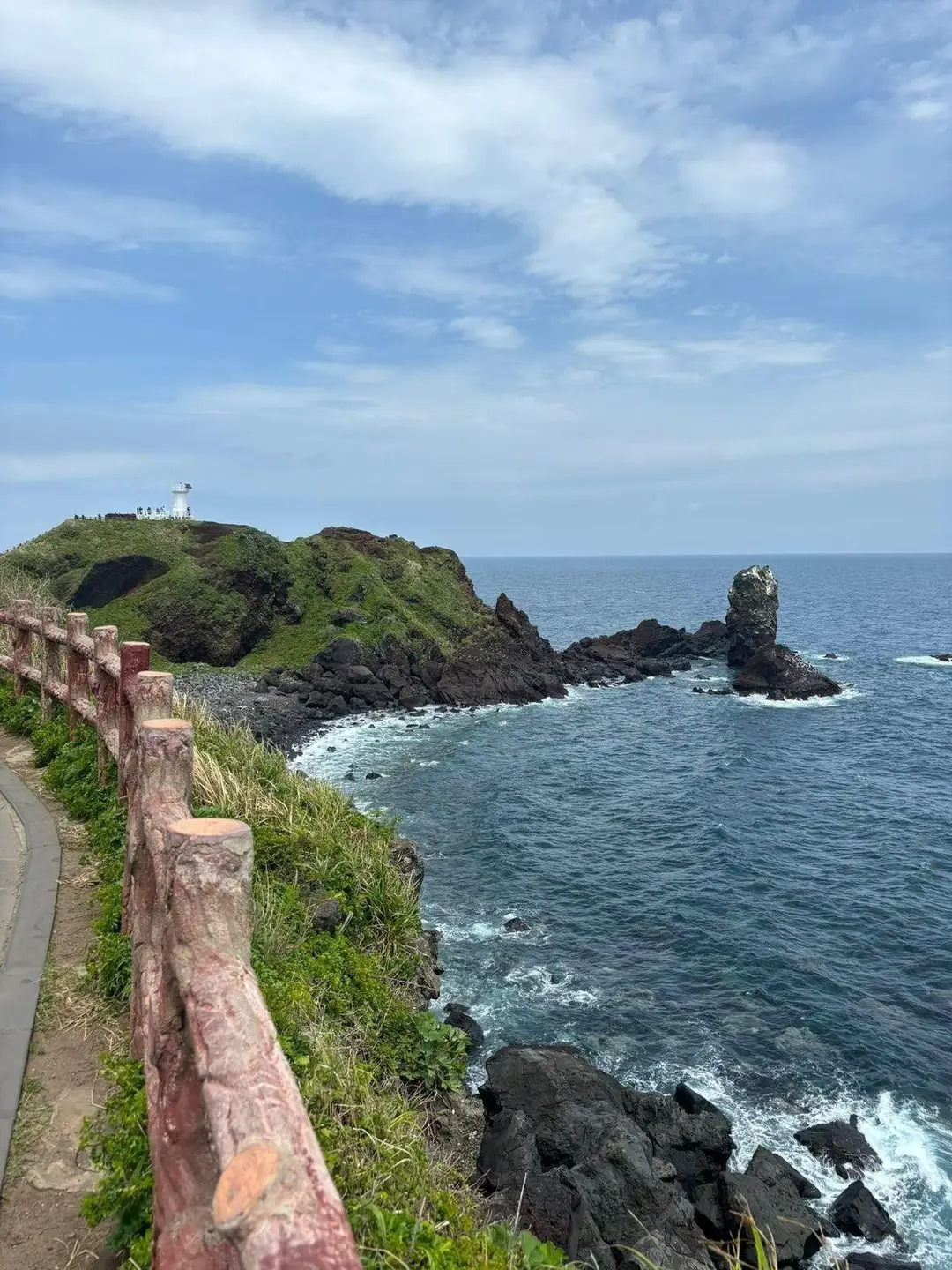
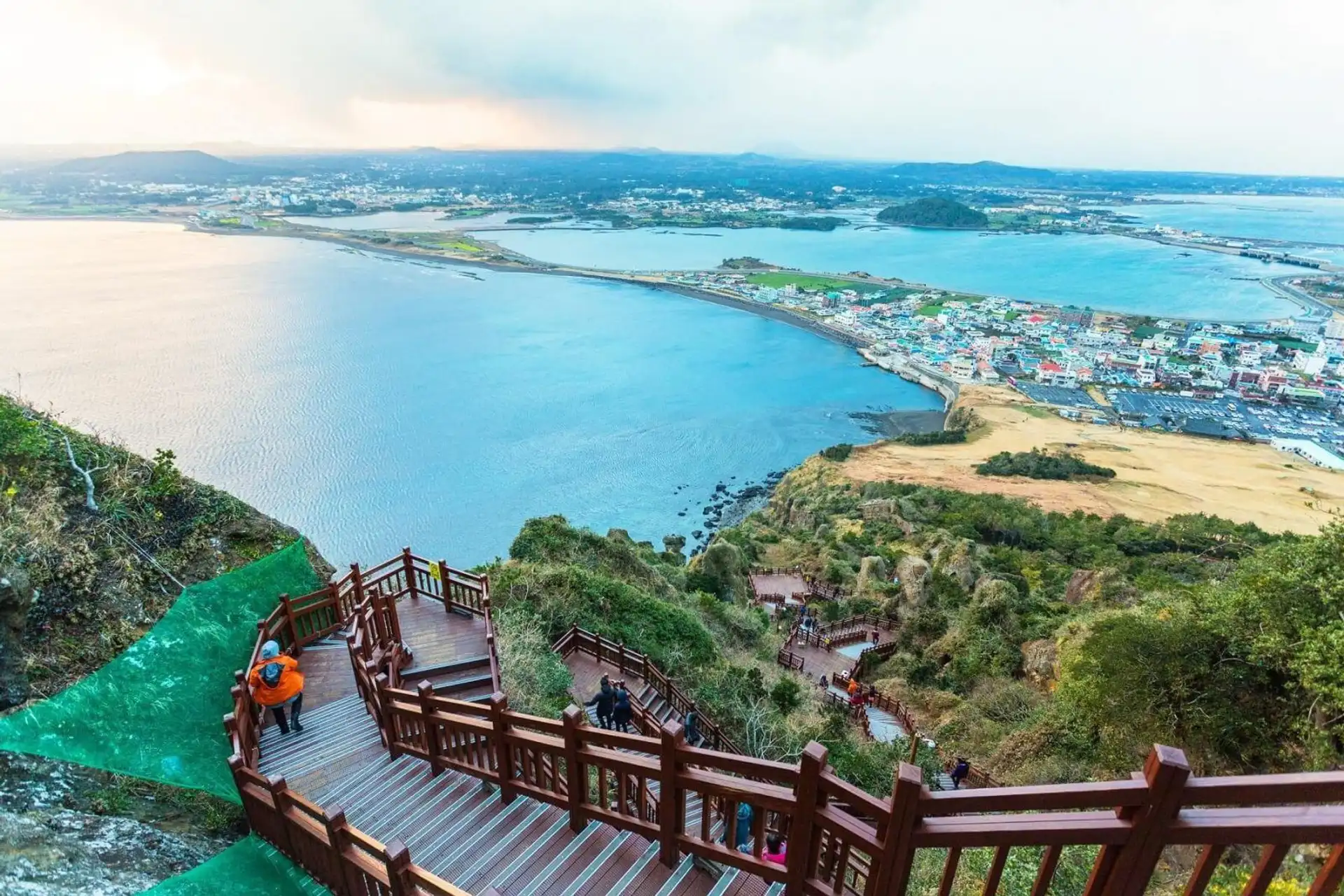
The following morning, we set off for a first stop towards the peak and cliffs of Seongsan Ilchulbong. Perched at the eastern tip of Jeju Island, this UNESCO World Heritage site is nicknamed the "Sunrise Peak". This ancient volcanic crater is encircled by the ocean on one side and steep rocky cliffs on the other. The appearance of these sheer cliffs, the sea air and the sound of the waves crashing against the rocks transport me to Irish landscapes, miles away from the Asia I know so well.
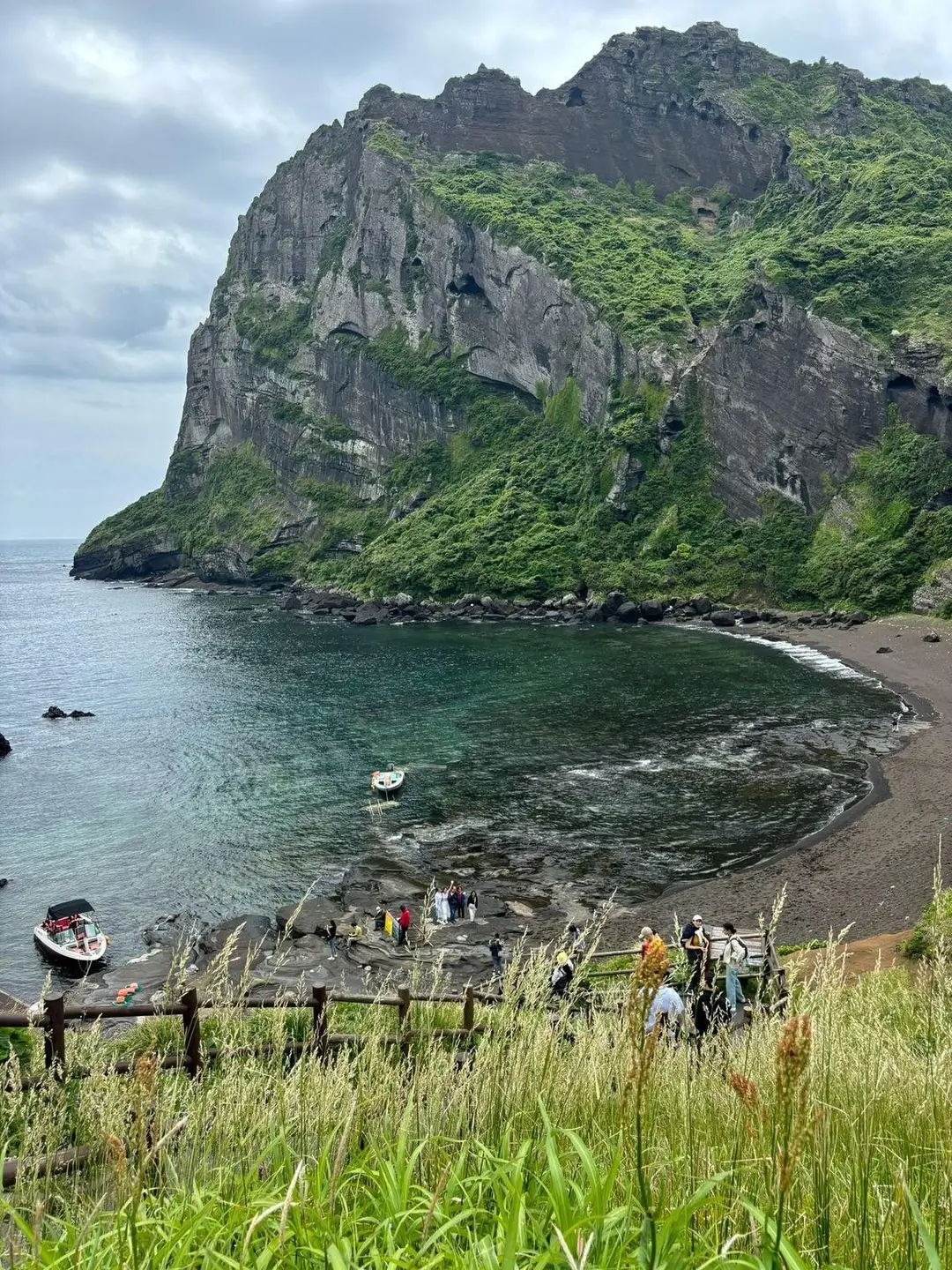
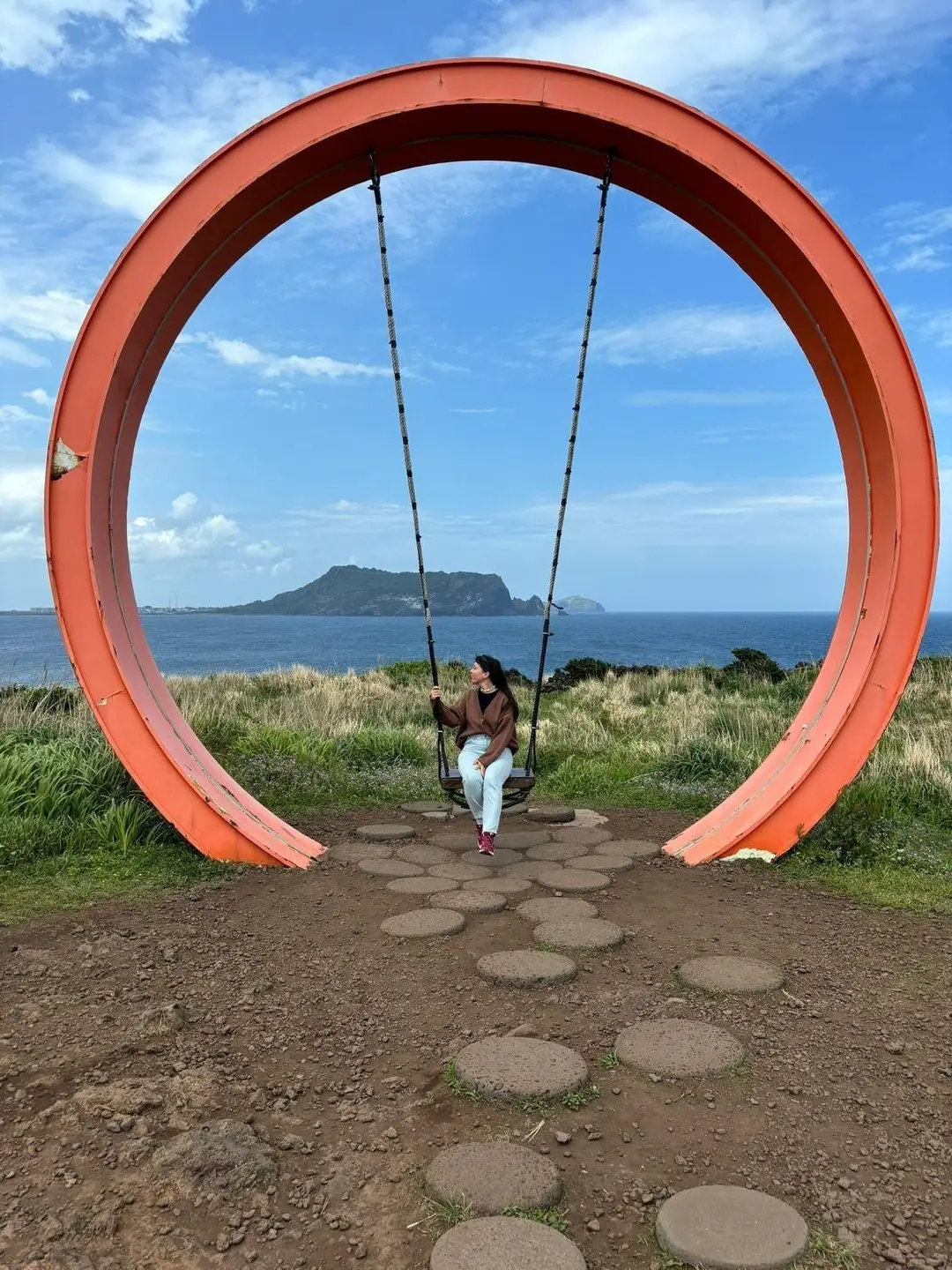
By continuing my exploration along the path, it is possible to climb the crater for a panoramic view of the area. Right at the end of the path, a swing has been installed facing the sea, allowing tourists to take the quintessential Instagrammable shot (and I was no exception to the rule).
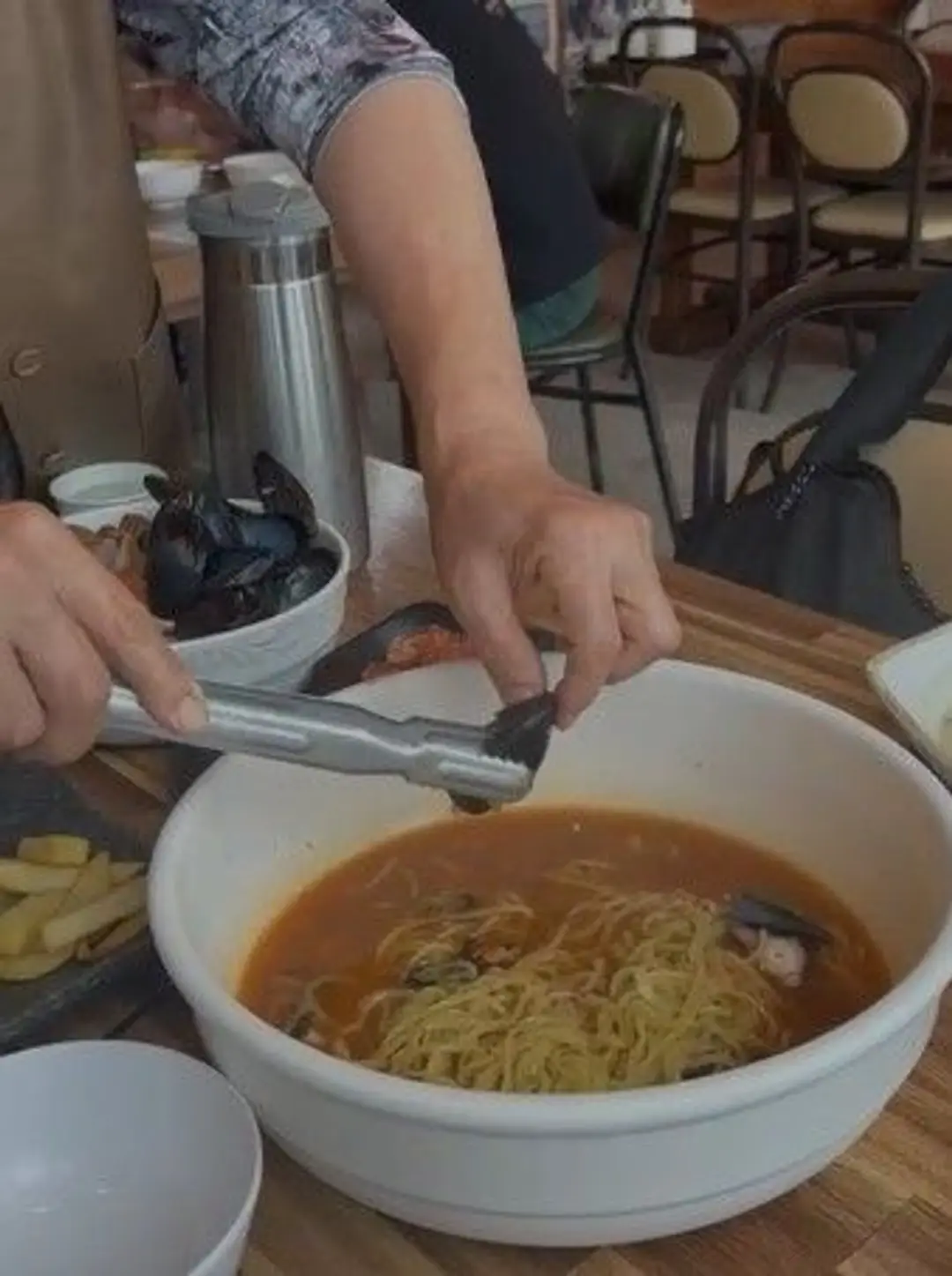
After this walk, it is high time to look for a place to have lunch. My recommendations naturally go towards restaurants offering fish and seafood. Marine products are not lacking on the island and their freshness is guaranteed!
On the road, I also stumble upon a small café with a view of the beach. Seogwipean Bakery offers a wide range of sweet treats and drinks that you can enjoy while watching seagulls and kitesurfers cross paths in the clouds.
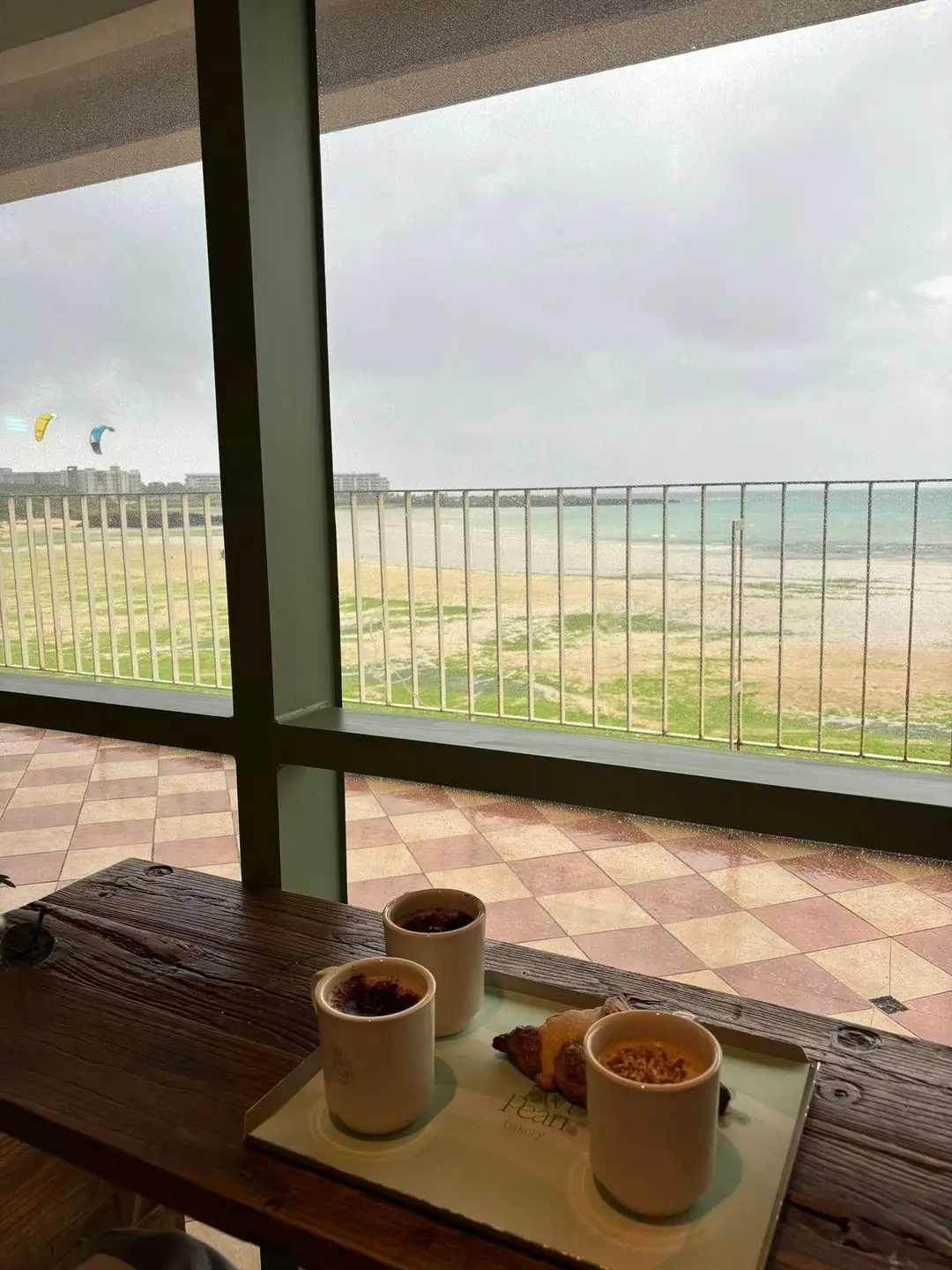
I spend the rest of the day criss-crossing the coastal roads at random, stopping from time to time to take a few photos of typical houses and maritime landscapes. Even though the weather turns to rain, it lends a somewhat nostalgic atmosphere to this end of the day. It is finally time to return to Seogwipo for my second and last night in the small town.
A day to see the West
My second day will be quite busy in terms of visits! My itinerary plans to cover the western part of the island, featuring: waterfalls, tea plantations and a sunset.
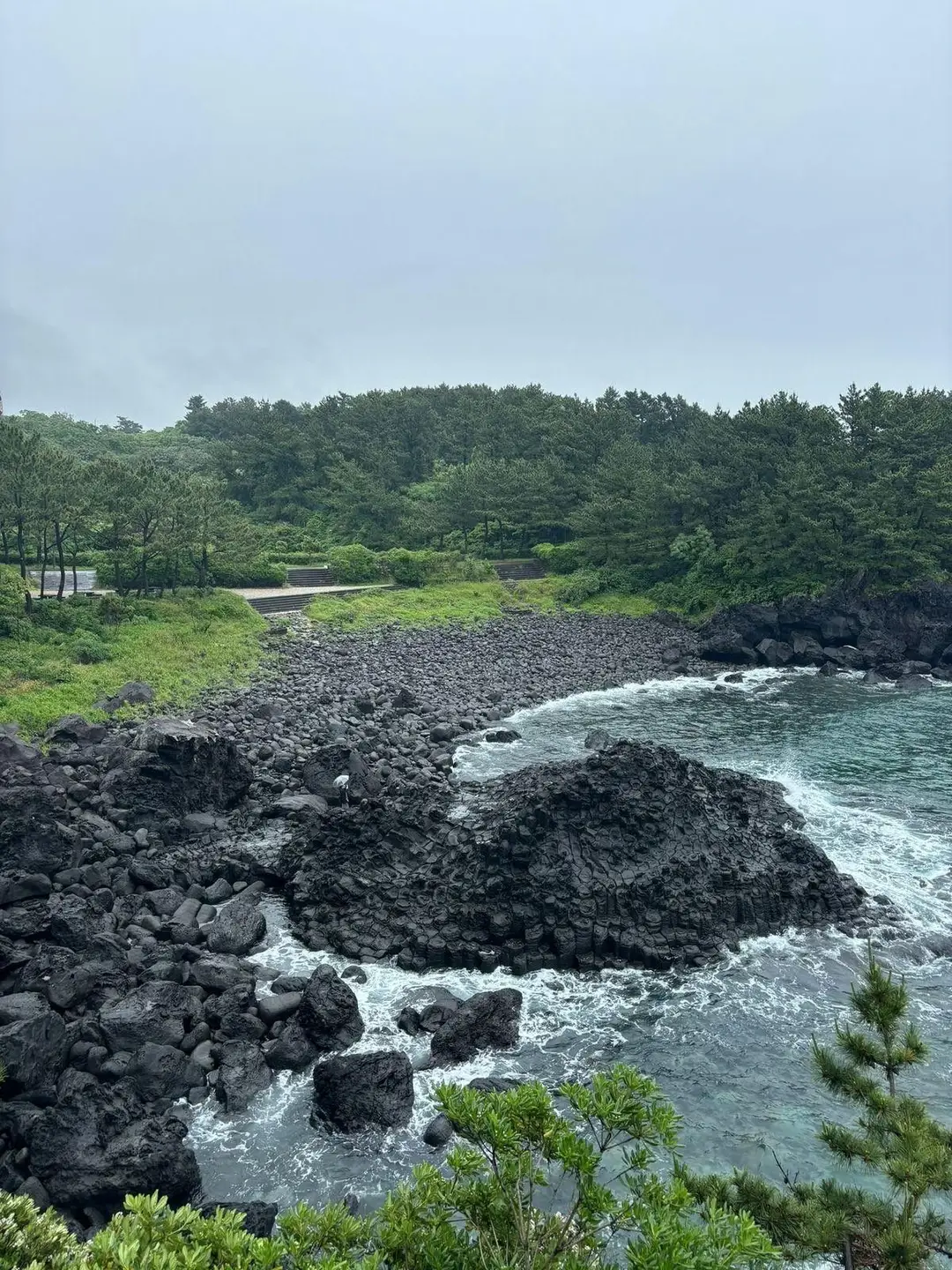
So I head towards the Jusangjeolli Cliffs early in the morning to beat the crowds. In this place, you can discover an extremely peculiar rock formation. The lava flows have formed small hexagonal basalt steps. Once again, I am reminded of Ireland, as these formations are identical in every way to the famous Giant's Causeway.
On a less cultural and more anecdotal note, Chinese tourists approach me while I am taking a few photos of the site. I gather they are asking me to take their photo, but I realise they would actually like to immortalise photos with me. I play along and follow their requests to the letter for the hand signs I should make, each one more adorable than the last.
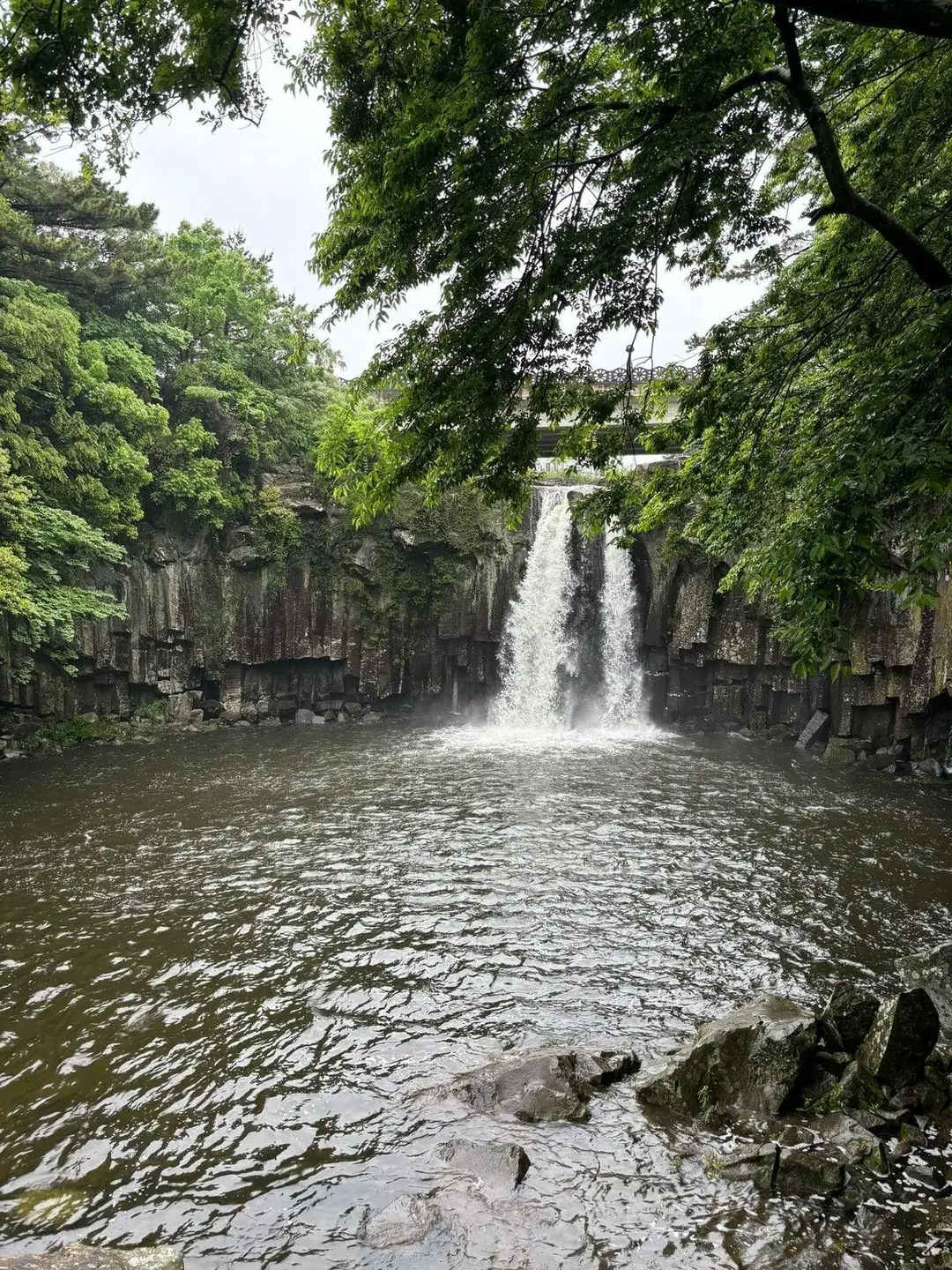
Next, I head out to discover the Cheonjeyeon Waterfalls. They are grouped within a complex that allows you to wander freely. Along the way, I also cross a beautiful bridge ornamented with sculpted white dragons and take a break in a wooden pagoda for a well-deserved moment of rest after walking nearly 10 kilometres in one morning!
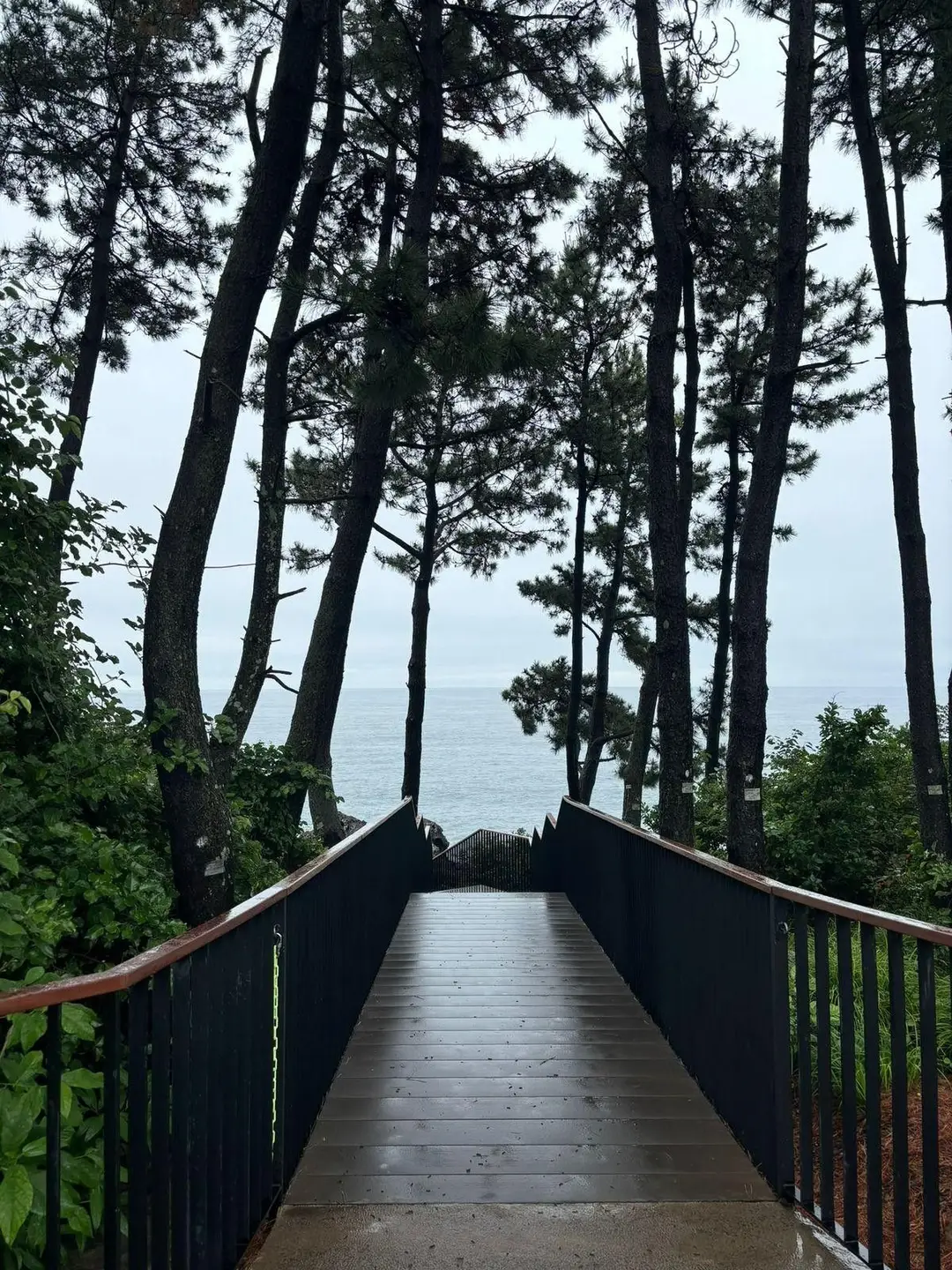
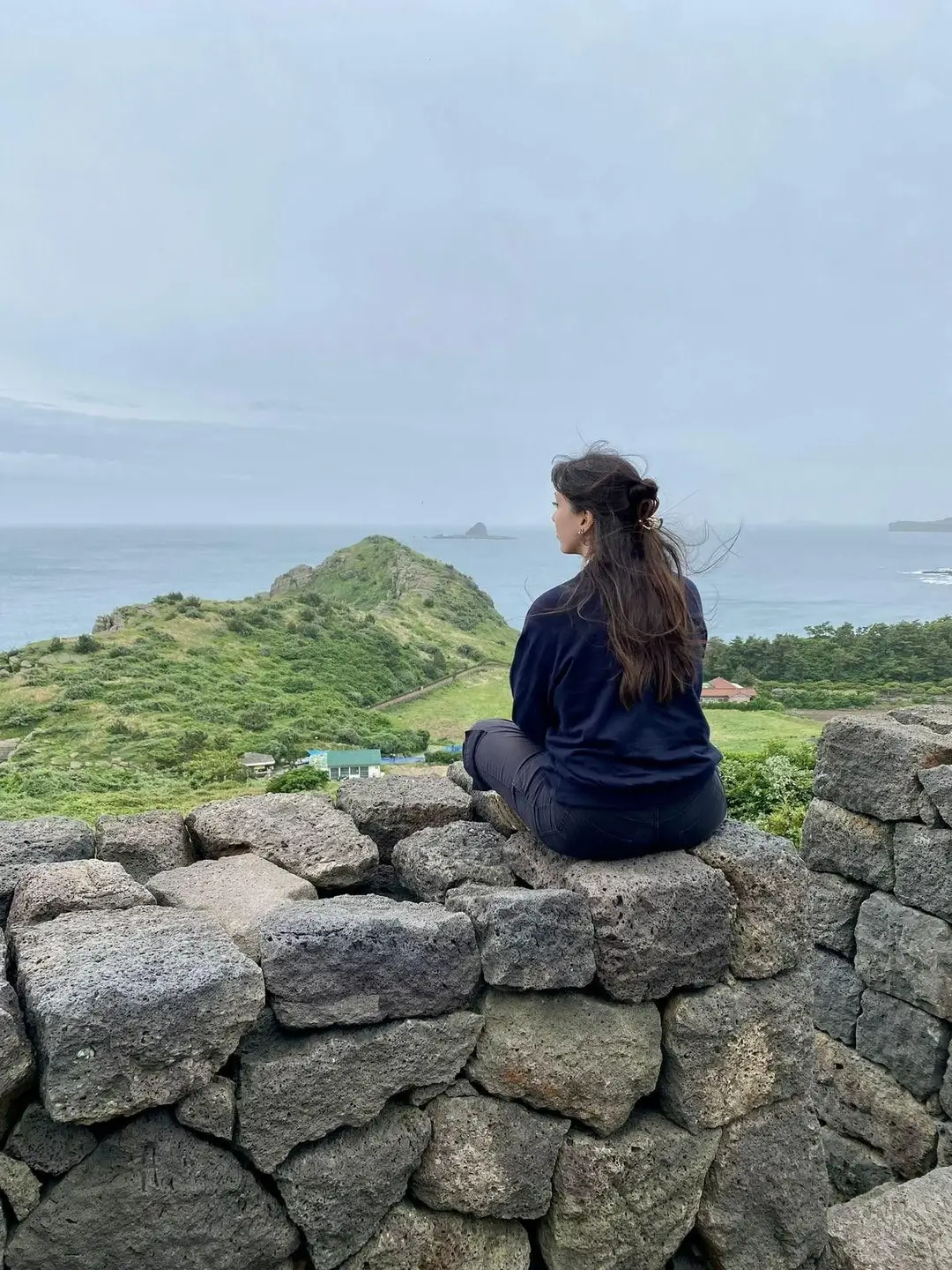
Then, in the afternoon, I take the road again towards the Yongmeori Coast and beach. At this point in my journey, I think I have found the most beautiful spot on the island. After climbing a few steps to find myself on a small wall overlooking the beach, I take the time to appreciate the view, the freezing wind and the smell of the sea spray.
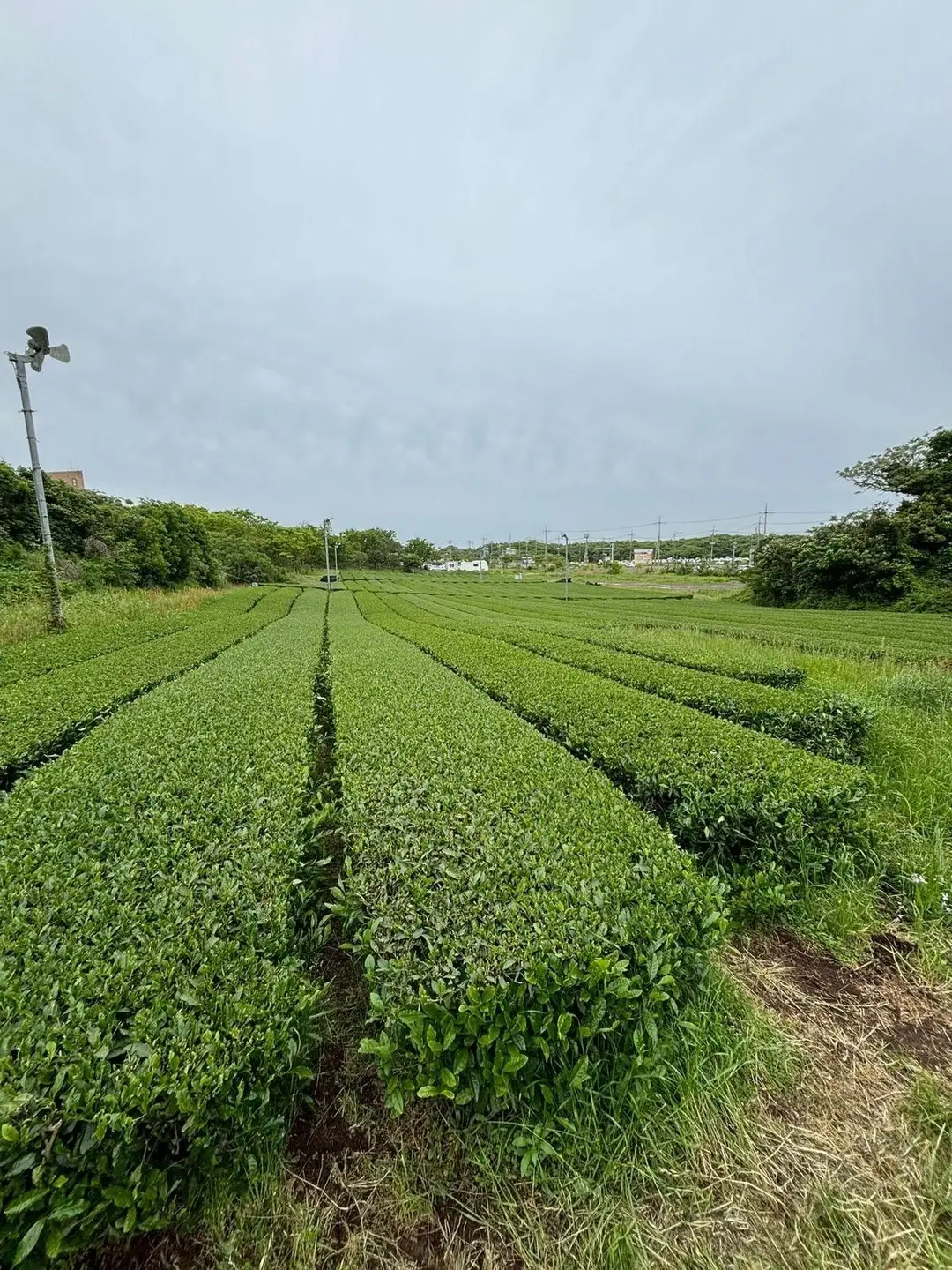
Jeju is famous for its tangerine and tea cultivation, so it is to the Osulloc Museum that I decide to devote the end of my second day in Jeju. The museum is actually a huge café offering dozens of choices of pastries and tea-based drinks. Outside, you can stroll directly among the tea plantations, whose green leaves dress almost the entire garden. A final stop at the souvenir shop, and I find my faithful car to head back to Jeju City in the north of the island.
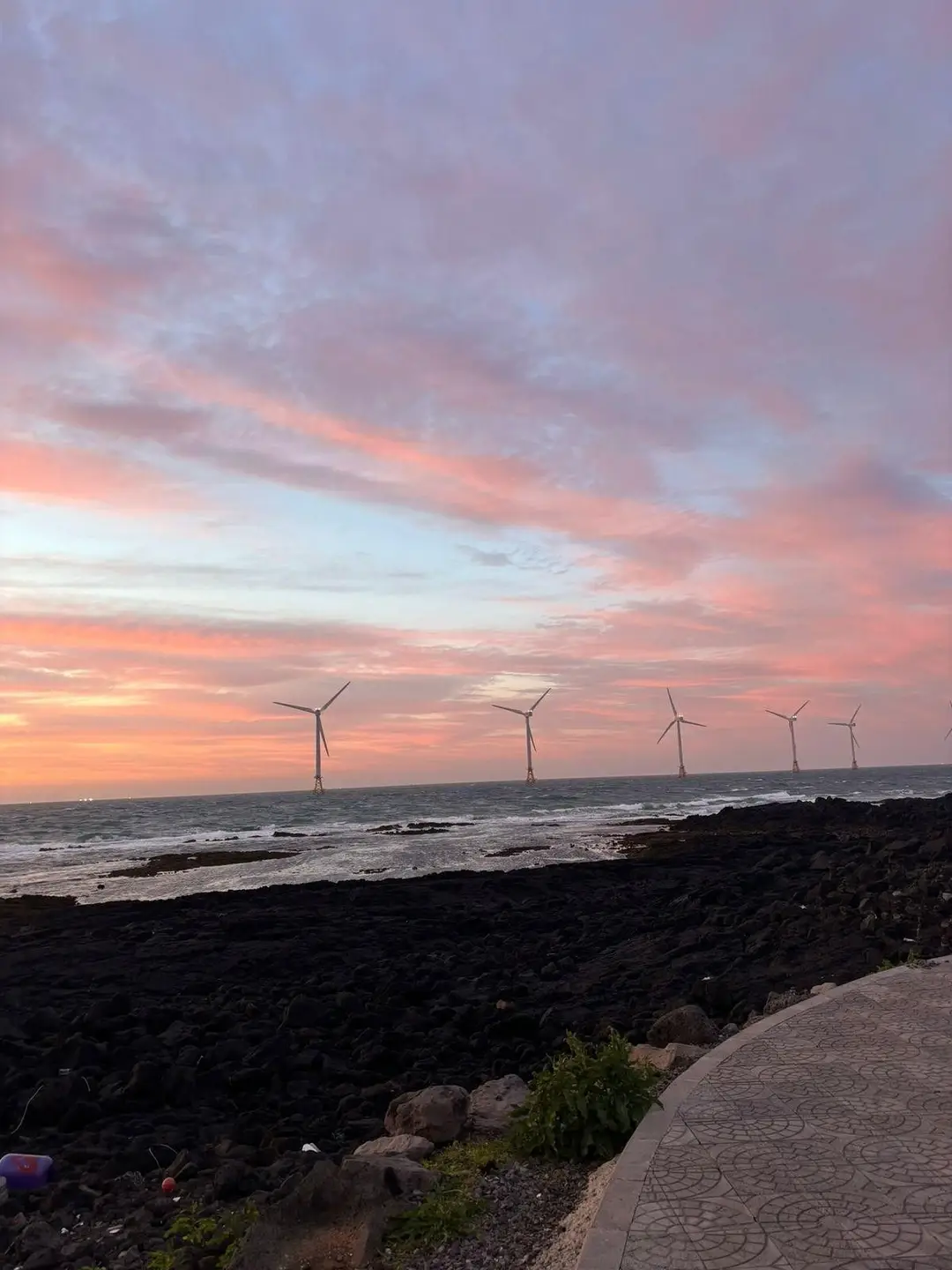
But before heading to our destination city, I have one last stop to make and the timing is perfect since the sun is about to set! I can only recommend this place for its unmatched beauty. I park my car in a small roadside car park and take the narrow paved path along the beach. In the background, a row of wind turbines turns lazily. Then the sky dresses up in the typical colours of a successful sunset: red, orange, pink. Everything confirms that I was right to pass through here. A final photo as the last rays disappear beyond the horizon, and I finish the rest of the journey under the stars.
Conquering Hallasan!
I have obviously kept the best for last (from my point of view!). For this final day, I am heading out to tackle Mount Hallasan, the highest mountain on the island, which promises breathtaking views as well as some good muscle soreness.
A departure from Jeju City at dawn, and it then takes me a good hour's drive to reach the start of the hike at the foot of the mountain. There are 2 main routes for this ascent: Seongpanak or Gwaneumsa. Whichever one you choose, this hike is not for beginners or young children. You will need to count at least 7 to 8 hours to reach the summit and come back down afterwards. You can obviously just complete a portion of the hike and turn back when you feel the need!
Regardless, climbing Hallasan is a guarantee of a change of scenery, tranquility and spectacular views. For those in the know, I felt like I was in a flowery valley straight out of a Studio Ghibli film. Indeed, I wouldn't have been very surprised to meet a little kodama (tree spirit) around the bend of the path.
After recharging my strength, I finish this day with a short walk in the Jeolmul Forest, east of Hallasan. Here, there are plenty of benches, small ponds and interactive games for children. The sunlight filters through the branches of the immense pine trees, and you can hear young students on a school trip that day laughing out loud.
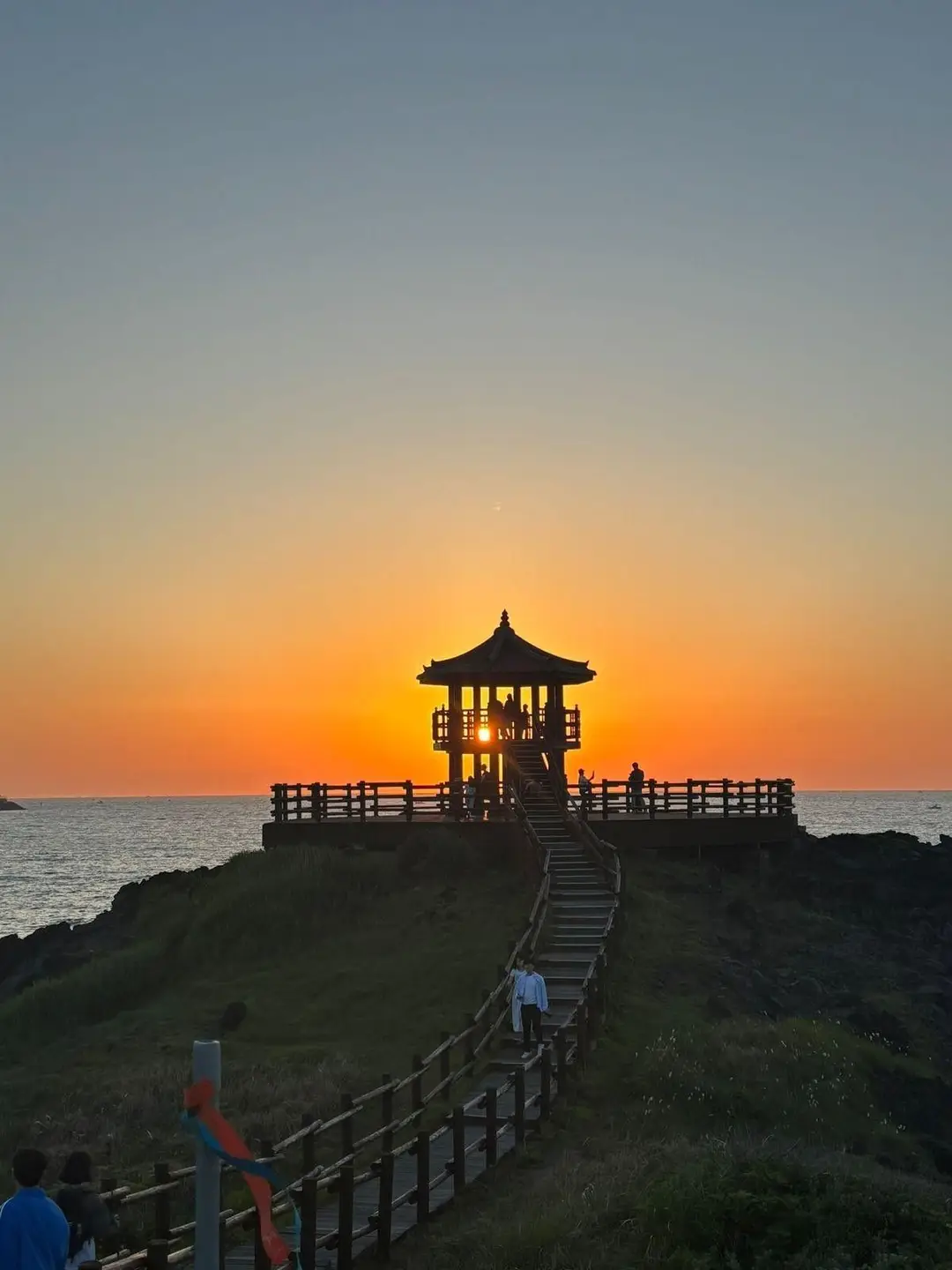
I cannot leave Jeju without hunting down a sunset one last time. Luck smiles on me once again as I find a small pagoda overlooking the sea. The coast is called Dakmeoru, and I can finally say that it is definitively my favourite place on the whole island. The sky is tinged with the orange hues that I love so much and the sun finally sets over Jeju, wrapping up my last day of exploring the little Korean island!