Your expert on destination Vietnam
The Hue Imperial City is the walled palace complex of the Nguyen dynasty in central Vietnam, a UNESCO World Heritage Site since 1993. Allow a morning for it (adult ticket 200,000 VND, as of June 2026), then spend the afternoon on the Perfume River, at Thien Mu Pagoda and at a royal tomb.

The Hue Imperial City is the heart of the old Hue citadel: a walled enclosure that was the political and spiritual centre of imperial Vietnam under the Nguyen emperors until 1945. The Imperial City of Hue sits on the Perfume River, and UNESCO has listed it since 1993 as part of the Complex of Hue Monuments.
It is worth the trip, and the first hours of the day are when it works best. The layout follows the Forbidden City in Beijing: palaces, temples, pavilions and monumental gates, all ringed by wide moats. That borrowed design is also why Hue's version is sometimes called a forbidden city too.
Walk in early and the mood is quiet. Gardens lie silent between the halls, dragons are carved into railings and rooflines, and glazed roof tiles catch the light. The air is cooler before midday and the paths are calmer, so you can stop and look.
Not everything is polished. Some corners of the citadel still carry the marks of time and conflict, and that is part of the visit: you see the former grandeur and what it cost to keep.
Hue became the capital of a unified Vietnam in 1802, when the Nguyen dynasty took power. According to UNESCO's listing of the Complex of Hue Monuments, the city remained the country's political, cultural and religious centre until 1945.
That year closed the chapter. Emperor Bao Dai abdicated on 30 August 1945, ending the rule of the Nguyen dynasty. The citadel came under fire again on 31 January 1968, which explains the damaged sections you will notice as you walk.
As of June 2026, an adult ticket for the Hue Imperial City costs 200,000 VND, and a child aged 7 to 12 pays 40,000 VND. The site opens Friday to Wednesday from 8:00 to 17:30 and stays open to 22:00 on Thursday.
| Details (as of June 2026) | |
|---|---|
| Adult ticket | 200,000 VND |
| Child ticket (7 to 12) | 40,000 VND |
| Opening hours, Friday to Wednesday | 8:00 to 17:30 |
| Opening hours, Thursday | 8:00 to 22:00 |
Yes, you need a ticket. The ticket office opens with the site and closes 30 minutes before the gates do. Hours and prices change with the season, so check the official Hue Monuments Conservation Centre site for current figures before you go.
After the citadel, the pace drops. A dragon boat takes you along the Perfume River, where green banks slide past and the city slowly recedes. With the soft sound of water and a breeze off the river, the ride is as much a part of the day as the stop at the end of it.
Thien Mu Pagoda, the "Celestial Pagoda", is one of Hue's best-known symbols. Its seven-storey octagonal tower rises above the river and draws pilgrims and travellers alike.
Give yourself time here. The gardens reward a slow walk, monks can be seen at prayer, and the view reaches over the surrounding countryside. It also makes a good first look at Buddhist pagodas in Vietnam if you have not seen one yet.
The Hue royal tombs were built as funerary palaces, set in the middle of landscaped gardens. Of the group, Tu Duc is probably the most harmonious. The emperor loved poetry and the arts, and he imagined a place made for reflection.
Lotus ponds, pavilions, pools and shaded paths make up an elegant, quiet whole where architecture and nature blend. It is easy to slow down here, far from the bustle of Vietnam's big cities.
With more time, add a second tomb: the tomb of Khai Dinh. As of 2026, an adult ticket costs 150,000 VND.
To close the day, head to a craft village on the outskirts of Hue. The artisans there keep two emblematic traditions alive: coloured incense sticks and the nón lá, the Vietnamese conical hat.
You can watch each stage of production, smell the herbs and spices that go into the incense, and talk with the makers about their skills. The village is very photogenic, but what stays with you is how alive it feels. Hue is not only about its imperial past: the city holds on to its crafts and its traditions.
Here is the order that works for things to do in Hue in one day:
One full day covers all four. Two days let you go slower and add Khai Dinh. Our local experts can fit Hue and Hoi An into a trip to Vietnam at your pace.
Hoi An gets its own time. Its old town fills a day by itself, with the lanterns and yellow facades that bring most visitors. Another day can leave the centre for the villages nearby, where the pace is quieter.
Start in the morning at Tra Que, a market-gardening village a few kilometres from Hoi An. Villagers have grown aromatic herbs and vegetables for local cooking here for generations. You can walk the plots and join in with traditional farming, watering crops or turning the soil with the growers. Lunch uses the village's own produce, a simple meal that shows why farming matters so much in Vietnamese culture.
The afternoon follows the Thu Bon River to two craft villages. In Kim Bong, carpenters have worked wood for generations, and their skills helped build Hoi An's old houses and boats. You can watch the workshops, try cutting wood and leave with a small souvenir made on the spot. In Thanh Ha, family workshops make pottery by hand. The artisans explain their methods and help you shape a small clay object. It will not be perfect, which is half the fun.
Hue rewards a trip built around its rhythm: a quiet morning in the citadel, a slow afternoon on the river and in the villages. Tell us your dates and interests, and a local expert in Vietnam will design the route with you.
Most travellers go by car with a driver or by bus, via Da Nang and the Clouds Pass. The road follows the coast, with sea viewpoints along the way, and many itineraries treat it as an easy transition day. For other routes and options, see our guide to getting around Vietnam.
February to April is a good window for central Vietnam: temperatures are milder and there is generally less rain. That weather suits river trips, tomb visits and village excursions equally well.
A guide is not compulsory, but it adds a lot. A local guide explains Nguyen history, the symbolism of the palaces and tombs, and the episodes that left marks on the monuments. Some free walking tours run on tips, with a suggested minimum of around $10, and ask you to book 24 hours ahead.
Yes. Hue is calmer than Vietnam's big cities, and its activities vary: walks, crafts, boat trips and workshops. Days can be built around a few highlights and some simple village moments, which keeps the schedule easy for children and for anyone who wants to slow down. Ask a local expert to shape the pace.
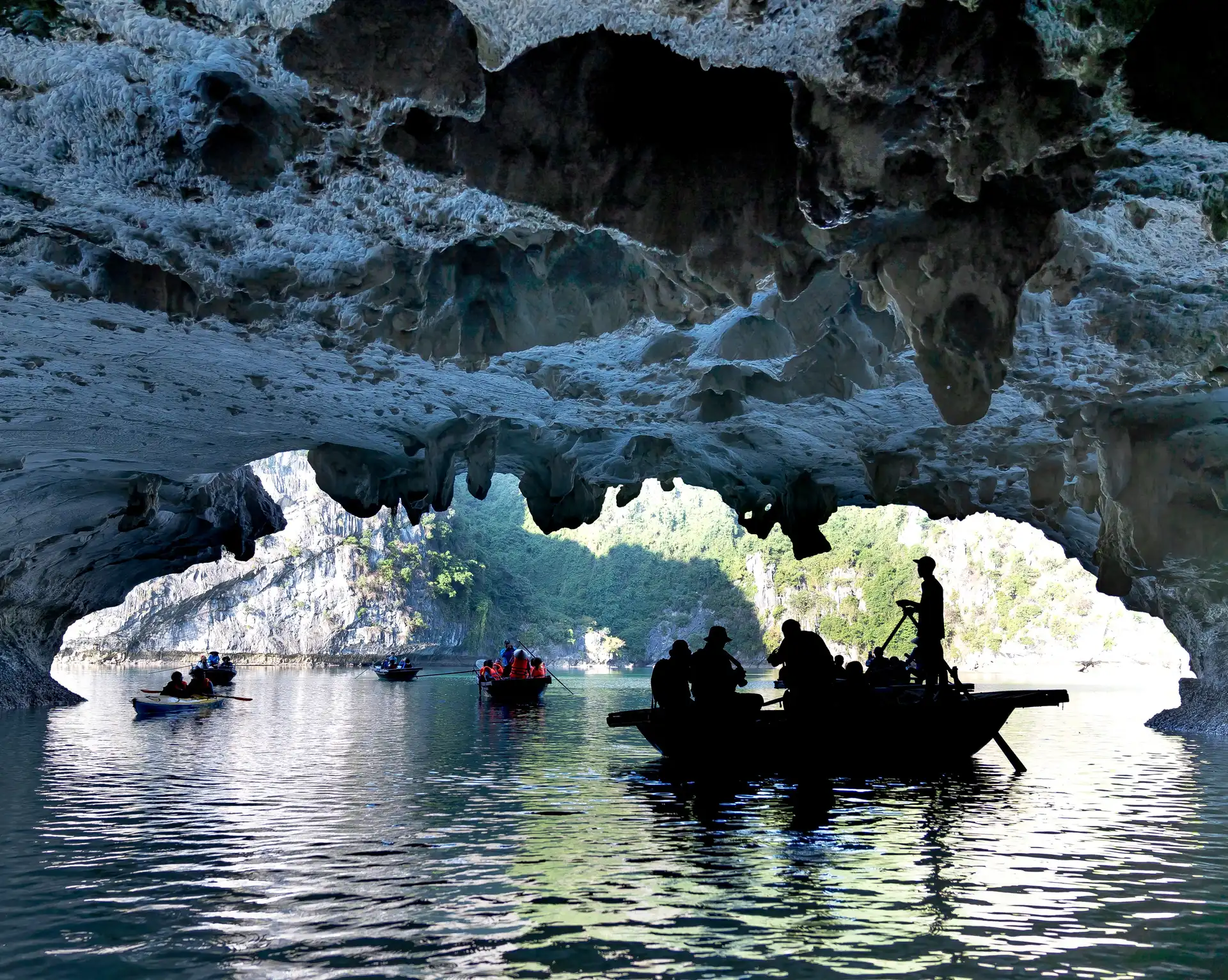
Phong Nha, in central Vietnam's Quang Binh province, is a UNESCO-listed karst region known for its caves, from the boat ride into Phong Nha Cave to the Son Doong expedition. Plan two to three days for the standard caves, countryside and river, and more only for expeditions.

A Trang An boat tour is a hand-rowed sampan ride of roughly 2 to 4 hours through limestone caves and temples in Ninh Binh, about 100 km south of Hanoi. Tickets cost 300,000 VND (about US$12) as of August 2026. Route 2 suits most first visits; Route 3 has the longest cave.

Authentic, chaotic, colourful, dense, noisy, alive. These are the words that best describe Hanoi, a city full of contrasts. As a departure or arrival point for a stay in Vietnam, the capital leaves no one indifferent, and can often frighten travellers who deliberately choose to spend little time there. Yet Hanoi has much to offer beyond the major tourist sites, and allows travellers to really immerse themselves in local culture and life. If you're passing through Hanoi and have a little time to spare, here are my top tips for living like a local and discovering Hanoi differently.
Subscribe and receive our travel inspirations and practical advice twice a month.

Wanting to share your trip with a group?