Bhutan Religion: Buddhism, Hinduism and Daily Faith

Bhutan's main religion is Vajrayana Buddhism, the state religion written into the Constitution and followed by around 75% of people, with about 23% Hindu, mostly in the south. The official Drukpa school belongs to the Kagyu tradition. This guide covers the faith, the monks, the festivals and the law.
Religion here is not tucked away in temples. You meet it in the valley before you reach the first monastery: coloured flags snapping in the wind, a stone wall of prayer wheels beside the path, a white chörten at a bend in the road. Festivals, rituals and family life all grow out of faith, and they give people a reason to gather around sacred dances, songs and offerings.
What is the main religion of Bhutan?
Vajrayana Buddhism is Bhutan's state religion, practised in the Drukpa Kagyu school of Mahayana Buddhism. According to the US State Department's 2022 religious freedom report, which cites Pew Research Center figures from 2012, about 75% of Bhutanese are Buddhist and 23% are Hindu.
Guru Rinpoche brought Buddhism to Bhutan's valleys as early as the 8th century. A second wave of teaching spread across the whole country from the 12th century onwards, and the faith has stayed at the centre of national life since. It is useful to know this before a trip to Bhutan, because it explains why so much of what you see, from architecture to etiquette, has a religious reason behind it.
Buddhism in Bhutan works as a philosophy of life as much as a creed. It guides behaviour, the search for harmony in the community and a respectful relationship with nature. Compassion, non-covetousness and peace are the values the rest of society is built on.
Buddhism in daily life: flags, wheels and chörten
Bhutanese spirituality shows in rituals that anyone can see. Four signs come up on almost every journey:
- Prayer flags: strings of every colour cover mountains, passes and bridges. The mantras printed on them are believed to bring luck and harmony when the wind moves the cloth.
- Prayer wheels (mani korlo): engraved cylinders you spin with your fingertips, spreading prayers into the air. They are used every day, especially by older people, to purify karma and build up merit.
- Chörten (stupas): sacred structures consecrated along trails. They stand for the presence of the Buddha, the spiritual path and protection, and they are carefully kept up because they matter to ritual practice.
- Colours and iconography: the lotus for purity, the dorji for the lightning of harmony, dragons for divine protection, plus pearls and sacred jewels. They turn up on monastery walls and on traditional clothing alike.
Inside the home, religion is quieter. Every house sets up an altar, and the day often begins with lighting a butter lamp or leaving an offering of rice at the village temple.
Monasteries, dzongs and the role of monks
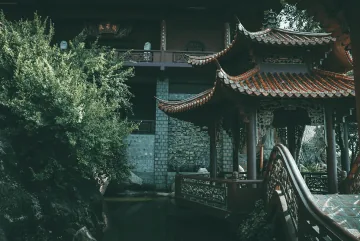
The fortress-monasteries called dzongs are easy to spot. A dzong is both a religious and an administrative centre, and each of Bhutan's 20 regions has one. Monks and laypeople gather there for the major ceremonies. The size of the buildings, the detailed decoration and the way they are organised reflect a balance between tradition, spirituality and political power.
Monks, called gelong, form a hierarchical community. At the top is the Je Khenpo, and below him each monastery is headed by a lama or a lopen, a master teacher.
Who is the Je Khenpo? The Je Khenpo is Bhutan's chief abbot and the supreme authority over the monastic community. The king is head of state.
Monks are far more than spiritual guides. They give teachings, take part in education, including health and social life, and help hold communities together. They also lead the religious festivals and pass on traditional knowledge, which is why you will see them as much in classrooms and village ceremonies as in prayer halls. When you visit a dzong, expect to find both worship and government offices under one roof.
Religious festivals: when to see a tsechu
Tsechus are the great Buddhist festivals, held across the country to honour Guru Rinpoche. Each region keeps its own annual festival. The programme usually includes masked dances, ritual performances known as Cham, and in some places the unfurling of a giant thangka, a sacred painted or embroidered banner. For many families it is a day of popular fervour and shared spirituality.
These are some of the largest, by usual month:
| Festival | Usual month | Location | What to expect |
|---|---|---|---|
| Punakha Tshechu | Late February to early March | Punakha Dzong | Rituals and community festivities |
| Paro Tshechu | April | Paro Dzong | Guru Thongdrel unfurled |
| Thimphu Tshechu | October | Tashichho Dzong | Sacred dances |
| Jambay Lhakhang Drup | November | Bumthang | Worship and dances for Guru Rinpoche |
| Gangtey Tshechu | November | Gangtey | Protection of the Phobjikha valley |
The exact days shift from year to year, so confirm them before you book flights. For background on the calendar, read about Bhutan's festivals, or look at one in detail with the Jambay Lhakhang festival.
People come to a tsechu for a blessing and a chance to purify themselves, and it doubles as a family and community reunion. The dances carry the teachings of Buddhism in living form, mixing devotion, art and spirituality.
Planning around a tsechu? Talk to a local expert about timing your trip to a festival.
Hinduism and other faiths in Bhutan
About 23% of Bhutanese are Hindu, mainly in the south, with their own organisations and temples. Hinduism is officially recognised and celebrated on national holidays, so a visitor travelling from the Himalayan valleys towards the southern border will see the religious landscape change.
Smaller groups follow animism and Bön, the older spiritual traditions of the region. Christianity and Islam are present only marginally. So when travellers ask whether Bhutan has Muslims, the answer is yes, but as a very small minority.
The two main shares leave only about 2% for animists, Bön followers, Christians and Muslims together.
Religion, law and daily life in Bhutan
Bhutan's Constitution guarantees religious freedom and also forbids proselytism, to protect the country's cultural identity. Both statements hold at once: people may practise their own faith, but trying to convert others is not allowed. If you travel with a religious group or religious material, keep that rule in mind.
Since the 2008 Constitution, religion and politics are kept separate. For the details, see how Bhutan keeps religion and politics apart. On the institutional side, the Minister of the Interior is responsible for religious affairs and manages religious life from the dzongs, while the Je Khenpo leads the monastic community.
Even so, spirituality shapes daily life. Every household keeps an altar, every village looks after its temple, and each major stage of life is marked by a ceremony. Prostrations, visits to the dzong, taking part in festival rituals or simply spinning a prayer wheel are part of the rhythm of the day. Religion also influences education and the country's social organisation.
Buddhism is tied to the idea of Gross National Happiness, which steers public policy towards peace, health, ecology and collective well-being. The constant conversation between spirituality and civil life gives the country a calm atmosphere. You can read more in our Bhutan travel guide.
Want to see these monasteries and festivals on a trip built around you? Tell us your dates and interests and a local expert in Bhutan will design it.
Bhutan travel FAQ
Most international visitors pay a Sustainable Development Fee of US$100 per person per night, as of October 2026, according to the official Bhutan tourism page. Indian visitors pay INR 1,200 per night. The fee is separate from your accommodation and tour costs, so check what your trip price includes.
Bhutan has about 763,000 people, according to a National Statistics Bureau estimate for 2022 quoted in the US State Department report. The figure is a national estimate, so treat it as an approximate size, not an exact count.