Cambodia Religion: Buddhism, Islam and Older Beliefs
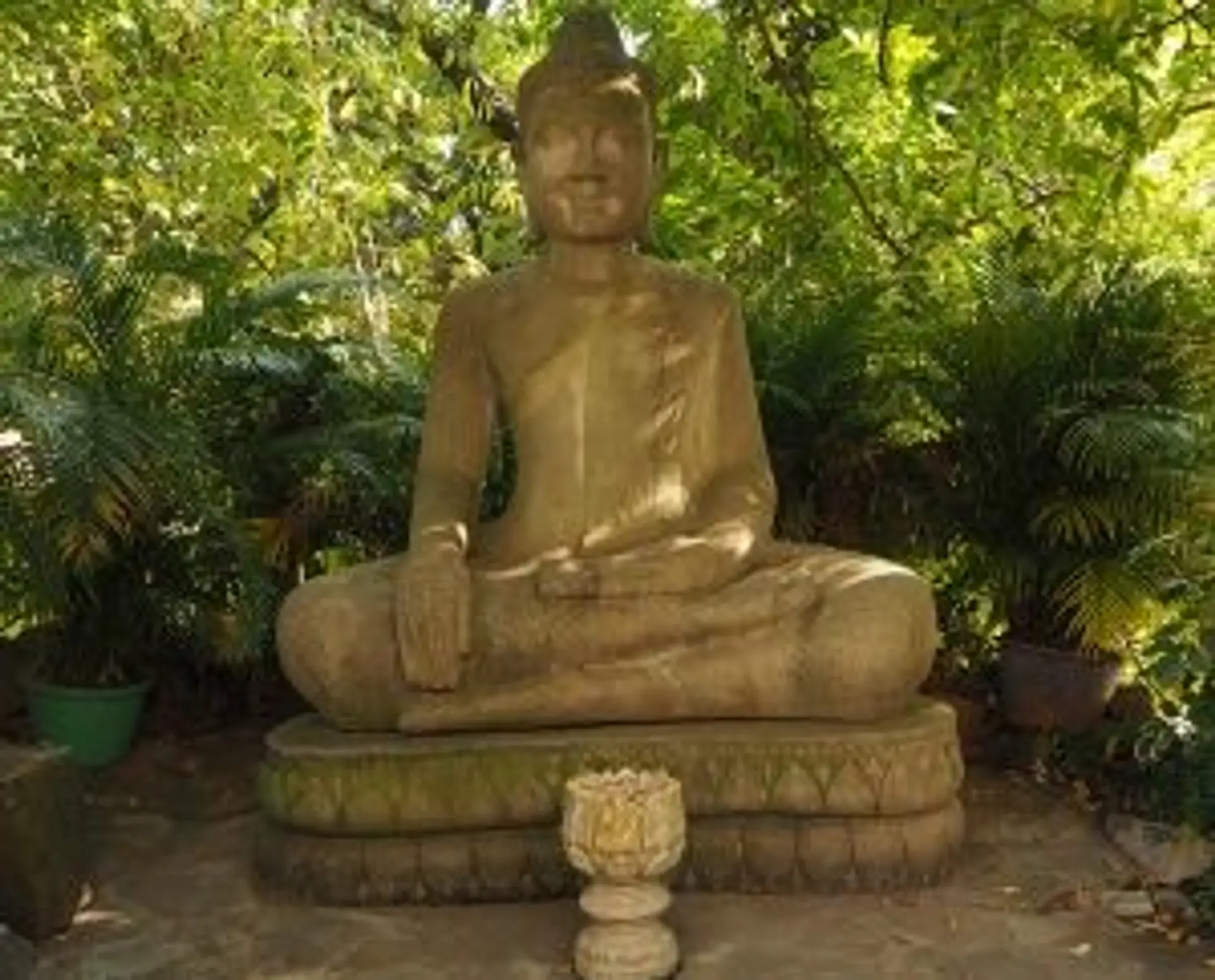
Cambodia religion is overwhelmingly Buddhist. At the 2024 national census, 96.5% of people identified as Buddhist, and Theravada Buddhism is the state religion under the constitution. Muslims make up 2.6% of the population, Christians 0.3% and others 0.5%.
Hinduism came first and left its mark on Angkor, and older spirit beliefs still sit alongside Buddhism in everyday life. This page, part of our Cambodia travel guide, explains each tradition and what it means when you step into a pagoda, a Cham village or a festival.
Religion in Cambodia: the 2024 census figures
Buddhism is the main religion in Cambodia, followed by 96.5% of people at the 2024 census. Theravada Buddhism is the state religion, written into the constitution.
| Religion | Share of population (2024 national census) |
|---|---|
| Buddhist | 96.5% |
| Muslim | 2.6% |
| Christian | 0.3% |
| Other | 0.5% |
These are the census figures as reported by Wikipedia. Older sources quote anywhere from 93% to 97% for Buddhists: the US State Department's 2023 report, for example, cites 2022 ministry data of about 93%. The census is the latest count, so it is the one used here.
The constitution dates from 1993 and was last amended in 2008, according to the ARDA national profile. The national motto, "Nation, Religion, King", puts religion in the middle, between the country and the crown.
Buddhism in Cambodia: Theravada and daily merit
Theravada, the state religion
Theravada is the oldest school of Buddhism, often called the "Lesser Vehicle", and it is the school followed across mainland Southeast Asia. About 95% of Cambodia's Buddhists follow it, according to the US State Department's 2023 report on international religious freedom. Wikipedia dates its status as state religion to the 13th century, with a break under the Khmer Rouge.
Pagodas and merit
The pagoda is more than a place of worship. It is where a village marks birth, marriage and death, where neighbours help each other and where respect for elders is passed on. Daily life is shaped by religious merit, which people build through offerings, by taking part in ceremonies and by helping the monks. That is why you will see monks collecting food in the morning and families arriving at the pagoda with gifts.
Visitors are welcome in most pagodas. Take off your shoes at the door, cover your shoulders and move calmly. A short visit goes a long way when these codes are followed.
Buddhism and animism
Many Cambodians are Buddhists and animists at once. They believe in spirits, good or bad, protective or destructive. The most familiar are the neak ta, guardian spirits of the land, who get offerings at small shrines. Household altars, mediums consulted to appease souls, and belief in reincarnation and in the soul of every living being or object all shape behaviour, including a good deal of superstition that is still very much alive.
The census has no separate animist category, so there is no percentage to give. Because so many people practise both, the shares in daily life are not additive: a family can be counted as Buddhist and still honour the neak ta of its village.
Angkor Wat religion: from Hindu to Buddhist
Hinduism was the main religion of Cambodia from the 1st century to roughly the end of the 12th, then Mahayana Buddhism took over at the royal court, and Theravada followed as the state religion. The Angkor Wat religion story runs through all three.
- 1st century to about the end of the 12th century: Hinduism is the main religion. Many bas-reliefs at Angkor Wat recount episodes from the Mahabharata, the great Hindu epic.
- Late 12th to early 13th century: under Jayavarman VII, the royal faith of Angkor turns to Mahayana Buddhism. The boundary between the schools stays fluid, so temples carry both Hindu and Buddhist imagery.
- From the 13th century: Theravada Buddhism becomes the state religion.
- Today: Cambodia is overwhelmingly Buddhist, yet some rituals and ceremonies still include elements from Brahmanism.
Mahayana, the "Greater Vehicle", appeared in the first century and took root in China, the Himalayas and Central Asia. In Cambodia it is historical rather than living. You see it in the architecture and iconography of the Angkor era, a period of religious transition, not in present-day worship.
So Cambodia did not drop one faith overnight. The Hindu heritage is still visible in stone and in some ritual, and that answers a common question: Hindu influence runs deep in Khmer culture, even though the census lists Buddhism as the faith of almost everyone. No Hindu share is given in the figures above.
Our Angkor Wat visitor guide covers the practical side. A local expert can walk you through the bas-reliefs and explain who built what and for which faith.
Islam and Christianity in Cambodia
Cham Muslims
Muslims account for 2.6% of the population at the 2024 census, and most belong to the Cham ethnic group. The Cham have lived in the Khmer kingdom for about five centuries, with a strong presence in the Kampong Cham region. Community and ARDA estimates run higher than the census, at 500,000 to 700,000 people, or 3.5% to 5%.
Islam sets the rhythm of life in Cham villages: the call to prayer, Koranic teaching, and festivals such as Eid. Mosques, recognisable by their sober architecture, are centres of community life and mutual help. The Cham keep their identity alive through their language, the veil worn by women and their own religious calendar.
Christians
Christians make up 0.3% of the population at the 2024 census. They form small communities, Catholic and others, centred on their parishes.
Religious festivals in Cambodia
The calendar is marked mainly by Buddhist festivals. Pchum Ben is the festival of the ancestors. Visak Bochea commemorates the birth and enlightenment of the Buddha. The Cham observe Ramadan, and Christian communities hold their own celebrations in the parishes.
Across all of them the pattern is similar: families gather, offerings are made, processions pass in bright colours and the whole community feels it belongs. Dates move from year to year, so check the current calendar when you plan. Our local experts can time a trip around Pchum Ben or a Cham celebration.
Plan your trip with a local expert
Temples and pagodas mean more when someone explains the faith behind them. Tell us what you want to see and we'll design a tailor-made trip to Cambodia with a local expert, or send your request here.
Cambodia religion FAQ
Coexistence is described as peaceful and respectful, and communities sometimes share rituals that mark the great stages of life. A single family may have its house blessed by a monk, honour a local spirit at a festival and attend a Christian or Muslim ceremony. The Catholic Church even aligns All Saints' Day with the Khmer tradition of remembering the dead.
Yes, in law. The constitution provides for freedom of belief, as long as it neither interferes with the beliefs and religions of others nor violates public order, according to the US State Department's 2023 report on international religious freedom. Buddhism is the state religion, but that does not restrict what individuals believe.
Shanti Travel recommends it, even if only as a visit to a pagoda during Pchum Ben or to a Cham village during a celebration. It is the best way to feel what holds communities together. Go as a guest, follow the usual pagoda dress, and ask your local expert to arrange the introduction.