Georgian Food: Dishes, Wine and Regions to Try
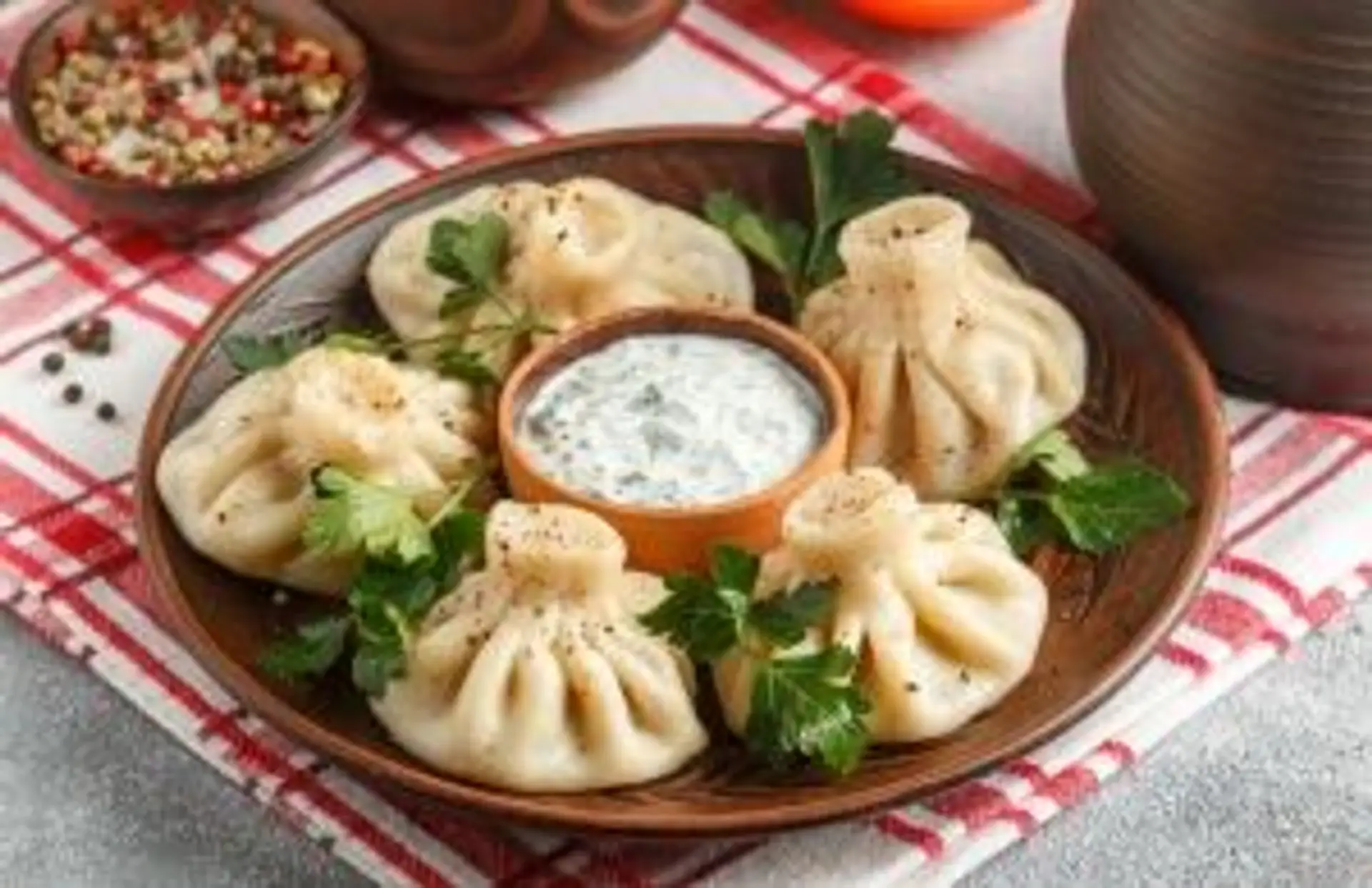
Georgian food is a regional cuisine built on bread, cheese, walnuts, fresh herbs and wine. It blends flavours from the Middle East, Eastern Europe and Western Asia, with a quieter but lasting Russian imprint, and its two best-known dishes are khachapuri, the cheese bread, and khinkali, the large dumplings. This guide covers what to order, where each dish comes from, how wine fits in and what a meal costs in Tbilisi. The feast itself, the supra, and its etiquette have their own page: see the Georgian culture guide.
What Georgian cuisine is (and where it comes from)
Georgian cuisine is a mix of Middle Eastern, Eastern European and Western Asian influences, shaped by Georgia's long history and stamped differently by each region. Fresh herbs, walnuts, cheese and bread run through almost every meal.
Nothing about it is fixed. The cooking is alive and still evolving, and each region puts its own signature on a dish. That regional spread is the real answer to "where is Georgian food from": it comes from the whole country, and from everyone who passed through it.
What sets the food apart is the seasoning. Cooks use herbs by the handful: coriander, tarragon, parsley and mint. The spices are chili, garlic and fenugreek. Together they give Georgian dishes their identity and balance the richness of both meats and vegetables.
Sauces do a lot of the work, and four are worth knowing before you sit down:
- Tkemali: a tangy green plum sauce.
- Adjika: an aromatic chili paste typical of the Caucasus.
- Satsebeli: a spicy tomato sauce.
- Narsharab: a reduction of pomegranate juice.
Pkhali, vegetables with walnuts and herbs, shows the same logic on a plate: chopped greens made rich with nuts and lifted with fresh herbs. It is a good example of the aromatic creativity behind the cuisine.
Khachapuri: the cheese bread, by region
Khachapuri is a Georgian cheese bread, often called the national dish, and every region has its own version. Adjaruli is boat-shaped with cheese, butter and a raw egg; Imeruli is round and flat; Megruli adds cheese on top.
The bread and the cheese stay constant. The shape changes with the region, which is why a single word covers a thousand variations.
Adjaruli was born in Adjara, on the Black Sea. The bread is shaped like a boat, filled with cheese and finished with butter and a raw egg. It is the one on the postcards, and in Tbilisi it costs about ₾15-30 as of August 2026, depending on the restaurant and the size.
Imeruli comes from Imereti in the west. It is the round, flat version, and its filling is imeruli cheese, a mild cheese from the same region.
Megruli is the richer cousin. Cheese goes inside and is added again on top, so the surface turns golden and bubbly.
For a first order, pick Adjaruli for the spectacle or Imeruli for something lighter. Each region has its signature recipe, so if you meet an unfamiliar name on a menu, ask what is inside.
Khinkali and other dishes to order
Beyond khachapuri, a short list of dishes covers most Georgian menus. The table sets these Georgian dishes side by side before the details.
| Dish | What it is | Where it is strongest |
|---|---|---|
| Khinkali | Large dumplings with meat, cheese or potato | Mountain regions (Svaneti, Mtskheta) |
| Lobio | Beans with walnuts, garlic and herbs, hot or cold | Everywhere |
| Mtsvadi | Grilled meat skewers | Everywhere |
| Odjakhuri | Meat, potatoes and mushrooms cooked in a pot | Everywhere |
| Ajapsandali | Stew of eggplant, peppers and tomatoes | Everywhere |
| Chakapuli | Lamb stew with herbs and green plums | Across the country |
| Chkmeruli | Chicken simmered in milk and garlic | Kakheti |
| Lobiani | Bread stuffed with beans and bacon | Feast of Saint Barbara |
Khinkali
Khinkali are large Georgian dumplings, filled most often with meat but also with cheese or potato. You eat them by hand, sucking out the fragrant juice inside.
They belong to the mountain regions, where hearty food makes sense. Meat is the classic filling, and the cheese and potato versions suit anyone who wants something lighter. The juice collects inside as the dumpling cooks, so the first bite deserves care.
In Tbilisi they cost about ₾2-3 each as of August 2026, and a table usually orders them by the half dozen or more.
Stews, grills and sides
Georgian cooking is happy in a pot. Chakapuli is a lamb stew with herbs and green plums, and the plums give it a sour edge. Odjakhuri is meat, potatoes and mushrooms cooked together in a pot.
Lobio is beans cooked with walnuts, garlic and herbs, served hot or cold, and variants turn up everywhere. Ajapsandali is its vegetable neighbour on the menu: a stew of eggplant, peppers and tomatoes, often brightened with fresh herbs.
On the grill, mtsvadi is the skewered meat. Chkmeruli goes another way: chicken simmered in milk and garlic, a speciality of Kakheti in the east.
Then lobiani, bread stuffed with beans and bacon, eaten especially on the feast of Saint Barbara. If khachapuri is the cheese bread, lobiani is its bean cousin.
Bread and cheese: what's on every table
Bread, or puri, is sacred in Georgia. It sits on the festive table and the everyday one, and it systematically accompanies cheese and grilled meat.
Shotis puri and tonis puri are baked on the scorching walls of a clay oven, the tone. It is an ancestral know-how, sometimes accompanied by the bakers' songs. Other breads show the regional range:
- Lavashi: a thin flatbread.
- Mchadi: a cornbread patty.
- Nazuki: a sweet bread with raisins.
The cheeses are just as interesting. Georgian cheese is rarely eaten on its own: it features in many dishes, brings texture and indulgence to the cooking, and is a genuine source of heritage pride. Four names are worth learning:
- Sulguni: an aromatic, stretchy cheese from Mingrelia (Samegrelo), enjoyed fresh, smoked or fried.
- Imeruli: the mild Imereti cheese, essential for khachapuri.
- Guda and tenili: artisanal mountain specialities, true witnesses to the terroir.
Georgian food by region
Georgia is small, but the plate changes as you cross it. The table pulls together which dishes belong to which part of the country.
| Region | Signature | Note |
|---|---|---|
| Adjara (Black Sea) | Khachapuri Adjaruli | Boat-shaped bread with cheese, butter and a raw egg |
| Imereti (west) | Khachapuri Imeruli and Megruli | Round and flat; Megruli adds cheese on top |
| Samegrelo (Mingrelia) | Sulguni | Stretchy cheese, fresh, smoked or fried |
| Kakheti (east) | Chkmeruli and wine | Chicken in milk and garlic; the reference vineyard region |
| Mountain regions (Svaneti, Mtskheta) | Khinkali | Large dumplings, mostly meat |
Some dishes ignore the map. Lobio, mtsvadi and odjakhuri appear everywhere, so you can order them on arrival and judge the cook rather than the region.
The table also works as a route: Black Sea for Adjaruli, Imereti for the round breads, Kakheti for wine. Want to plan a route around these regions? A local expert can build it with you: send a trip request.
Georgia is not the only table in the Caucasus. For a comparison with its neighbour, read the guide to Armenian food.
Georgian wine and chacha
Georgia is the cradle of viticulture, with nearly 8,000 years of winemaking history. Its method of fermenting wine in buried clay jars, called qvevri, has been on UNESCO's Intangible Cultural Heritage list since 2013.
The jar goes into the ground and the wine matures there. UNESCO describes the practice on its qvevri winemaking listing.
At home, wine is part of daily life. Homemade wine is everywhere in Georgian households: every meeting, every meal and every reunion is an excuse to share a glass, a symbol of friendship and peace. Kakheti remains the absolute reference of the Georgian vineyard, and it would be a pity not to taste different vintages on a tour in Tbilisi or in the rural villages too. If you want a tasting in Kakheti built into a trip, a local expert can add one to your route.
Chacha is Georgian grape brandy. It is strong, often homemade, and sometimes reputed for its medicinal virtues.
Wine is also tied to the toast, led by the tamada at a supra. That ritual deserves more room than a food guide has, so it lives in the Georgian culture guide.
Drinks without alcohol
- Artisanal lemonades: tarragon, pear, quince or cherry, perfect for picnics and summer days.
- Mineral waters: Borjomi and Nabeghlavi, very popular in the country, at the table or during spa cures.
- Tea: often present during family conversations and relaxed moments.
A first Georgian meal: what to order
Georgian menus are long, and ordering one dish each is the usual mistake. The food is made to be shared, with dishes laid out in the centre of the table, so order for the group and let the plates arrive in waves.
A sensible first round for four people looks like this:
- Cold starters: pkhali, a plate of cheese and a basket of puri to mop up the sauces. Salads and vegetables in walnut sauce also belong to this part of the meal.
- One khachapuri: Adjaruli if you want the show, Imeruli if you want to save room.
- A portion of khinkali: meat for the classic taste, cheese or potato for variety.
- One grill or stew: mtsvadi, chakapuli or chkmeruli, with tkemali or adjika on the side.
- A bottle of wine, or a lemonade if you prefer to stay dry.
Add lobio or ajapsandali if the table includes vegetarians. Finish with fruit, or with a slice of medoki if the menu offers it. Dishes keep coming over the course of a meal, so start small and reorder rather than covering the table at once.
One practical note on the menu itself: spellings vary a lot between restaurants because Georgian is written in its own alphabet. Khachapuri, khinkali and chakapuli all appear in several forms in Latin letters, and the pictures or the waiter will settle any doubt.
Sweets and desserts
Desserts hold a more modest but still essential place. Walnuts, honey and grape juice recur in nearly all of them.
- Churchkhela: walnuts coated in grape juice, an energy-rich specialty prized during the festive season and not to be missed in the markets.
- Gozinaki: a honey and walnut treat served at New Year.
- Pelamushi: a grape juice pudding, often shared at family gatherings.
- Korkoti: a sweet porridge prepared at Easter or for commemorations, made from wheat, honey and raisins.
- Medoki: a honey cake.
Fresh fruit or homemade jams naturally round off a meal, sometimes with a slice of medoki.
What Georgian food costs in Tbilisi
No official price list exists for restaurant meals, so the figures below are indicative ranges for Tbilisi as of August 2026.
| Item | Price (as of August 2026) |
|---|---|
| Adjaruli khachapuri | ₾15-30 |
| Khinkali, each | ₾2-3 |
| Mid-range dinner with wine in the centre, per person | ₾45-80 |
Eat your way through Georgia with a local expert
A trip built around food works best when it follows the regions: cheese bread on the Black Sea, dumplings in the mountains, wine in Kakheti. Shanti Travel's local experts bring more than 20 years of expertise on Georgia to these routes and design them with you.
Being invited to a Georgian table is receiving an honour, and the hospitality is so generous that travellers will rarely feel like strangers. Tell us what you would like to eat and a local expert will help shape the trip: send a trip request for Georgia. To see the country first, start with the Georgia trip page.
Georgian food FAQ
Not much. Georgian cooking has more in common with the Caucasus, the Middle East and Eastern Europe, even though it is popular across the post-Soviet states. Its signatures are walnut sauces, pomegranate, sour plums and heaps of fresh herbs, flavours you will rarely meet in a Russian kitchen, which leans on cabbage, potatoes, rye and sour cream.
Work while it is hot. Stir the egg and butter into the melted cheese until it forms a rich dip, then tear off the doughy edges of the boat and dip them in. It is a hands-on dish, and sharing one between two people is normal.
Yes, with some care. Beyond the cheese breads, look for badrijnis borani (fried eggplant with spices), shechamandi (a vegetable soup) and sorrel and walnut soup, all listed as vegetarian on Wikipedia's page on Georgian cuisine. Ask about meat stock when ordering soups. Vegans will find the choice thinner, since cheese and eggs are everywhere.