Armenian Food: What to Eat in Armenia
Armenian food is built on grilled meat (khorovats), stuffed vine leaves (tolma), lavash flatbread baked in a clay oven, fresh herbs, cheese and yogurt. It sits somewhere between Mediterranean and Eastern cooking, with Greek, Turkish, Lebanese, Iranian and Russian touches. Expect a table that fills fast, plates passed around, and a host who will not let your glass empty.
This guide covers the dishes to try first, how an Armenian meal unfolds, what people drink, and where to eat on a trip to Armenia, from Yerevan's covered market to village guesthouses.
What makes Armenian cuisine different
Armenian cuisine has its own identity while borrowing from its neighbours and former rulers. The Greek, Turkish, Lebanese, Iranian and Russian influences are all there, and the result is a mix of Mediterranean accents, Eastern flavors and a fine touch with herbs.
Traditional Armenian food centres on grilled meat, stuffed leaves, flatbread, fresh herbs, cheese and yogurt. The land is fertile, so the quality of the fruit, vegetables, herbs and meat stands out. The seasons decide what lands on the plate, and dishes stay tied to the local terroir.
Armenia has no coastline, which is why meat and dairy dominate and fish is the exception. Trout and sturgeon are the most common species, usually grilled and served with rice and vegetables.
That is the short version of what Armenians mean by good eating: ingredients at their best, cooked simply, and put in the middle of the table for everyone. The rest of this guide shows what that looks like dish by dish.
If you know Greek or Lebanese food, plenty will feel familiar: stuffed leaves, flatbread, small starters set out to share and syrup-soaked filo pastries. The difference is in the weight of the herbs, the central role of lavash and the importance of the grill.
Armenian dishes to try first
Here are the Armenian dishes our local experts would put on a first-timer's list.
| Dish | What it is | When you meet it |
|---|---|---|
| Khorovats | Meat skewers grilled over embers | Celebrations and big meals |
| Tolma | Vine or cabbage leaves stuffed with minced meat and rice | Starter on most menus, centrepiece at big occasions |
| Lavash | Thin flatbread from a tonir oven | On every table |
| Khash | Beef-feet stew | Winter |
| Khashlama | Beef and potato soup | Home cooking |
| Ghapama | Stuffed pumpkin | End-of-year holidays |
| Tjvjik | Beef liver with peppers and tomato | Typical of Armenian homes |
| Lahmajoun | Thin dough topped with minced meat and herbs | Bakeries and casual lunches |
Khorovats, the grill
Khorovats is the dish people mean when they talk about Armenian barbecue: skewers of pork, beef, lamb or chicken cooked over embers. It appears at celebrations and big meals, and it's usually wrapped in lavash with raw vegetables and herbs. If you eat one meat dish in the country, make it this one. Expect the smoke, the char and a pile of bread to go with it.
Tolma (dolma)
Armenian dolma, called tolma, is made from vine or cabbage leaves wrapped around minced meat, rice and spices. It's a standard starter on restaurant menus and also the centrepiece of big occasions. Vegetarian versions are common. Cooks who bake it at home keep it at 150 °C (300 °F) for 50 to 60 minutes.
Lavash and other breads
Lavash is the ancestral bread, baked against the wall of a tonir, a clay oven sunk into the ground. It sits on every table, and diners tear it to scoop up food or wrap grilled meat and fillings. Making it is a social ritual, often done by several people at once.
Yes, it's protected: lavash has been on the UNESCO Intangible Cultural Heritage list since 2014. Pita bread appears too, and the variety of hand-made breads says a lot about rural customs. In villages, the bread on your table may well have been shaped by the family that is feeding you.
Soups, stews and home cooking
Home cooking is where Armenian food gets comforting. Khash, the beef-feet stew, is a winter dish and an acquired taste, so order it with a local who can tell you how it's eaten. Khashlama is gentler: beef and potatoes cooked slowly. Ghapama is a festive pumpkin dish, usually prepared for the end-of-year holidays.
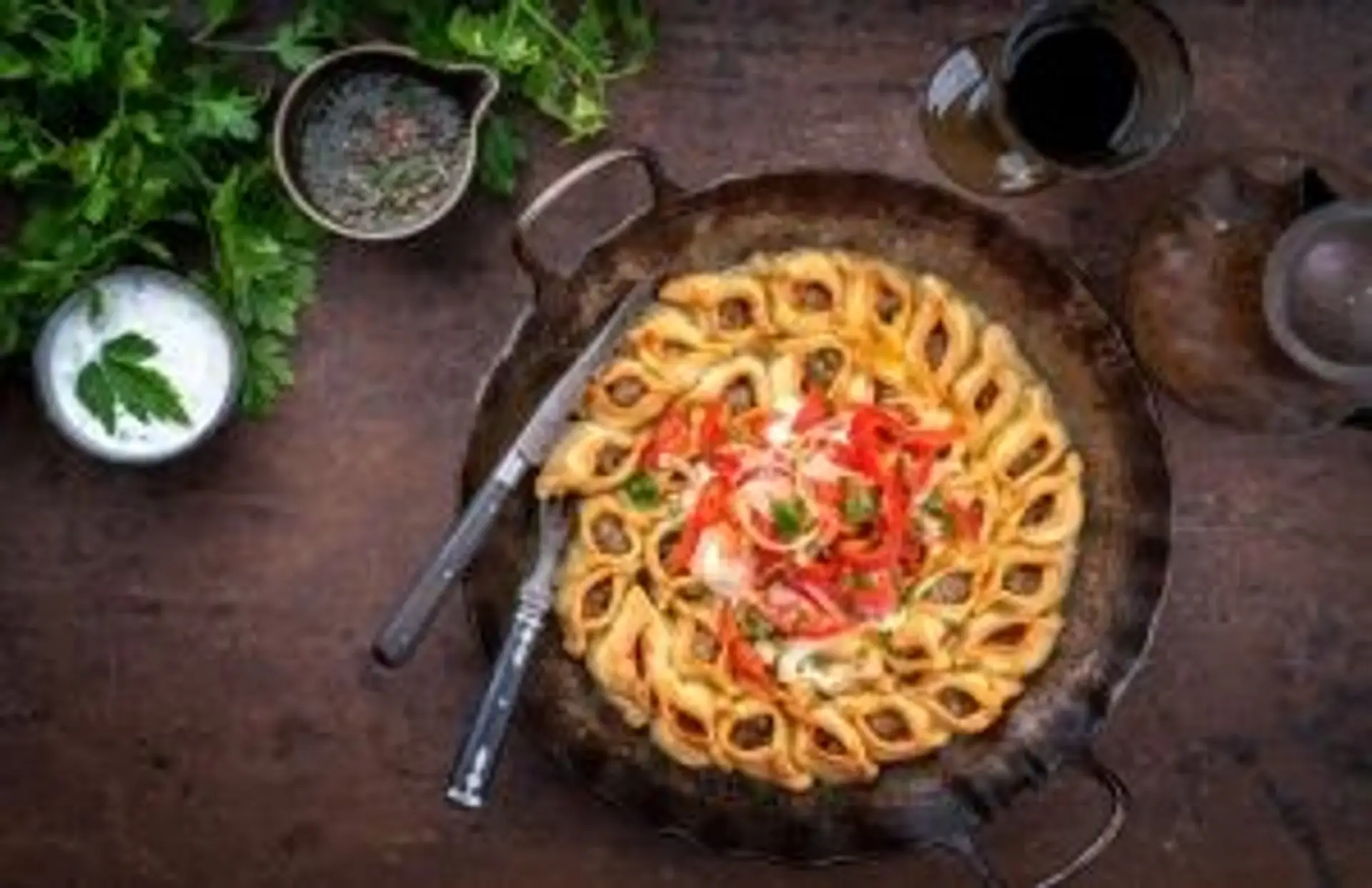
Tjvjik, beef liver sautéed with peppers and tomato sauce, is typical of family kitchens. Keftas (spiced meatballs) and manti, a stuffed-dough dish, are common, and moussaka is adapted to local taste with fresh herbs. Lahmajoun, the "Armenian pizza", is a thin dough with minced meat, vegetables and herbs: cheap, quick and easy to find.
How an Armenian meal works
The meal reflects the country's reputation for generosity. The philosophy of hospitality says you offer "more than you possess", so the table is laid generously, and a good table is one where you can no longer see the cloth.
It starts with cold dishes: vegetables, salads, cheese and bread. Hot dishes follow, then sweets and coffee. Food is shared, and the host makes sure everyone has enough. Refusing a second helping takes some diplomacy. A fair rule: pace yourself at the cold starters, because the hot dishes are still to come.
Toasts shape the rhythm. Glasses are raised to family, friends and life, and at weddings and festivals the meal gets louder: songs, then a few dance steps. For dining manners and other local habits, read our guide to customs and etiquette in Armenia.
Starters, mezze and dairy
Raw vegetables take pride of place at the start of a meal: radishes, cucumber and tomato, often in a salad or simply served with bread. Herb and cheese salads, keftas and soups made with madzoun (yogurt) or chicken round out the table. Fresh coriander, parsley and dill lift almost everything. Stuffed vegetables give vegetarians plenty to eat. Dolma, or tolma, shows up here as well as among the hot dishes, which tells you how central it is to the table.
Cheeses and dairy
Pastoral farming gives Armenia a good range of dairy: fresh sheep's cheese, tchal (a braided cheese) and matsoun, a thick yogurt. Madzoun, as it is also spelled, ends up in soups as well as in the bowl. All of it is easy to find at markets, which is where to try the differences side by side.
What do Armenians eat for breakfast?
A typical Armenian breakfast is matsoun, cheese, fruit and bread. The same combination works as a snack during the day. Lavash with fresh cheese and herbs is a simple version you'll see in guesthouses.
Armenian desserts and sweets
Armenian desserts sit between East and West, and most are syrupy, nutty and very sweet.
- Pakhlava: layers of filo with walnuts, sugar, butter and syrup, the Armenian cousin of baklava.
- Kenafeh: angel-hair pastry with walnuts, butter and cheese, soaked in syrup.
- Halva: a confection of sesame paste or semolina, flavored with butter and dried fruit.
- Napoleon: a Russian-inspired cake, close to the French mille-feuille.
- Compotes and candied fruit: the usual companion to a cup of coffee.
Dried fruit, honey, cinnamon, rose water and orange blossom flavor many sweets. Pakhlava is ideal at the end of a meal or with Armenian coffee. Because these sweets are rich, locals tend to eat a small piece with a small cup, not a whole plate.
Traditional Armenian drinks
- Armenian brandy, often called Armenian cognac, is famous worldwide and aged in oak barrels.
- Wine comes from some of the oldest wine-growing lands, and it goes well with meat and cheese.
- Vodka and sometimes beer show up at celebrations.
- Tan is a refreshing, slightly salty yogurt drink, a good match for spicy dishes and prized for helping digestion.
- Armenian coffee is brewed in a jazzve, strong, aromatic and social, served at the end of a meal or during a break.
- Fruit juices such as apricot, pomegranate and peach are popular in summer.
Whatever is in the glass, each toast celebrates family, friendship and life. At a long table the toasts can come one after another, so accept a small pour and sip slowly. If you prefer something without alcohol, tan, juices and coffee are always on hand.
Where to eat Armenian food in Armenia
Markets. The GUM Market in Yerevan is full of regional produce: fruit from the garden, seasonal vegetables, local cheeses, dried fruit, artisan honey, spices and pastries. Small producers often let you taste before you buy, and it's the quickest way to understand the pantry behind the dishes. Come with an empty stomach and leave with cheese, dried fruit and honey for the road.
City restaurants. Many mix traditional cooking with modern touches. Some are decorated with local crafts, others have inner courtyards, and portions are generous and made for sharing.
Village guesthouses. This is where home meals happen, with a family welcome and recipes still passed down orally. Rural "gastro yards", built around agritourism, add friendly workshops where you learn traditional techniques.
A cheap meal. A cafeteria meal in Yerevan (lahmajoun, shawarma or tolma) costs 2,000 to 3,500 AMD, about 6 to 10 USD (5 to 9 EUR), as of May 2026.
Curious which tables are worth a detour? Our local experts can point you to the markets, guesthouses and gastro yards that suit your tastes when they plan your trip to Armenia.
Practical tips for eating in Armenia
- Seasonality: menus follow the seasons. Apricots arrive in summer, pomegranates in autumn and fresh herbs in spring. Plan around them and the same dish tastes different from one month to the next.
- Vegetarian options: meat is everywhere, but meat-free versions exist, so ask. Salads, cheeses, legumes and stuffed vegetables offer many alternatives.
- Food hygiene: tap water is drinkable in most cities, though many people favor bottled water or fill a bottle at local fountains. Choose busy places and well-cooked food. Markets are generally clean and fresh, but stay careful with street food.
- Tipping: leave about 10% of the bill in restaurants, unless service is included. For guides and drivers, tips are appreciated: about 10 to 15 EUR per day for a guide and 5 to 10 EUR per day for a driver (as of April 2026).
If you'd like to see how meals fit into a full route, look at this example Armenia itinerary.
In Armenia, food is a language of generosity. Come hungry, accept the second plate, and let the host win the argument.
Want to taste your way through Armenia? Tell our local experts what you like to eat and they'll build the route around it.
Armenian food FAQ
Not in the chili-hot sense. Armenian cooking uses plenty of spices and spice blends, such as cemen, a mix with fenugreek, paprika, cumin and garlic, but heat is not central. Locals describe the cuisine as spiced, not hot, and note that spices are not a big feature of everyday cooking, so chili burn is rarely the point of a dish.
Mostly not by default. Travellers report that most restaurant meat is not halal, though a few halal restaurants exist, and some cafes in Yerevan have introduced a dedicated halal menu. Check the venue before you book, and tell our local experts about dietary rules early so they can plan meals and guesthouse stays around them.