
Your expert on destination Philippines
Discover Bohol in one day: Philippine tarsiers, Chocolate Hills, the Loboc River, and lechon. A complete guide to the must-see island of the Visayas.
Bohol is easily visited during a trip to the Philippines, in one day from Cebu or Panglao, and that day alone is enough to etch the island in your memory for a long time. Let's be direct: in our eyes, this Visayas island is not the most beautiful or spectacular in the country. But it definitely deserves a detour because it is original and unique in its kind. Bohol concentrates in a compact area some of the archipelago's most distinctive experiences: meeting one of the smallest primates in the world in its natural habitat, contemplating a geological landscape without equal, and being surprised by a turquoise river winding through an almost surreal green jungle. Add to that a spit-roasted suckling pig, and you have the ingredients for a day that's hard to forget.
The day starts at the Bohol Tarsier Conservation Area, located in the municipality of Bilar, about forty kilometers from Tagbilaran. This sanctuary, managed by the Philippine Tarsier Foundation, is one of two legally authorized sites to host tarsiers on the island in a semi-natural environment, far from commercial setups that exploit the animal.
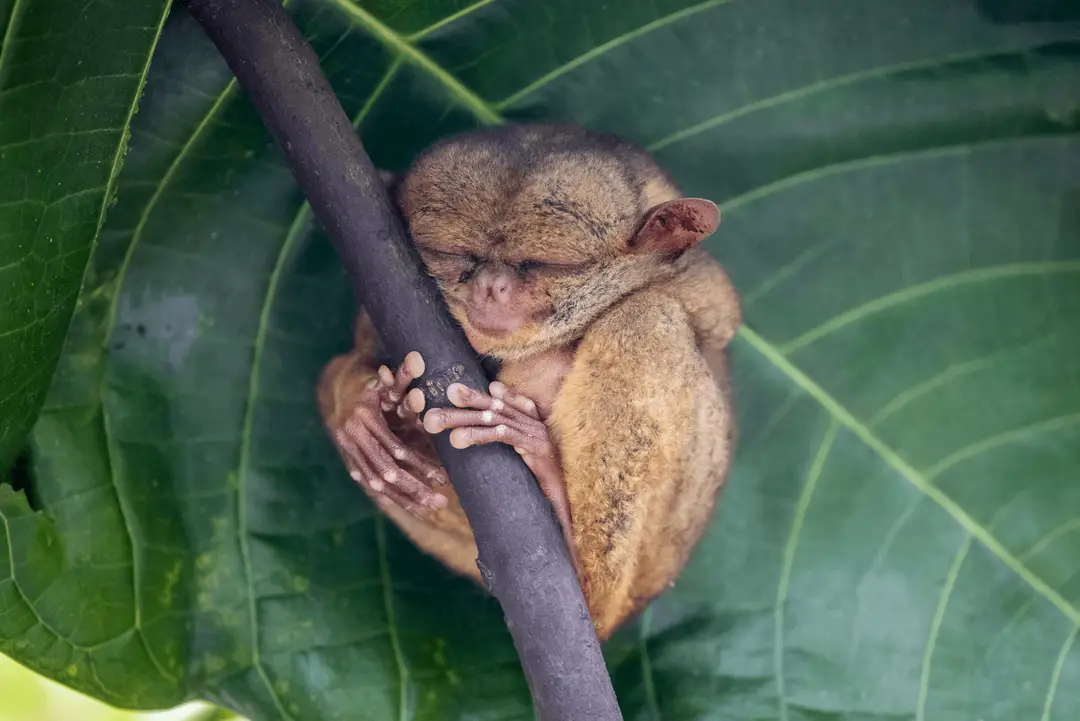
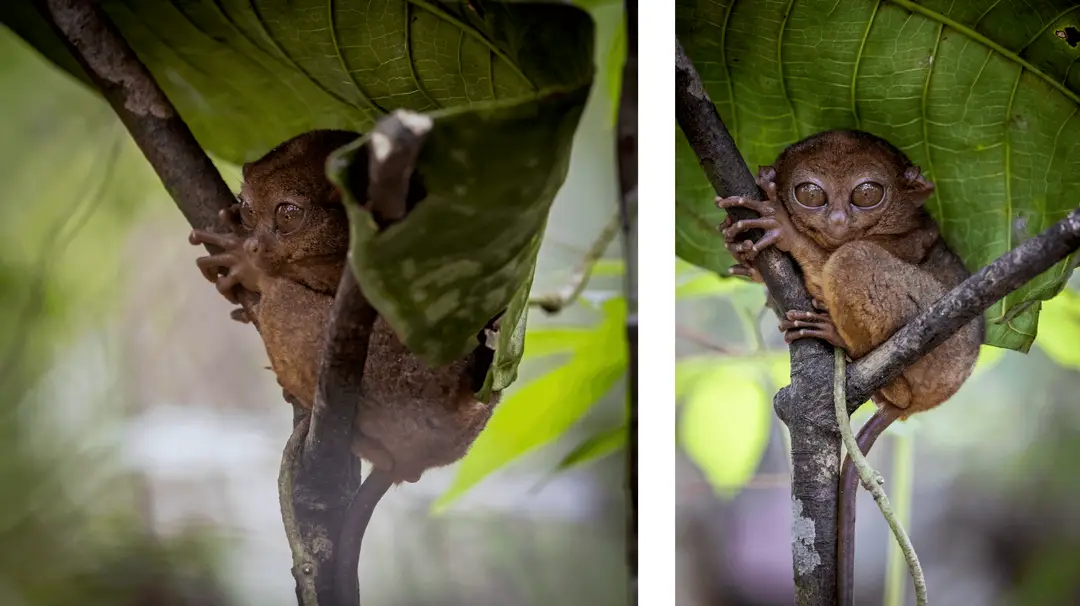
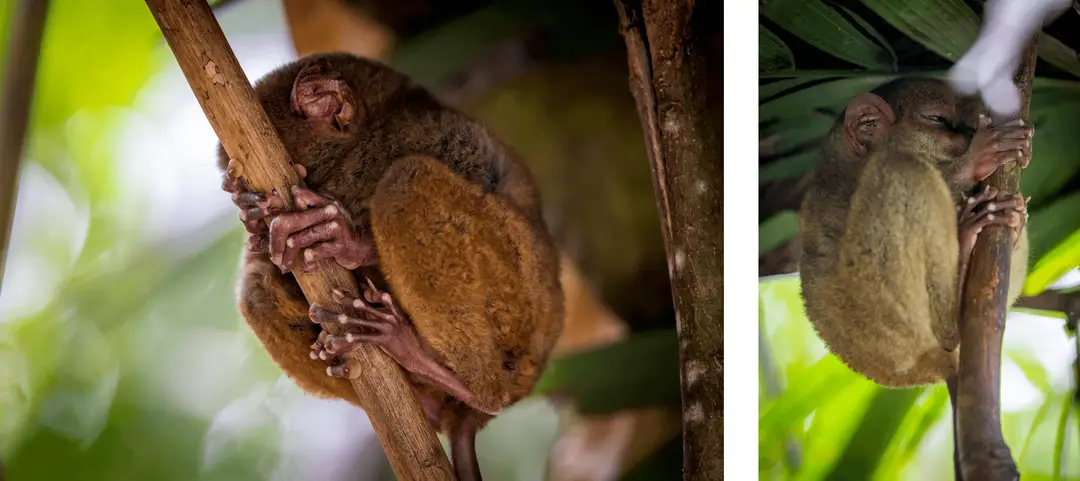
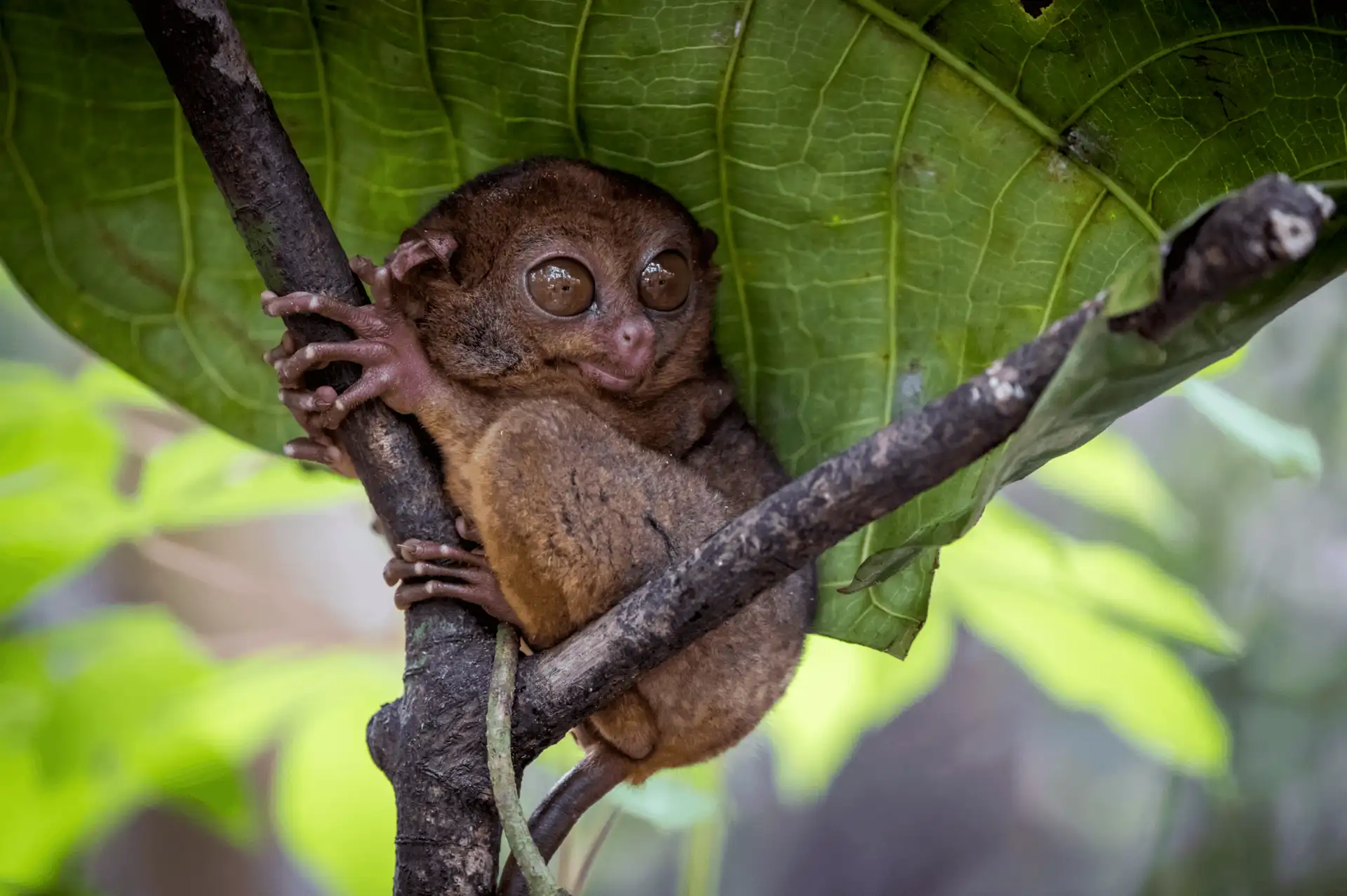
The Philippine tarsier is an extraordinary creature, hard to describe if you've never seen one. Imagine a creature that fits in the palm of your hand, with two enormous, bulging eyes (each eyeball is about 1.5 cm in diameter, roughly the size of its brain), slender fingers ending in tiny suction pads, and a head capable of rotating nearly 180 degrees in each direction because its eyes are too large to move within their sockets.
This nocturnal primate, whose lineage dates back 45 million years, feeds exclusively on insects caught at night with leaps that can exceed five meters, forty times its own length.
Visits are conducted in silence and without flash. The tarsier is extremely sensitive to noise and light. When stressed, it can injure itself intentionally by banging its head against branches: a self-destructive behavior that illustrates how harmful captivity is to it, and explains why choosing a responsible sanctuary is essential.
They are seen clinging to thin branches, perfectly still, eyes half-closed in daytime sleep. The emotion is real: seeing such a fragile, ancient, and strange animal just centimeters away, while fully respecting its space, is a rare privilege.
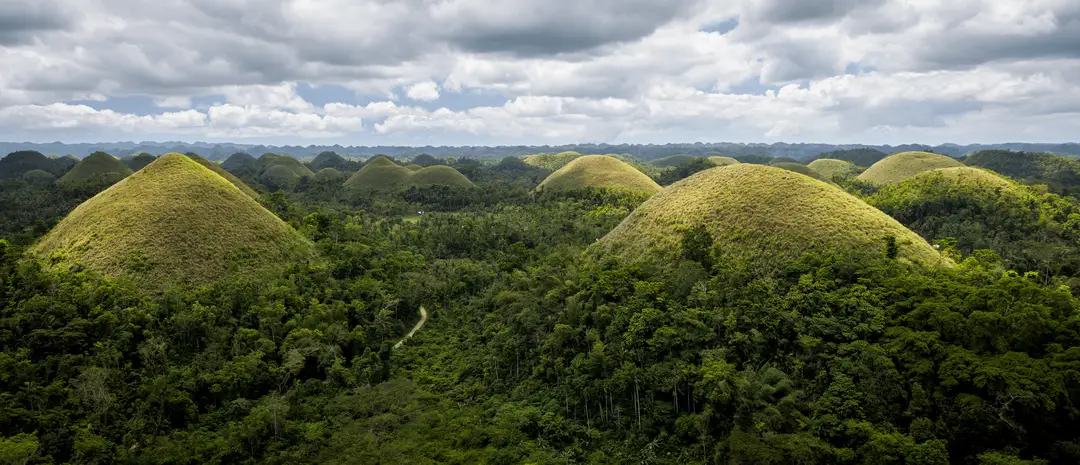
Next, head to Carmen, about a thirty-minute drive north. Here you'll find the viewpoint for the Chocolate Hills, accessible after climbing 214 steps. At the top, the view is breathtaking.
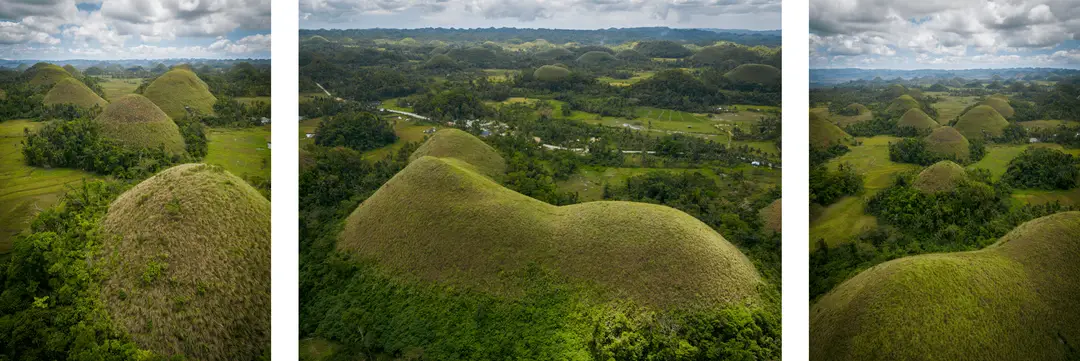
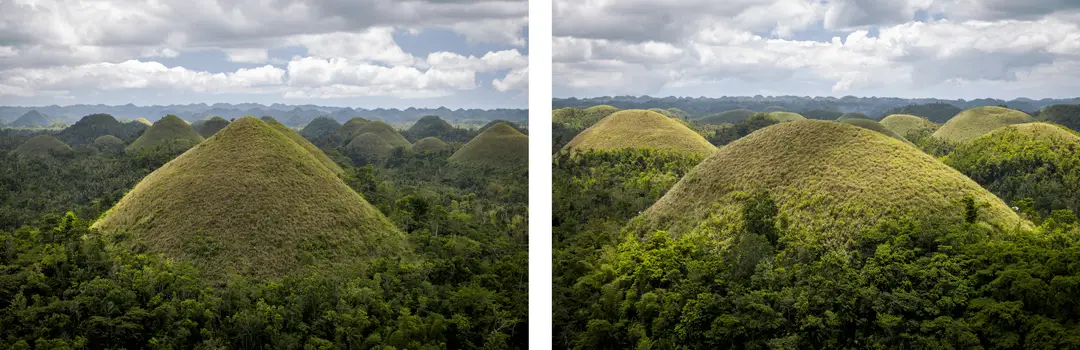
These are not one or two hills, nor even a dozen. There are 1,268 almost identical conical hills spread over more than 50 square kilometers, extending to the horizon in all directions. This world-unique landscape results from millions of years of marine limestone erosion shaping these strange geometric forms, almost impossible, as if out of a Jules Verne novel.
The Chocolate Hills have been part of the Bohol UNESCO Global Geopark since 2023.
Their name comes from their color: in the dry season, when the grass covering them browns and dies, they take on a chocolate hue that looks like a giant tray of pralines. In the green season, they remain uniformly green, just as beautiful, though less chocolaty.
Climbing 214 steps in the Philippine heat requires a real effort, but the reward is proportional: from the top, the 360-degree panoramic view embraces the entire site in all its vastness.
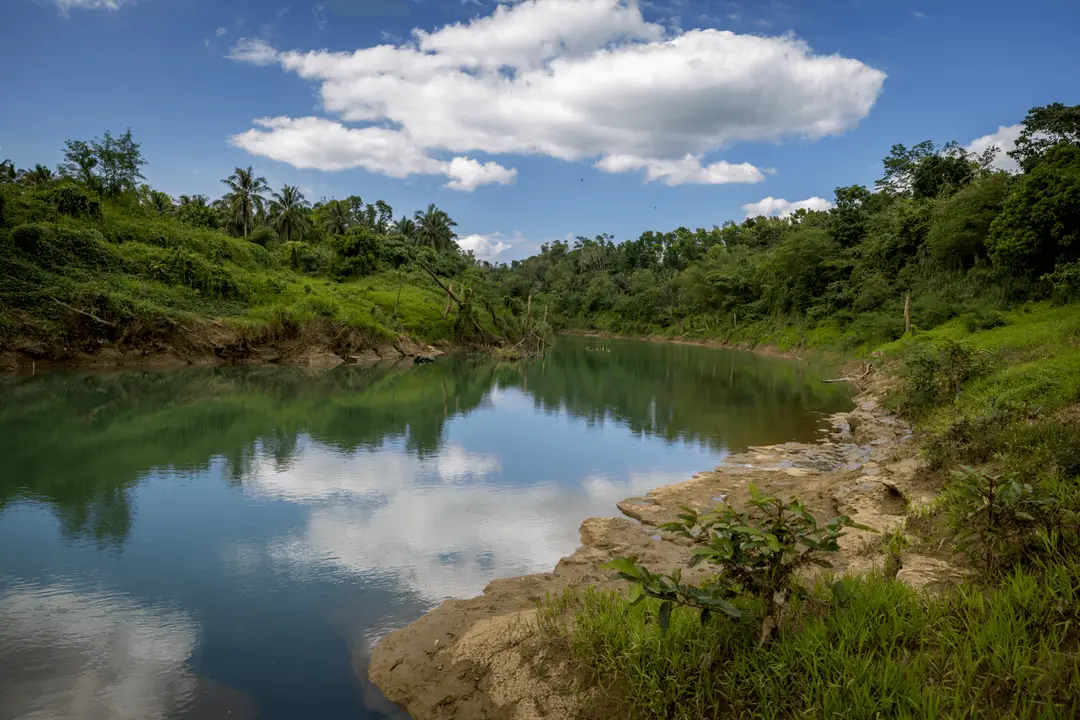
The most beautiful discoveries often happen when you get lost. Leaving the Chocolate Hills to head back south, we chose not to follow the main route and wandered on the island’s secondary roads. That’s how, around a bend, we stumbled upon a spot of striking beauty along the Loboc River.
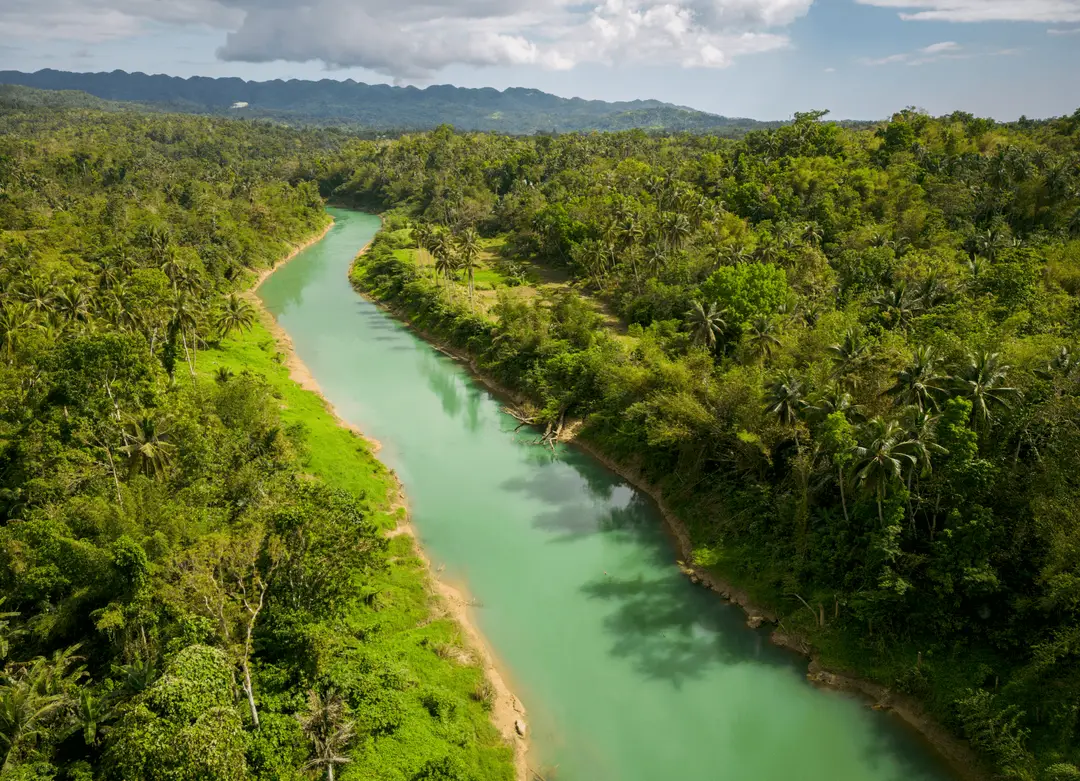
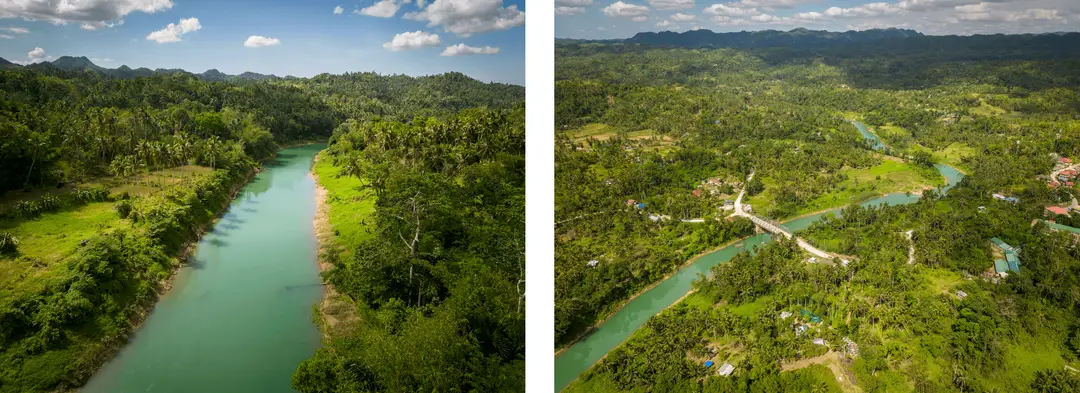
The water, an almost artificial intense turquoise, wound between banks covered in dense tropical vegetation. Trees leaning over the river, emerald reflections on the surface, silence broken only by birds and water ripples. No tourists, no signs, no floating restaurants: just the river, the jungle, and us. The kind of moment that organized tours don't plan but which remains the most vivid memory.
The Loboc River winds through the heart of Bohol, wrapped in dense tropical vegetation. Wide, calm, silent. These banks, discovered by chance, offer a moment of pure contemplation, unexpected and free. It's the kind of spot you find only when you allow yourself the unexpected.
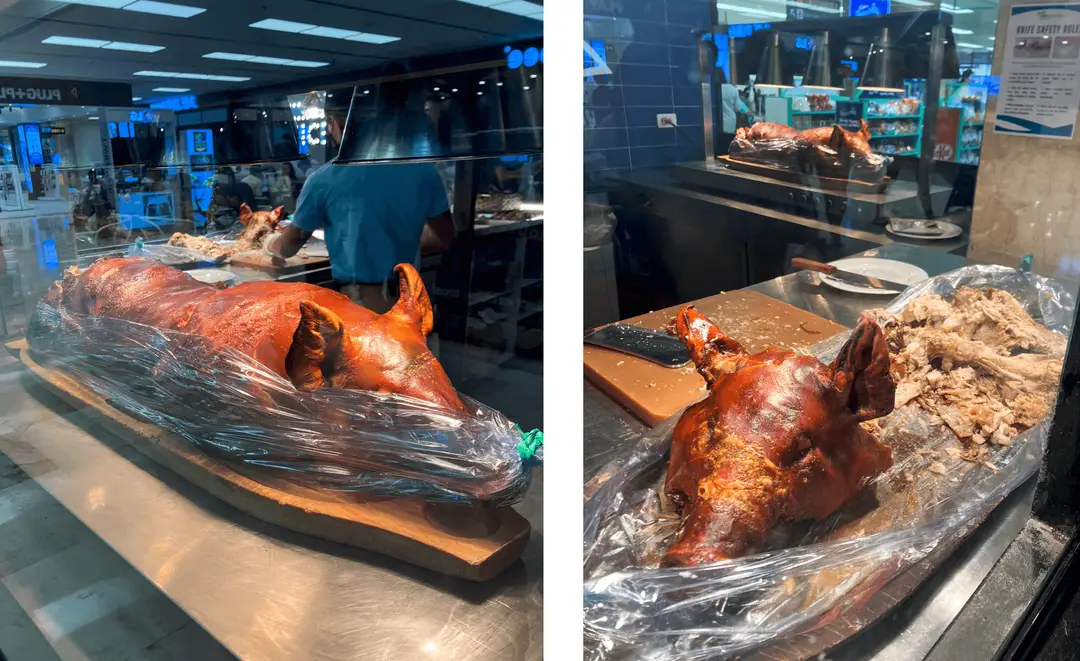
It's impossible to spend a day in Bohol without tasting lechon: a whole suckling pig slowly roasted on a spit, crispy skin and tender meat, a true Philippine culinary institution. While Cebu’s lechon is the most famous in the archipelago, stuffed with lemongrass, garlic, green onions, and chili before being charcoal-roasted for hours, Bohol’s version holds its own. It stands out with local herbs and a more rustic touch, served simply in the island’s restaurants, at various local markets, or on roadside stalls.
The crispy skin and flavorful meat make it the perfect companion to a cold San Miguel beer at day’s end. A meal worthy of an island that never does things halfway.
From Cebu City, a fast craft ferry connects to Tagbilaran port in about 2 hours (around 600 to 800 pesos). Direct flights also exist from Manila, about 1h15 flight. From Panglao, count 30 minutes by tricycle or car to Tagbilaran.
Yes. Tarsiers, Chocolate Hills, and the Loboc River can comfortably be seen in 6 to 8 hours by car or scooter. Most travel agencies offer guided tours from Tagbilaran or Panglao for around 1,500 to 2,000 pesos (25 to 35 euros), sometimes including entrance fees. But if you have more time, you can certainly stay longer to enjoy other attractions of the island.
Favor the Bohol Tarsier Conservation Area in Bilar or the Philippine Tarsier Sanctuary in Corella, both managed by the Philippine Tarsier Foundation. Avoid unofficial places that exploit animals in poor conditions.
Admission is around 80 pesos per adult (less than one euro), according to site prices, with a guided visit about 20 to 30 minutes long. Some visitors report slight variations depending on the guide or operator: budget between 80 and 170 pesos to be safe. The visit remains one of the most affordable on the island.
Bohol is pleasant year-round. To see the Chocolate Hills in their chocolate version, come in the dry season, from January to May. For lush green views, June to November is excellent.
A rented scooter from Tagbilaran or Panglao (about 400 to 500 pesos per day) offers the greatest freedom to explore at your own pace. Tricycles and cars with drivers are also available at negotiable prices.
Draw inspiration from our ideas for trips to the Philippines and create a tailor-made stay that suits you.
Subscribe and receive our travel inspirations and practical advice twice a month.

Wanting to share your trip with a group?