Your expert on destination Singapore
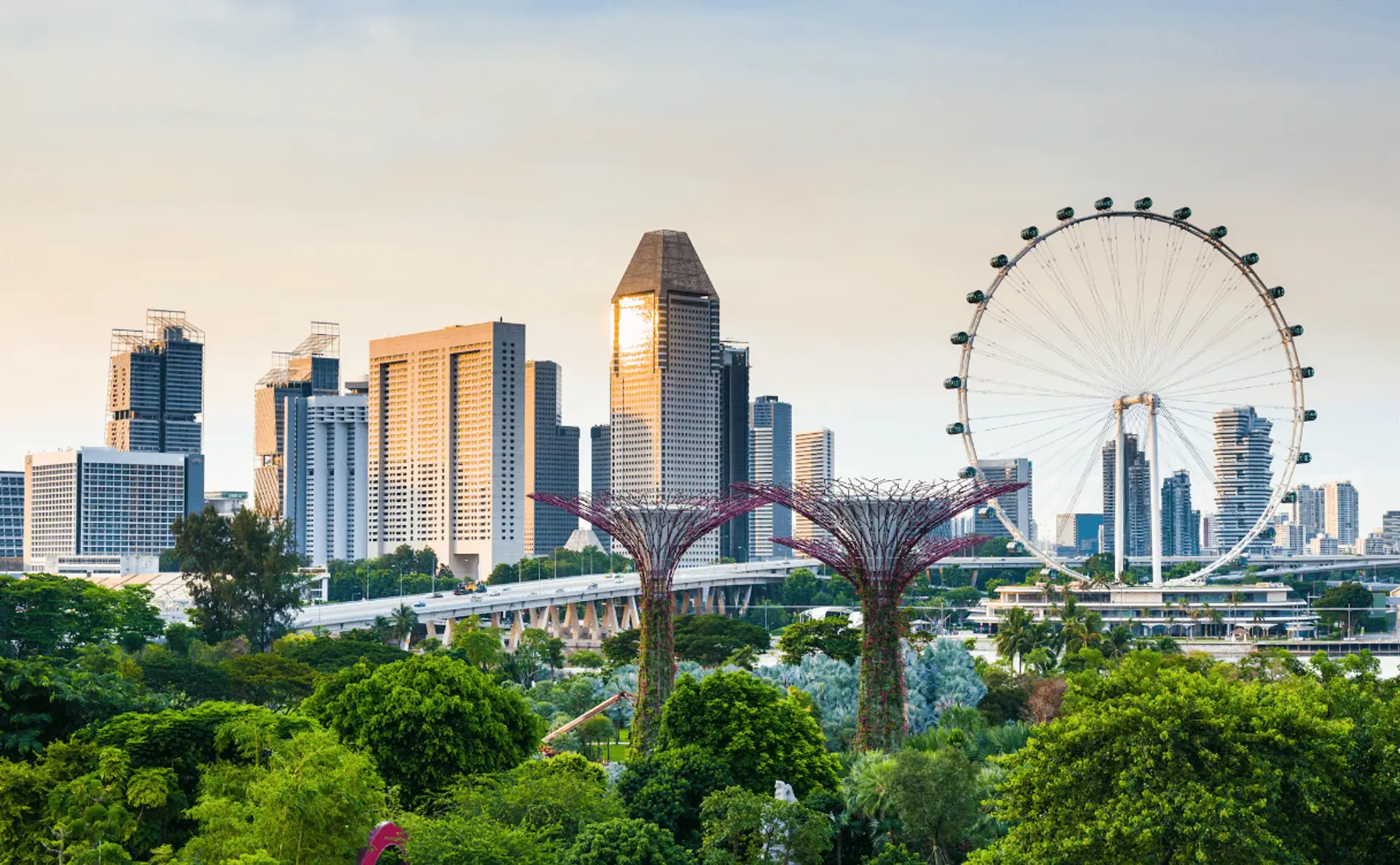
The best time to visit Singapore is February to April. February is the driest month, and temperatures stay between 24°C and 33°C (75-91°F) all year, so the heat is never the deciding factor. Rain is the real variable: November and December are the wettest months, though even then a downpour rarely keeps the city indoors for long.
Singapore never really closes, which means the right month depends on what you want from it. This guide covers the weather month by month, the monsoon calendar, festivals, the months to avoid and what to pack.
February to April is the best time to visit Singapore, with February the pick of the three. The city is at its driest and sunniest, which suits walking, parks and long days outdoors. The rest of the year is still very visitable if you plan around the rain.
| Best time | February to April |
| Best month | February (driest) |
| Wettest months | November and December |
| Busiest weekend | Formula 1 Grand Prix weekend |
| Typical stay | Our stays in Singapore generally last 5 to 12 days |
| Best for outdoor visits | February to April |
| Best for rainy-day plans | Museums, malls, food courts, shopping sales |
Not sure how long to stay? Our Singapore trips show how a few days can be arranged.
Singapore has an equatorial climate: 24-33°C (75-91°F) all year, humidity often above 80%, and sea water around 28-30°C (82-86°F), so swimming is pleasant in any month. The warmest months are May and June, according to the Meteorological Service Singapore. What changes through the year is the rain.
| Month | Temperature | Rain and humidity | Best for |
|---|---|---|---|
| January | 24-30°C (75-86°F) | High humidity, frequent showers | Chinese New Year, indoor sites |
| February | 24-31°C (75-88°F) | Driest month | Outdoor visits, parks |
| March | 25-32°C (77-90°F) | Rains gradually return | Walking the city, museums at midday |
| April | 26-33°C (79-91°F) | High humidity, more rain | Singapore Festival of Arts |
| May to September | 25-32°C (77-90°F) | Shorter storms | Strolls, Great Singapore Sale, National Day |
| October | 24-31°C (75-88°F) | Rains start to return | Deepavali, Little India |
| November and December | 24-31°C (75-88°F) | Heavy rain and humidity | Indoor sites, shopping, end-of-year lights |
Showers in Singapore are usually short. A downpour typically lasts 30 to 60 minutes, then the sun comes back. For long-term averages, see the Meteorological Service Singapore climate page.
According to the Meteorological Service Singapore, the northeast monsoon runs from December to early March and the southwest monsoon from June to September. March to May and October to November are the in-between months. The heaviest rain falls around November to January, while the southwest monsoon brings lighter, shorter storms.
That calendar explains why February is still the driest month. It sits at the tail end of the northeast monsoon, when the rain eases and the skies clear.
Can you travel during the monsoon? Yes. The climate stays stable and warm, so the only change to your plans is balance: pair a museum or a mall with an hour outside, and keep the open-air visits for the morning or evening.
December is among the wettest months, with heavy rain and thick humidity. It is also when the city dresses up for the end of the year, with lights along the shopping streets and busy malls. If you come then, plan a lot of indoor time and treat the dry spells as a bonus.
Singapore's calendar follows its communities, and a festival can shape a trip as much as the weather does.
Two dates to know if you are planning ahead. Deepavali 2026 falls on Sunday 8 November, with the public holiday on Monday 9 November, per the Ministry of Manpower public holidays list. Chinese New Year 2027 is on Saturday 6 February 2027.
For Thaipusam, the procession covers about 4 km from Serangoon Road to Tank Road and can start as early as 4am, according to Lonely Planet. Around public holidays, some local stores close for a day or two afterwards, while malls and attractions stay open.
First visit or city break: go between February and April, when the city is at its driest and easiest to cover on foot. Our city break in Singapore is built around that window.
Festivals: aim for January and February (Chinese New Year, Thaipusam), July and August (National Day, Festival of Light) or October and November (Deepavali).
Fewer crowds and better prices: prices tend to rise around Chinese New Year and National Day, so book early for January to February and August to September. The cheapest time to visit is outside those peaks, during the wetter months, if you accept more rain in return. Avoid the Grand Prix weekend, when hotels and transport are full or dearer.
Shopping: the Great Singapore Sale starts in June.
Singapore plus a beach: the city pairs well with an island stay. Our Singapore and Bali combined trip adds the relaxation.
None of these ruins a trip, but each has a cost.
If you can only travel in one of these windows, go anyway and build in indoor options. Most visitors still have an excellent trip.
For more practical details, see our essentials of Singapore.
Tell us when you can travel and what matters most, and a local expert will build the itinerary around the weather and the festival calendar. Create your tailor-made trip.
The National Environment Agency publishes a 24-hour PSI reading and a 1-hour PM2.5 reading for five regions of Singapore on its haze website and in the myENV app. A PSI of 0 to 50 is good, 51 to 100 moderate and 101 to 200 unhealthy. Look at the readings before planning a long day outdoors.
Singapore is among the world's most lightning-prone countries, with lightning recorded on about 176 days a year at Changi, according to the Ministry of Sustainability and the Environment (August 2026). The myENV app sends an alert when lightning is detected, or thundery showers are forecast within two hours, within 6 km of a location you choose. Check it before outdoor plans.
Subscribe and receive our travel inspirations and practical advice twice a month.
Wanting to share your trip with a group?