Your expert on destination Sri Lanka
Sinhala and Tamil are the languages spoken in Sri Lanka. Both are official, and English works as the link language between communities. If you're wondering what the Sri Lanka language situation means for a trip, the short version is simple: you can travel comfortably in English in cities and tourist areas, and a few words of Sinhala or Tamil help everywhere else.
About three in four residents are Sinhalese (74.12% in the 2024 census), Tamil is the main language of the north and east, and English covers hotels, transport and business. A phrasebook in both local languages follows further down.
Sinhala is the most widely spoken language, followed by Tamil. Both are official and national languages, and English connects the two communities and the outside world. Visitors will hear all three, often in the same day.
| Language | Role | Where |
|---|---|---|
| Sinhala | Official language, Indo-Aryan | South, west and centre |
| Tamil | Official language, Dravidian | North, east and the Hill Country plantation areas |
| English | Link language | Cities, hotels, tourism, higher education |
Sinhala and Tamil are the official and national languages under the constitution. English is the link language between them.
Each one carries a long history. Sinhala is an Indo-Aryan language with roughly a thousand years of history, carried by the Sinhalese Buddhist majority in the south, west and centre. Tamil is a Dravidian language and marks the identity of the north and east, which have historically been Tamil regions. The language question was tied to decades of ethnic friction, and giving both languages official recognition was meant to restore some balance.
English arrived with British rule, which lasted from 1815 until independence in 1948. It remains the language of administration, commerce, higher education and tourism.
The census counts ethnic groups, not languages spoken, so speaker shares are approximate. The 2024 census gives the ethnic figures below, and the language figures come from other published estimates.
| Figure | Value |
|---|---|
| Sinhalese (ethnic group, 2024 census) | 74.12%, or 16,144,037 people |
| Sri Lankan Tamils (2024 census) | 12.3% |
| Indian Tamils (2024 census) | 2.8% |
| Sinhala speakers | About three quarters of the population |
| People who can speak Sinhala | Around 92% |
| Tamil speakers | Roughly one in five |
| Fluent English speakers | About 24% |
For more numbers on the island, see our Sri Lanka key figures.
The country splits roughly by region, and that split is the most useful thing to know before you go. It decides which greeting to use, which language a menu or road sign is likely to lean on, and how far English will carry you on a given day.
Sinhala predominates here. Colombo and the tourist towns work in English, but for anything local, from a market stall to a village bus, Sinhala is what people use.
Tamil predominates in the north and east, mainly in areas with a large Tamil population. English is rarer outside hotels, so a few Tamil words go a long way.
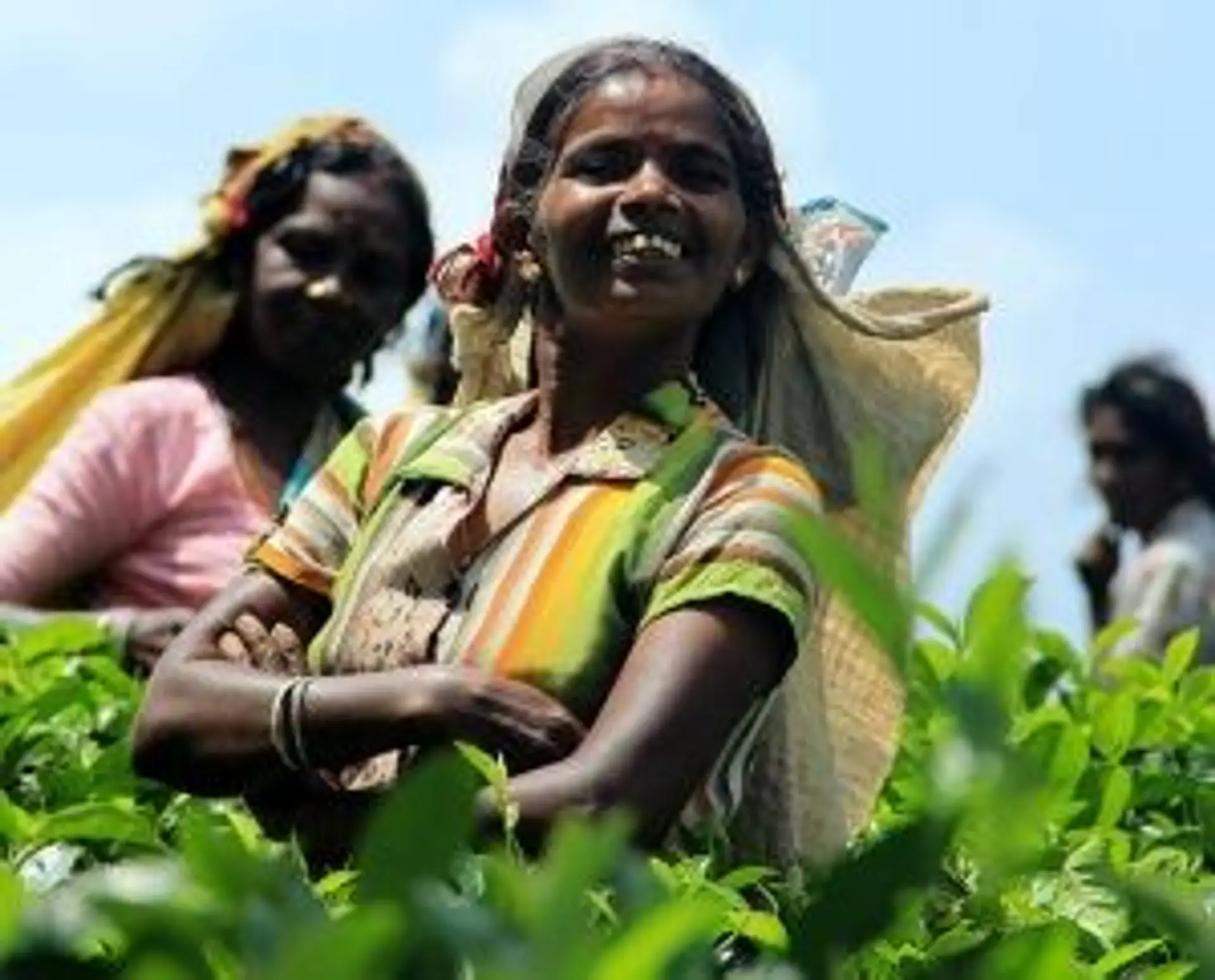
The tea country has a mixed population. Indian Tamils, descendants of plantation workers, live alongside Sinhalese communities, and they make up 2.8% of the island's population in the 2024 census.
English is very present in big cities, hotels, universities and job interviews. In the countryside its use becomes rarer, and knowing a little Sinhala or Tamil makes conversation much easier. Our local experts plan every tailor-made trip to Sri Lanka with this in mind, so you know what to expect in each region.
The classroom explains a lot about what you hear on the street.
Public schools teach in Sinhala or Tamil depending on the region, and English is compulsory as a second language. Skilled jobs and higher education often ask for good English, which is why it has grown steadily in importance for young Sri Lankans over several generations.
Sinhala and Tamil are more than tools for communication. Each carries cultural, religious and family references, and linguistic divisions have caused political and social tension. Today English is often seen as neutral ground that helps communities coexist and opens the way to the wider world. For a traveller, that means a hotel receptionist, a university student or a young guide will probably answer in good English, while the person selling vegetables at a village market may not.
Here is a short survival phrasebook in English, Sinhala and Tamil. Pronunciation varies, and spellings of Sinhala and Tamil words in Latin letters differ from one source to another, so treat the spellings below as a guide to the sound rather than a fixed standard. Where the local column says "(English word)", people simply use the English term.
| English | Sinhala | Tamil |
|---|---|---|
| Greetings | ||
| Hello | Ayubowan | Vanakkam |
| Goodbye | Gihin Ennam | Poittu vanga / Poittu varan |
| Thank you | Istuh-ti | Nandri |
| How are you? | Oya hohinda? | Eppadi sukam? |
| My name is … | Mage nama … | Ennudaya peyar … |
| Basics | ||
| Yes | Ow | Om / Ama |
| No | Ne | Illai |
| Good | Hondai | Nallam / Nalam |
| Okay / that's fine | Eka hondai / Hari | Sari / Naan ettukolluren |
| I don't understand | Mata therenne ne. | Enakku puriyala |
| I'm sorry | Sama wenna. | Ennai mannikkavum |
| Getting around | ||
| Railway station | Dumriva stanaya | Pukai arutha nilayam |
| Airport | (English word) | Vimana nilayam |
| Bank | Benkuwa | Vanki |
| Post office | Thepel kanthoruwa | Thabal nilayam |
| Stop | Newathuma | Niruththu |
| Toilet | Nana Kamare | Malasalakudam |
| Eating and paying | ||
| Price | Gaana | Vilai |
| Spoon | Henda | Karandi |
| Fork | Geruppuwa | Mullu karandi |
| Knife | Pihiya | Kaththi |
| Glass | Weeduruwa | (English word) |
| Bill | Bila | (English word) |
| Health | ||
| Doctor | Dostara | Vayithiyar |
| Hospital | Ispiritalaya | Vayithiyasaalai |
| Pharmacy | (English word) | (English word) |
| Mosquito repellent | Maduru koil | Nulambu thaduppu |
| Toilet paper | (English word) | (English word) |
| Time and questions | ||
| More | Thawa | Kooda |
| Less | Aduwen | Kuraya |
| What time is it? | Welawa keeyada? | Enna neram ippa? |
| Today | Ada | Inru |
| Tonight | Ada re | Iravukku / Raththirikku |
| Tomorrow | Heta | Nalaikku |
| Yesterday | Eye | Nettu |
| How? | Kohomada? | Eppadi? |
| Why? | Ei? | Ean? |
| When? | Kawadda? / Keeyatada? | Eppa? |
| Where? | Koheda? | Enga? |
At Shanti Travel, we recommend adding a survival phrasebook to your trip preparation and listening to the language with curiosity, since it reflects the island's many cultural influences. In Colombo, English covers restaurants, transport, hotels and visits. Off the beaten track, try Sinhala or Tamil.
Not sure which words you'll need where? Our local experts in Sri Lanka plan your route and can tell you what to expect in each region.
Browse the full Sri Lanka travel guide for more practical advice, and when you're ready, tell us your dates and interests and a local expert will design your trip.
Somewhat. Both belong to the same language family, and Sinhala shares some vocabulary and grammar with Hindi. Sinhala has also absorbed a lot from Dravidian languages such as Tamil, and it has prenasalised consonants that no other Indo-Aryan language has apart from Dhivehi, the language of the Maldives.
No, they use different scripts, though both descend from the ancient Brahmi script. Sinhala is thought to derive from Grantha and resembles South Indian scripts, Tamil included. It is written left to right, with rounded letters and about 18 vowel signs and 41 consonants, many of them used only for Sanskrit and Pali loanwords.
Usually yes. By law, public signs in Sri Lanka must be in Sinhala, Tamil and English, so road signs, station boards and official notices carry all three.
Subscribe and receive our travel inspirations and practical advice twice a month.
Wanting to share your trip with a group?