Your expert on destination North India
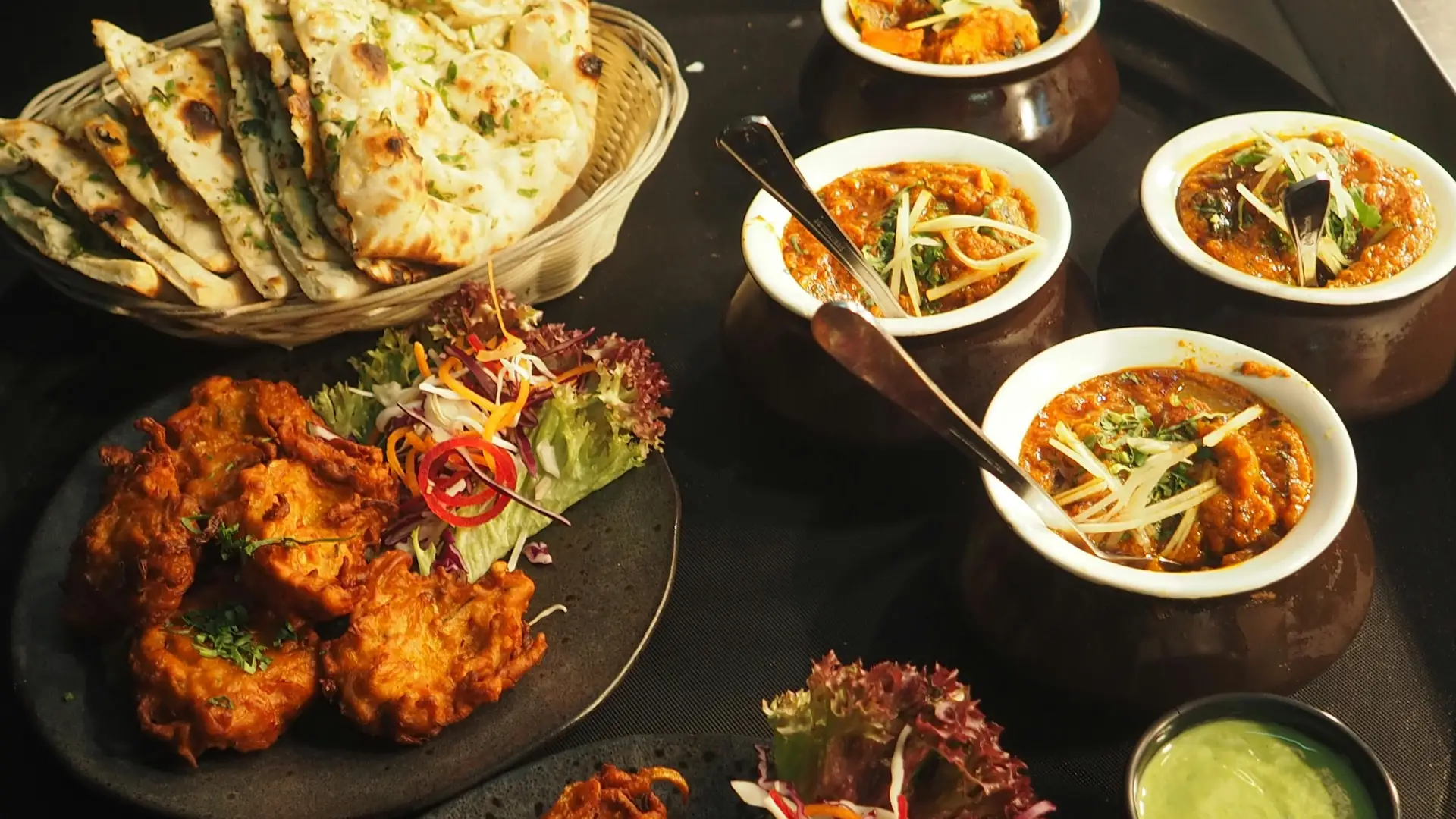
North Indian food is built on the tandoor oven, ghee, dairy, pulses and wheat breads, with spice blends that change from Punjab to Rajasthan to Lucknow. Expect dal makhani, paneer tikka, tandoori chicken, butter chicken, kebabs and fresh naan or roti at most meals. Vegetarian and meat dishes both have a long tradition, and every region has a signature of its own: dal baati churma in Rajasthan, galouti kebabs in Lucknow, rogan josh in Kashmir, chole bhature in Delhi.
This guide covers the dishes, the breads, the words on the menu and the safety basics, plus where to look for each one on a trip through North India.
North Indian food is the cuisine of northern India, from Rajasthan and Punjab to Delhi and Uttar Pradesh. It is marked by tandoor cooking, ghee, dairy products, pulses, wheat breads and complex spice blends. Each region adds its own dishes, such as dal baati churma in Rajasthan and galouti kebabs in Lucknow.
That is the short version. The longer one is that North Indian cuisine is a family of regional cooking styles, shaped by climate, history and who ruled where. Rajasthan's dry land and royal kitchens produced one table, Punjab's farms and tandoors another, and the old court of Awadh a third. Further north, in the Himalayan regions, mountain life and Tibetan influence change things again.
Two corrections help before you travel. There is no single "Indian bread" and no single thali, only large families of both. And India is not an all-vegetarian country: eating habits vary between regions, communities and families, so you will find excellent meat dishes next to a deep vegetarian tradition.
Use this table to match a dish to a city on your route. Our local experts can match the food to your itinerary if you are still choosing between regions. For general eating advice, see our guide to dining in India.
| Region | Dishes to try | What to know |
|---|---|---|
| Delhi | Mughlai dishes, chole bhature, kebabs, street food | The widest range in one city |
| Punjab | Dal makhani, paneer tikka, tandoori chicken, butter chicken | Hearty, built around the tandoor, pulses and dairy |
| Rajasthan | Dal baati churma, laal maas, gatte | Shaped by an arid climate and royal history |
| Lucknow | Galouti and seekh kebabs, Awadhi biryani | Refined cooking from the court of Awadh |
| Kashmir | Rogan josh | Distinct from the plains cuisines |
| Ladakh | Momos, mountain food | Strong Tibetan influence |
Delhi is where you can try Mughlai food (the rich, refined cooking of the former Mughal courts), chole bhature (spiced chickpeas with fried bread) and kebabs without leaving the city. It is also the easiest place to eat on the street, which is covered in its own section below.
Punjabi cooking is hearty and tied to the tandoor, pulses and dairy. The classics are dal makhani, paneer tikka, tandoori chicken and butter chicken, all of which you will see on restaurant menus across the country. Order them with tandoor breads and you have a very typical Punjabi meal.
The food reflects the region's dry environment and its history. Dal baati churma is the state's great speciality: lentils, round wheat breads called baati, and churma, a sweet crumbled preparation often enriched with ghee. Laal maas is a meat curry traditionally spiced with chilli, and it lives up to the name. Gatte also turns up on Rajasthani menus.
Lucknow was the historic capital of Awadh, and the influence of its former rulers is still on the plate. Galouti kebabs are known for a texture so soft they almost melt in the mouth. Seekh kebabs are a spiced mixture shaped around a skewer and grilled. The cooking is not limited to restaurants: the markets of Chowk and Aminabad are the places to see the range of local preparations. Awadhi biryani is also worth ordering here.
Rogan josh is the dish most associated with Kashmiri cuisine. In Ladakh, food traditions follow the mountain environment and Tibetan influence, and momos (dumplings) are the one to look for.
Bread plays a central part in many northern meals, and each type has a different job.
If you only order one, make it a fresh tandoor naan with dal. It is the quickest way to understand how the cuisine fits together.
Dal is not a single recipe. The word covers many preparations based on pulses: lentils, split peas and others, cooked with spices, tomato, onion, garlic or ginger depending on the cook.
Dal makhani is the one most associated with Punjab. It is made with black lentils and beans, simmered for a long time and often finished with butter or cream. Chole, spiced chickpeas, is just as popular across the north, and rajma (red kidney beans in a spiced sauce) is another regular on vegetarian menus.
Paneer, a fresh cheese, carries a lot of the vegetarian menu. Palak paneer pairs it with spinach, and paneer tikka is the grilled version. Vegetarian koftas are dumplings of vegetables or paneer served in a sauce, a frequent option in northern restaurants.
If you don't eat meat, you won't be limited to a side dish. Dal, chole, rajma, palak paneer, tandoori vegetables, paratha, and a vegetarian thali or biryani all count as full meals.
Tandoori means cooked in a tandoor, a jar-shaped oven that reaches very high temperatures. Tikka means marinated pieces of chicken, paneer or vegetables, often cooked in the same oven.
Tandoori chicken is probably the best-known example: pieces of chicken are marinated, then cooked in the oven until charred at the edges. Chicken tikka uses boneless pieces, while paneer tikka is one of the best vegetarian options in the north. Vegetables get the same treatment. These dishes usually arrive with bread, raw vegetables and mint chutney or other sauces.
Kebabs are a separate branch of the family. Lucknow's galouti and seekh kebabs, described above, are the benchmark.
Curry is a general term used outside India for dishes in sauce; menus in India use more precise names. Masala means a blend of spices, and a heavily spiced dish is not necessarily hot.
A masala may include cumin, coriander, cardamom, cinnamon, clove, pepper, turmeric or chilli, and the mix changes with the dish. Because flavour and heat are different things, you can ask for "less spicy" when you order if you're sensitive to chilli. Our local experts suggest saying it up front rather than hoping for the best.
Ghee, a clarified butter, is present in many northern kitchens. It gives breads, slow-cooked dishes and sweets their characteristic flavour.
A thali is a set of small dishes served with rice or bread. Its content changes by region, so a Rajasthani thali differs from one in Delhi or Punjab.
Depending on the restaurant, you may get dal, vegetables in sauce, rice, chapati or roti, raita (a yoghurt side), pickles, chutneys and sometimes a dessert. It is the easiest way to taste several dishes in one sitting if you're new to the cuisine.
Budget Delhi street food such as samosas, chaat and chole bhature often costs under ₹50 per item, as of March 2026. Choose busy stalls where food is cooked and served quickly.
The price comes from Comfortmytrip, a travel site, and prices have been rising through 2026, so treat it as a guide rather than a fixed rate. Besides samosas, chaat and chole bhature, look for momos and stuffed parathas. Old Delhi is the traditional hunting ground, and it pairs naturally with a day among the Old Delhi and Agra monuments.
Street food is part of Indian food culture, but hygiene varies from one stall to the next. A crowd means fast turnover, so food doesn't sit around. Also check that the equipment looks clean and ask about the water used.
Chai is the everyday drink: black tea with milk, sugar and spices, usually cardamom or ginger. Lassi is a yoghurt drink, plain, salted or fruit-flavoured, and it is especially popular in Amritsar and other northern cities.
Other drinks worth knowing:
Desserts matter in this cuisine. Gulab jamun are small soft balls of dairy dough dipped in fragrant syrup, among the best known. Gajar ka halwa, made with carrots, milk, sugar and dried fruits, is most appreciated in the cooler months. Barfi and jalebi (spirals of fried batter in syrup) are easy to find, along with many milk and dried-fruit sweets.
Sweets are especially present at festivals, weddings and religious celebrations, so if your dates overlap with one, expect to be offered some.
The north leans on wheat breads, tandoor cooking, ghee and dairy. The south is a separate set of cuisines, outside the scope of this guide.
If you're comparing the two, the practical difference on a menu is simple: in northern restaurants, expect your curry-style dishes to arrive with naan, roti or paratha, and expect tandoori grills to be a highlight.
In many traditional settings, eating by hand is part of the meal, and the right hand is generally used. It is not an absolute rule. Modern restaurants offer cutlery, and nobody will mind which you choose.
If you do eat with your hands, wash them first. Avoid touching shared dishes with fingers that have already been in your mouth.
For travellers, water and hygiene matter more than table manners. India's food safety authority, the Food Safety and Standards Authority of India (FSSAI), advises using drinking water and clean utensils and protecting food from dust and pests. Apply the same logic when you pick a place to eat.
Food can be the thread that ties a route together, from kebabs in Lucknow to dal baati churma in Rajasthan. For food-led trip ideas, see our post on culinary travel in North India.
Want these dishes on your route? Tell us how long you have and what you like to eat, and a local expert will build a tailor-made trip through North India.
Stick to sealed bottles or cans, and check that the seal is intact. The US Centers for Disease Control and Prevention (CDC) advises travellers to avoid ice unless they are reasonably sure it was made with safe water. The same applies to tap water for brushing your teeth. Chai and other freshly boiled drinks are a lower-risk alternative. Check current health advice before you travel.
Yes, with some care. Many vegetarian dishes are vegan except where ghee, butter, paneer or curd is used, which covers a lot of northern cooking. Ask for dishes cooked in oil instead of ghee, and for breads without butter. Chole masala, gobi masala and aloo gobi are commonly suggested safe choices. Always confirm with the kitchen, as recipes vary.
Subscribe and receive our travel inspirations and practical advice twice a month.

Wanting to share your trip with a group?