Your expert on destination Indonesia
The Borobudur temple in central Java is the largest Buddhist monument ever built: nine stone levels, 2,672 carved panels and 72 perforated stupas, about 45 km from Yogyakarta. A climb ticket costs IDR 455,000 as of May 2026, and the park opens at 6:30 am.

You can read dozens of articles about Borobudur, scroll through hundreds of photos, watch it in high definition. None of it prepares you for the moment the monument appears in front of you.
The Borobudur temple is a 9th-century Buddhist monument in the Kedu plain of central Java, built between 780 and 833 AD under the Sailendra dynasty. It took about 2 million blocks of volcanic andesite and is the largest Buddhist monument ever built. Figures like these mean little until you stand at the foot of it, looking up at a mountain of grey stone that seems to ignore both gravity and time.
From the site entrance, a tree-lined path leads towards the temple. You walk and still see nothing. Then the vegetation opens and Borobudur is simply there, massive, on top of a small hill, filling the horizon like a mountain carved by human hands.
The pyramid rises in tiers, grey and austere. No gilding, no bright colours: just stone, centuries and a presence that stops you mid-step. It wasn't built to decorate a landscape. It was built to dominate one.
Before you even set foot on the temple, another kind of encounter begins. Around Borobudur you are being watched, not with suspicion but with open, cheerful curiosity. Families smile at you, and groups of schoolchildren whisper among themselves before daring to come closer.
During our visit, a group of young female students came over to meet us, with that mix of shyness and curiosity so typical of the Javanese. They asked about our trip in hesitant English and laughed among themselves before finding the courage for the next question. Then the photo requests began. Not of us in front of the temple, but of them with us.
At Borobudur, foreign visitors can become an attraction in their own right. Many Indonesian visitors have come from across the archipelago, often from the countryside, and they may ask you to pose together, sometimes with a disarming candour. It's common at the big sites of Java. Say yes with a smile: behind each request is real curiosity about you.
When we told him about it, the manager of our guesthouse burst out laughing: "A photo of you will probably end up hanging in someone's living room!"
The Sailendra builders worked for several decades. By the 14th century the temple was abandoned, as the Hindu-Buddhist kingdoms of Java declined and the island converted gradually to Islam. Jungle and volcanic ash covered it for centuries, until Sir Thomas Stamford Raffles, then British governor of Java, had it brought to light in 1814.
The rescue came much later. According to National Geographic's guide, the "Save Borobudur" campaign was launched in 1968 by the Indonesian government and UNESCO. The restoration ran from 1973 to 1983, and UNESCO's World Heritage listing followed in 1991. Two blows came in between and after: a bomb on 21 January 1985 destroyed nine stupas and two Buddha statues, and a magnitude 6.2 earthquake struck on 27 May 2006.
The monument you climb today is therefore a rebuilt one, and part of a longer story told in the history of Indonesia.
Borobudur carries 2,672 carved panels that, laid end to end, tell 5 km of stories. You read them clockwise while climbing from the world of desires towards the life of the Buddha.
A system of corridors and staircases takes you from level to level. The lower panels show earthly life and the consequences of good and bad actions. Higher up, the stories turn to the Buddha's life, his teachings and his previous lives. You pick out elephants, boats, musicians, market scenes, warriors, demons. Some reliefs are astonishingly precise, with details of clothing and facial expressions that stand comparison with classical sculpture. Together they form the largest collection of Buddhist reliefs in the world.
Others, worn by time, pollution and vandalism, hint only at ghostly silhouettes. That erosion adds something: these walls carry twelve centuries.
Of the 504 Buddha statues on Borobudur, many have no head. The bodies sit in meditation, hands resting on their knees, serene and unsettling at once.
The explanation is painful. After the temple's rediscovery in the 19th century, collectors and looters helped themselves. Heads were sawn off and shipped to museums and private collections abroad. Some are now in the Tropenmuseum in Amsterdam, the Guimet museum in Paris and the British Museum in London.
In 1896, King Chulalongkorn of Siam (Thailand) left after a visit with eight cartloads of sculptures, with the agreement of the Dutch colonial government: statues, carved reliefs, stone lions and guardian figures. More than 300 of the 504 Buddhas are now damaged or decapitated, and 43 have disappeared altogether.
The moment of grace comes at the top. You leave the carved corridors, the walls fall away and the reliefs stop. Three circular platforms open to the sky, and 72 bell-shaped stupas stand in concentric rings around a large central one.
Each stone bell is pierced with diamond-shaped openings on the first two levels and square ones on the third. Through them you glimpse a seated Buddha, visible but out of reach. The wind blows freely at this height, silence replaces the murmur of the corridors, and the volcanoes rise beyond the green plain. It is one of the most recognisable images of Southeast Asia.
Borobudur's three levels map onto Kamadhatu, Rupadhatu and Arupadhatu: the world of desires, of forms and of the formless. Kamadhatu is the base. Rupadhatu is the five square terraces with the reliefs. Arupadhatu is the three circular platforms at the top.
This is Mahayana Buddhist cosmology built in stone, and it explains why the temple has no interior hall and no prayer room. The climb is the path. By going up, you retrace the way to enlightenment, from noise to silence and from fullness to emptiness. The destination isn't inside: it is the summit and the sky above it.
Borobudur is about 45 km from central Yogyakarta, roughly 1.5 hours by road and up to 3 hours in heavy traffic. The best options are a car with driver, a scooter or an organised tour. No direct public transport is really practical.
As of May 2026, the Temple Structure ticket, which lets foreign visitors climb the monument with a local guide, costs IDR 455,000. About 1,200 climbers are admitted per day. Upanat sandals, worn on the stone, are included.
| Ticket | Access | Price | Date |
|---|---|---|---|
| Temple Structure | Climb the monument, local guide and upanat sandals included | IDR 455,000 | May 2026 |
| Temple Ground | Park only, no climbing | IDR 375,000 | June 2025 |
Prices and quotas change, so check them on the day of booking.
The park is open from 6:30 am to 5:30 pm. Climbing is by time slot, from 8:30 am to 3:30 pm, with 150 people admitted per hour. Arrive at opening for the best light and fewer people. The guide on when to travel to Indonesia covers the seasons across the islands. If a dawn on another Java volcano appeals, there is also sunrise over Mount Bromo.
Local experts can time the visit and the transfer around your other stops in Java.
Borobudur works best as one stop in a longer route across Java, with the transfers and timing already sorted. Tell our local experts in Indonesia when you travel and what you want to see, and they'll build the trip around it: plan your tailor-made trip to Indonesia.
Yes, through a separate Sunrise Ticket that reopened in July 2025. Entry starts at 4:30 am, well before regular visitors arrive. It cost around IDR 1,000,000 per person as of October 2025, with breakfast included. You watch the morning mist wrap the stupas as the volcanoes emerge. Places are limited, so book ahead.
Plan 2 to 3 hours. That gives you time to read the reliefs on the way up, reach the summit and come back down at an easy pace.
Yes. Prambanan is the large Hindu temple east of Yogyakarta, and you can see it the same day or the next. Seen together, the two sites show Buddhism and Hinduism side by side in 9th-century Java. In the evening, the Ramayana Ballet makes a fitting end to the day.
From 1100 €
From 1992 €
From 1530 €
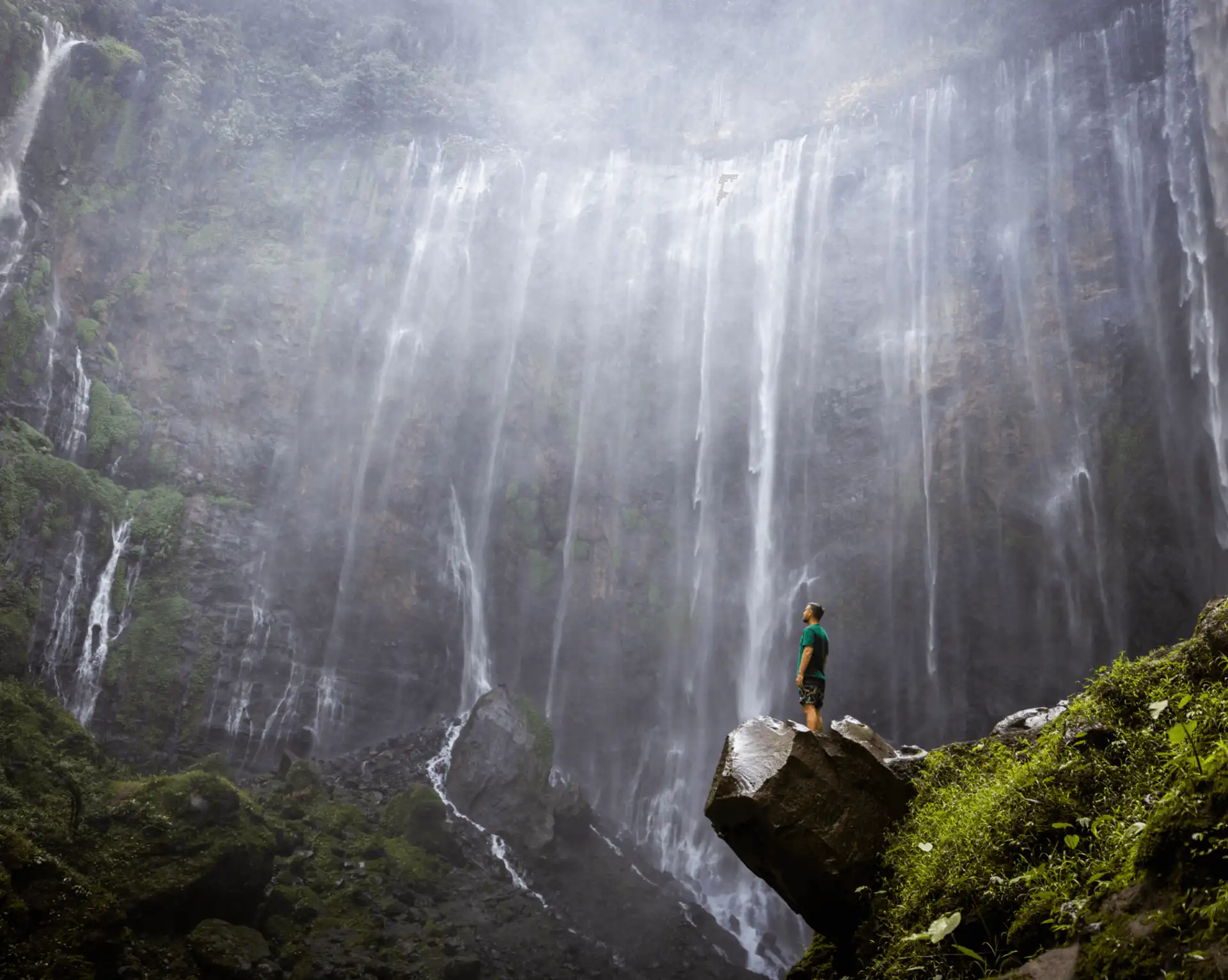
Tumpak Sewu waterfall in Lumajang, East Java, is a 120 m curtain of more than 30 separate falls spilling from a semicircular cliff. It is worth the trip: the viewpoint is a 10-minute walk from the car park, and the optional hike to its foot takes 30 to 45 minutes down. Allow about 3 hours in total.
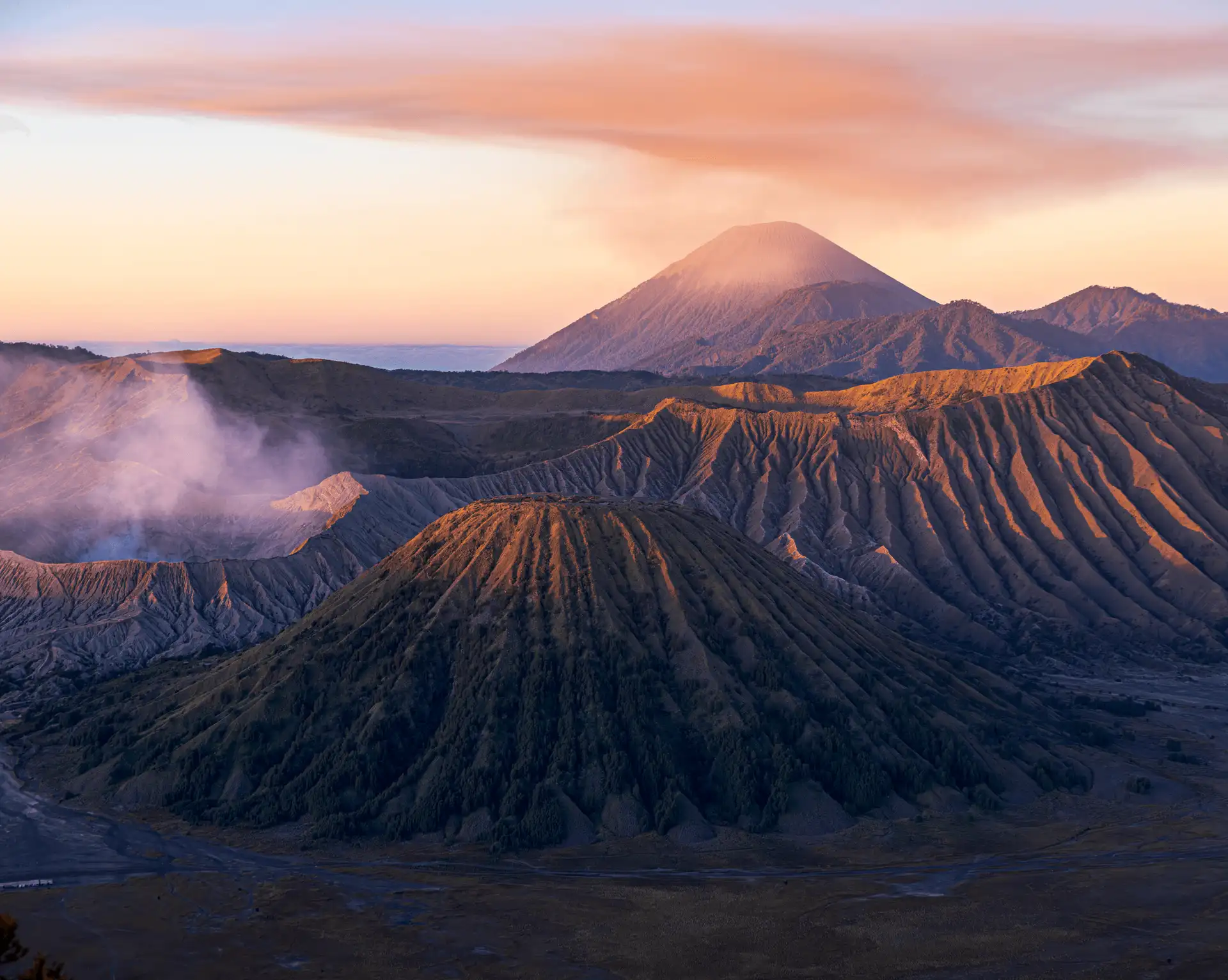
The **Mount Bromo sunrise** starts in the dark: a 30-45 minute jeep ride from your base village up to the **Penanjakan** viewpoint, at about 2,770 m, where it is 5-10°C before dawn. After first light, you cross the Sea of Sand and climb about 250 steps to the crater rim at 2,329 m.
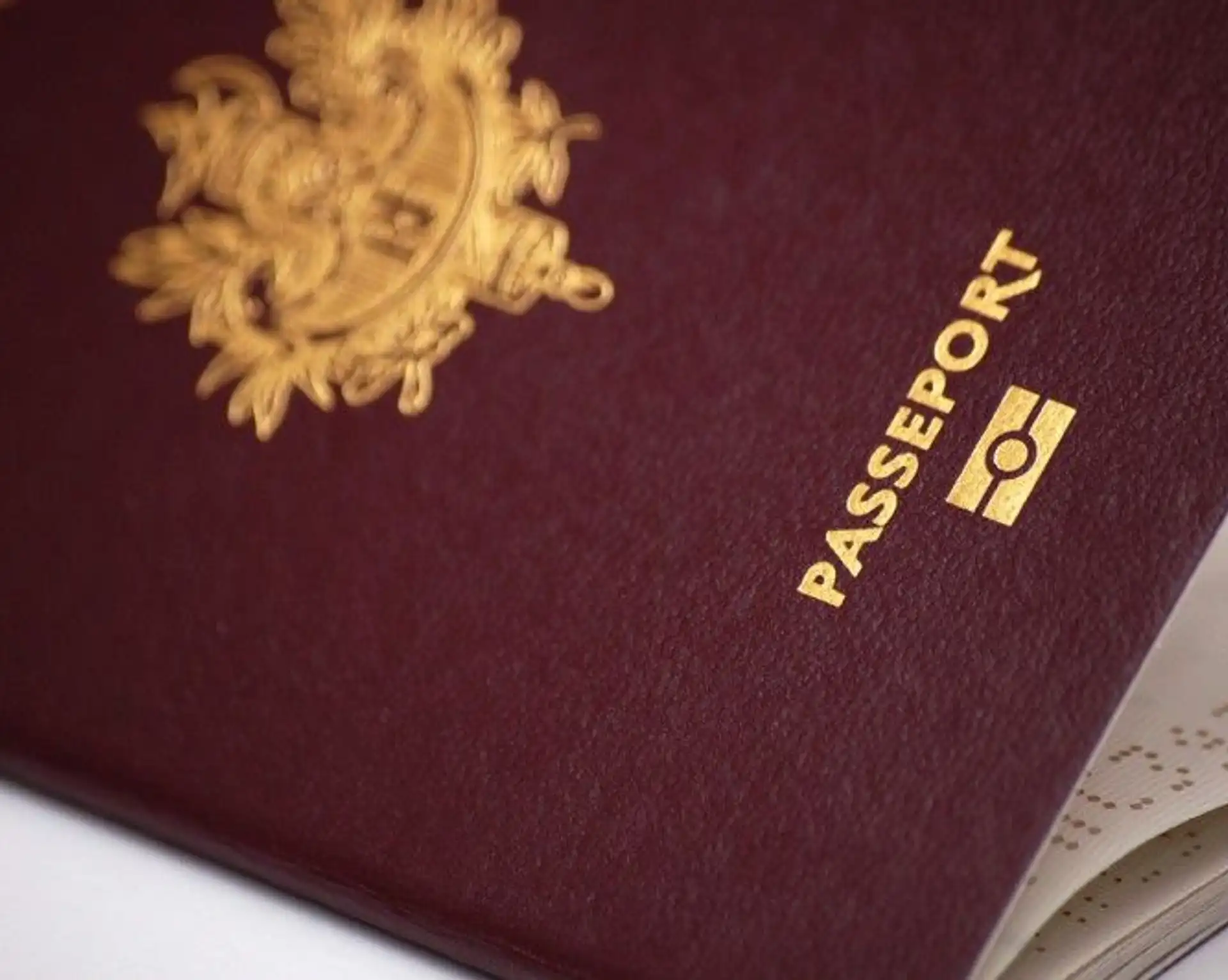
Only a short list of countries can enter Indonesia without a visa. If yours isn't on it, the visa on arrival takes a few minutes online. Here's who qualifies, what it costs and what to fill in before you fly.
Subscribe and receive our travel inspirations and practical advice twice a month.
Wanting to share your trip with a group?