Your expert on destination Indonesia
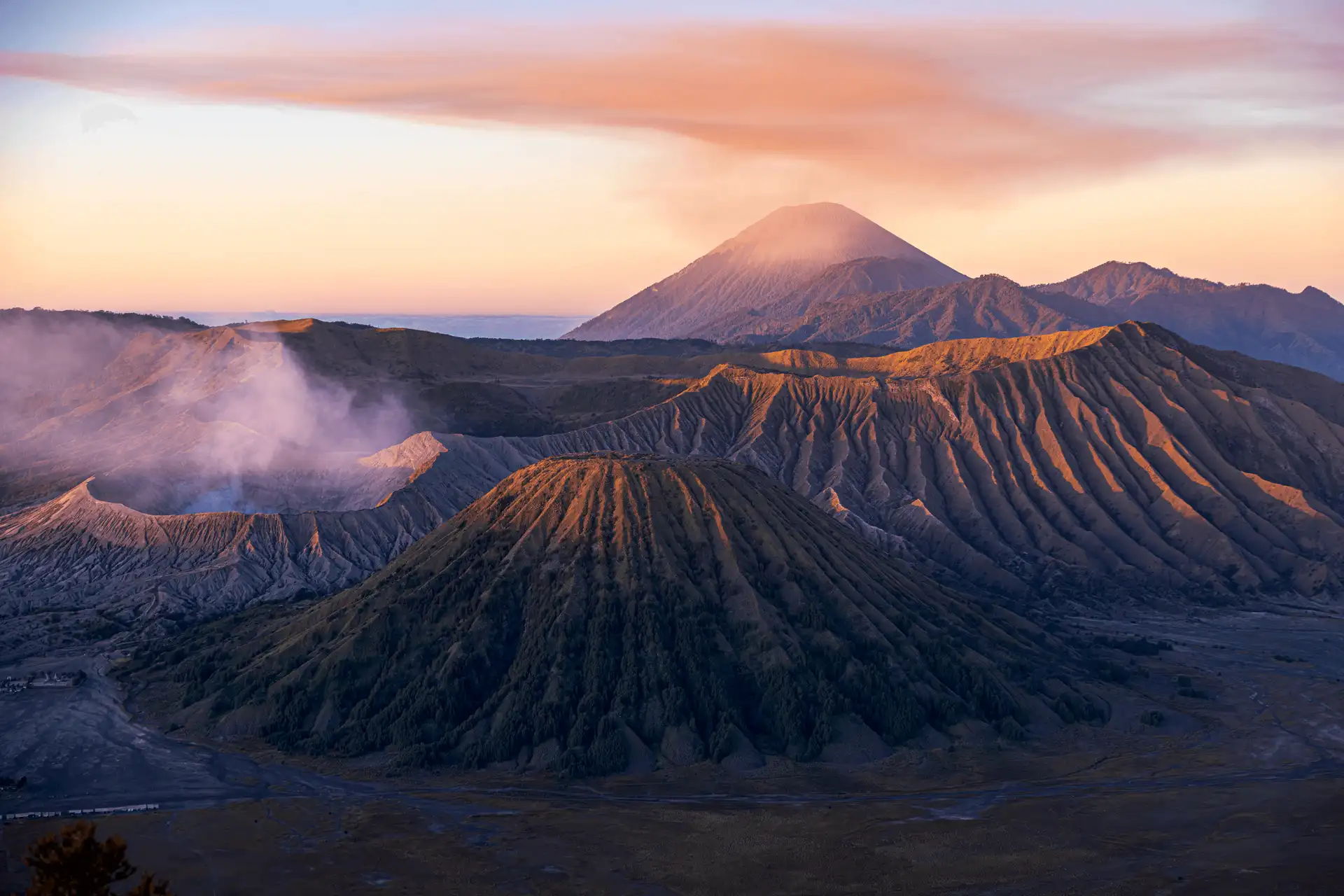
To see the **Mount Bromo sunrise**, you leave your base village in the middle of the night by jeep and drive 30 to 45 minutes up to the **Penanjakan** viewpoint, at about 2,770 m. Expect 5-10°C and a crowd at the main platform. After first light, the jeep drops to the Sea of Sand, and a 20-minute walk plus about 250 steps takes you to the crater rim at 2,329 m. It is dark, and colder than you ever imagined Indonesia could be. Somewhere in the highlands of East Java, a red jeep starts up. Its destination is the Bromo volcano, one of the most striking landscapes in Southeast Asia. If you are planning a [trip to Java](https://www.shantitravel.com/en/travel-indonesia), this is the morning travellers talk about for years. A short night, a biting cold, bumpy tracks, and then the first rays set the Tengger caldera ablaze and trace the shapes of Bromo, Batok and Semeru. This guide follows the morning in order, from the jeep to the crater rim, and ends with a waterfall for the way back.
The whole outing takes a morning. This is how the stages fit together.
| Stage | Duration | Altitude |
|---|---|---|
| Jeep from your base village to the viewpoint | 30-45 min | Penanjakan, about 2,770 m |
| Waiting for the light | Until sunrise | 5-10°C before dawn |
| Walk across the Sea of Sand | About 20 min | Caldera floor |
| Climb to the crater rim | 20-30 min, about 250 steps | 2,329 m |
Most visitors sleep in or near Cemoro Lawang, the base village, so the drive up is short. The rest of the morning is on foot.
Two viewpoints compete for the same sunrise. Your driver will usually suggest one, and it helps to know the difference before you climb into the jeep.
The jeep follows a dirt track with tight bends, and other jeeps pass you in the dark. The air gets sharply colder as you climb. When the engine stops, you step out into the cold and join a crowd on a rocky promontory.
Penanjakan 1 is the classic. It sits at about 2,770 m, has the widest view, and fills up first. Expect elbows, tripods and a lot of phone screens. If a clear sunrise photograph matters most to you, this is where the famous images come from. It is also the place where you'll want to arrive early to hold a spot at the railing.
King Kong Hill (Bukit Kedaluh) sits slightly lower down, and it is much quieter. You trade a little height for room to breathe. The view still takes in the caldera, and you can set up a camera without fighting for space. If crowds bother you, choose this one.
Whichever you pick, the wait begins. You blow into your hands, sip a coffee bought from a street vendor, and scan the black horizon.
Then everything shifts. First a thin pale blue line. Then pink. Then orange. You make out a thick layer of cloud that you are looking down on. Suddenly the landscape reveals itself, as if someone lifted a curtain on an enormous stage.
Before you stretches the Tengger caldera, a plain of volcanic sand 11 km across. At its centre, the cone of Bromo sends up a column of white smoke. Beside it, Batok, an extinct volcano, has a cone so symmetrical it looks like a scale model. Far behind, Semeru (3,676 m, the highest point on Java) breathes out its own plume.
The light changes every second. Shadows slide over the sand, the colours run from violet to gold, and the mist tears open and closes again, hiding and revealing the volcanoes. You forget the cold and the time.
Once the sun is up, the jeep plunges towards the floor of the caldera. The drop is quick: within minutes you leave the misty heights for a flat, grey, treeless plain.
The Sea of Sand is a vast stretch of fine volcanic sand with no vegetation. You could be on Mars. The jeep crosses it fast and kicks up clouds of dust, so keep your camera in a bag until you stop.
A few horses wait for tourists and offer the ride to the foot of the volcano. Walking is part of the experience, though. It takes about 20 minutes, your feet sink into the sand, and the smoking cone grows with every step.
At the foot of Bromo, a staircase of about 250 steps climbs steeply to the crater rim. Plan on 20 to 30 minutes, depending on your pace, the altitude (2,329 m) and the sand that covers some of the steps. The air is dry and carries a faint smell of sulphur that gets stronger as you rise.
The effort is manageable for anyone in reasonable shape. Go slowly and stop when you need to. The sand underfoot tires your legs more than the height does.
At the top, a metal railing runs along the rim. The crater opens beneath your feet: about 800 m across and 200 m deep, with ochre and grey walls that drop towards a bottom you can't see. White, sulphur-laden fumes rise from it all the time.
You hear a deep rumble, a vibration you feel in your chest as much as in your ears. Now and then the wind turns and sends a sharp gust of sulphur straight into your face. Then it changes again, the fumes clear, and you glimpse the whole caldera below. A scarf over your nose helps.
This is an active volcano, and you are standing on its edge. If you want to see how Bromo compares with the others, read about Indonesia's volcanoes.
MAGMA Indonesia, the government's volcano monitoring service, publishes Bromo's alert level every day. Bromo smokes daily, and Level II (Waspada) is the normal state for a volcano like this one, but the level and access can change without much notice.
Check MAGMA Indonesia's daily Bromo report in the days before you go, and ask your hotel or driver on the evening before. Parks also close sections at short notice.
The safety rules are simple. Stay on the marked paths. Do not cross the barriers at the edge of the crater. The rim is steep, the wind is gusty, and the fumes can catch you off guard.
At the edge of the crater, a statue of Ganesh keeps watch. It is a quiet reminder that Bromo is sacred. Its name comes from Brahma, the Hindu god of creation, and the Tengger, a Hindu community, have lived in the highland villages for centuries.
During the Yadnya Kasada ceremony, the Tengger climb to the crater in procession and throw in offerings: vegetables, fruit, livestock, flowers and money. They do it to honour their gods and ask for protection and prosperity. The ritual follows the Hindu lunar calendar and continues a tradition that goes back to the Majapahit kingdom in the 13th century.
Knowing this changes how the place feels. You are visiting someone's temple as much as a view. For more background, see our guides to religion in Indonesia and festivals.
The dry season, May to October, is the best time for a Mount Bromo sunrise. June and July bring the clearest skies, and the largest crowds. Book early if you travel then.
From November to March it is the rainy season. Paths turn slippery, clouds often block the view, and the landscape looks flatter. The sunrise can still happen, but you are gambling on it.
Whatever the month, it is cold before dawn: 5-10°C at the viewpoint. After the sun comes up, the temperature rises fast.
Foreign visitors pay an entrance fee to Bromo Tengger Semeru National Park. The fee is higher at weekends and on public holidays.
| Day | Entrance fee, foreign visitor (as of February 2026) |
|---|---|
| Weekday | 220,000 IDR |
| Weekend or public holiday | 320,000 IDR |
The jeep, a driver and any horse ride are paid on top. Prices vary by operator and season, so ask what a quote includes. If you would rather have a local expert arrange the transfers, the jeep and the timing around your other stops, you can talk to a local expert.
From Surabaya or Malang, allow 3 to 4 hours by road to Cemoro Lawang, the base village for Bromo. No public transport goes directly to the site. Your options are a car with driver, an organised tour, or a scooter if you are confident on mountain roads.
Many visitors arrive the afternoon before and sleep close to the park, so the pre-dawn drive stays short. For the wider picture of buses, trains and flights across the islands, see our guide to getting around Indonesia.
As we came back down the steps and found the jeep, we came across a scene that sums up Java. At the side of the dusty track, a man stood next to his motorbike, loaded with bunches of dried flowers. No stall, no sign. Just a man, a motorbike and flowers in the middle of a volcanic landscape.
You buy a bunch, exchange a smile, and leave with the feeling that the trip does not stop at the scenery.
On the road back to Malang, one detour is worth making: Coban Pelangi, "rainbow waterfall". It lies in the village of Gubugklakah, inside Bromo Tengger Semeru National Park, at about 1,400 m. After rock, sand and smoke, you get green forest, water and cool air.
A path of 15 to 20 minutes goes down through dense, humid forest to the foot of the falls. The name comes from a rainbow that forms when the sun, between 10 am and 2 pm, shines through the mist the water throws up.
It isn't guaranteed. During our visit, the rainbow didn't show up. The waterfall itself, strong and graceful against the green cliffs, was still worth the stop, and the cool air felt like relief after the dust of Bromo. It isn't on every itinerary, which is a shame.
Also read: Top five volcano hikes in Indonesia.
Bromo works best as one stop inside a longer Java route, with the right base village, a driver you trust and a sensible night before. Our local experts in Indonesia build these trips around your dates, your pace and the other places you want to see. Tell us what you have in mind and start planning your trip.
Avoid the rainy season, November to March, when paths are slippery and visibility is often poor. June and July have the clearest skies but also the biggest crowds, so book ahead. Also skip any day when MAGMA Indonesia raises the alert level or the park closes access.
Expect 5-10°C at the viewpoint before dawn, and it feels colder in the wind at Penanjakan. Wear warm layers, a hat and closed shoes. The temperature rises quickly once the sun is up, so dress in layers you can take off during the walk to the crater.
From the Sea of Sand, the walk to the foot of the volcano takes about 20 minutes. The climb up about 250 steps to the crater rim then takes 20 to 30 minutes, depending on your pace, the altitude of 2,329 m and the sand on some steps.
Bromo is an active volcano that smokes every day, and MAGMA Indonesia publishes its alert level daily. Alert levels and access can change at short notice, so check the daily report before you travel and again with your hotel or driver the evening before. Stay on the marked paths.
No, a guide is not essential. The jeep driver takes you to the viewpoint and then to the foot of the volcano, and you climb the steps on your own. A guide can add explanations about the geology and Tengger culture if you want more than the view.
As of February 2026, the park entrance fee for foreign visitors is 220,000 IDR on weekdays and 320,000 IDR at weekends and on public holidays. The jeep, driver and any horse ride are extra and vary by operator, so ask what your quote includes.
From 1100 €
From 1992 €
From 1530 €
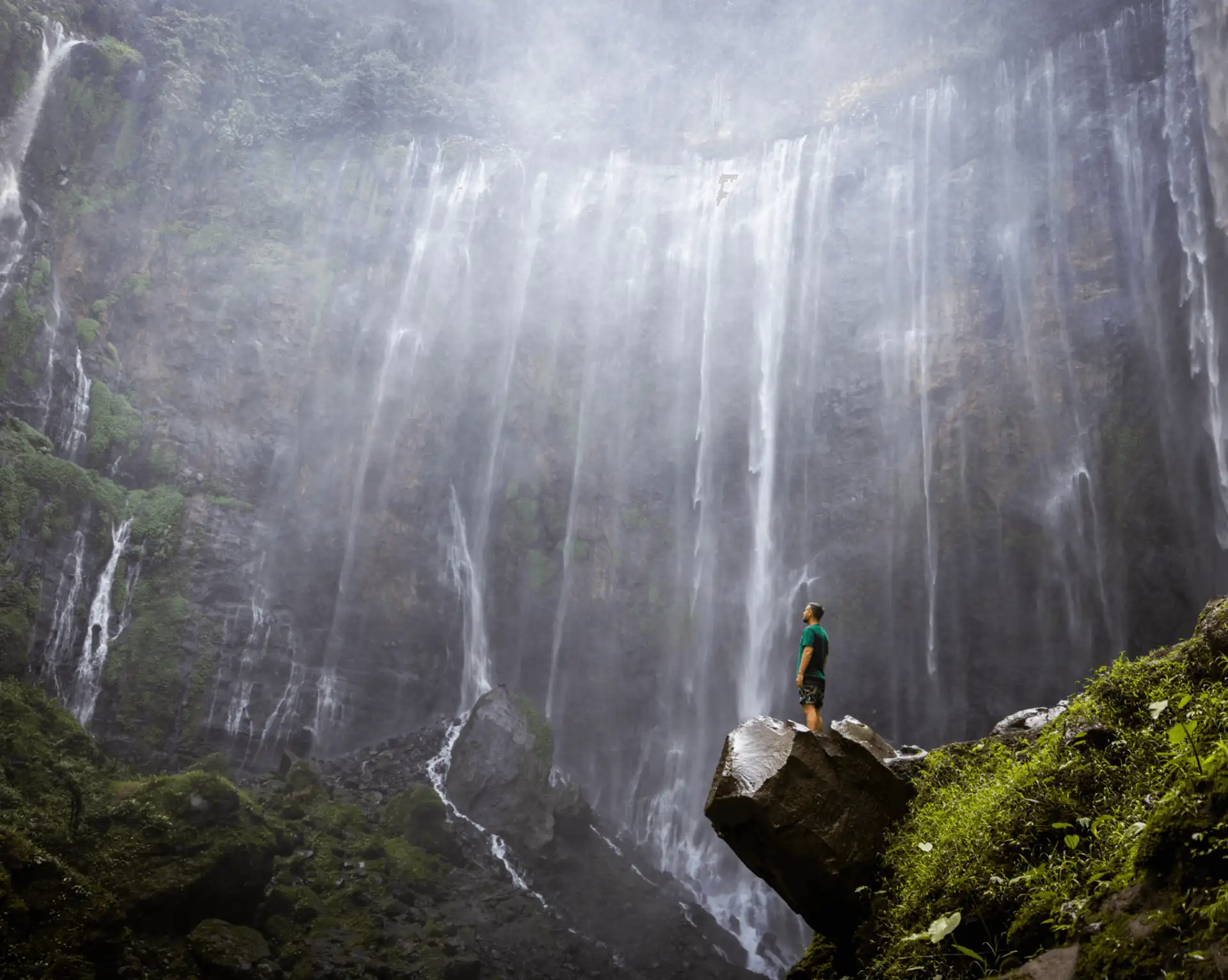
Tumpak Sewu waterfall in Lumajang, East Java, is a 120 m curtain of more than 30 separate falls spilling from a semicircular cliff, roughly twice the height of Niagara Falls. Yes, it is worth visiting: the viewpoint is a 10-minute walk from the car park, and the optional hike to its foot takes about 30 to 45 minutes down. Entry is around IDR 50,000 (about USD 3) as of April 2026, and the site is open 07:00 to 15:00. Allow about 3 hours for the full visit. Bring water shoes, because you will wade a knee-deep river. From the car park, a paved path crosses the jungle for about ten minutes. You pass a few stalls where local vendors sell snacks and drinks. Then the trees stop, a clearing opens, and the whole wall of water is in front of you.
Only a short list of countries can enter Indonesia without a visa. If yours isn't on it, the visa on arrival takes a few minutes online. Here's who qualifies, what it costs and what to fill in before you fly.
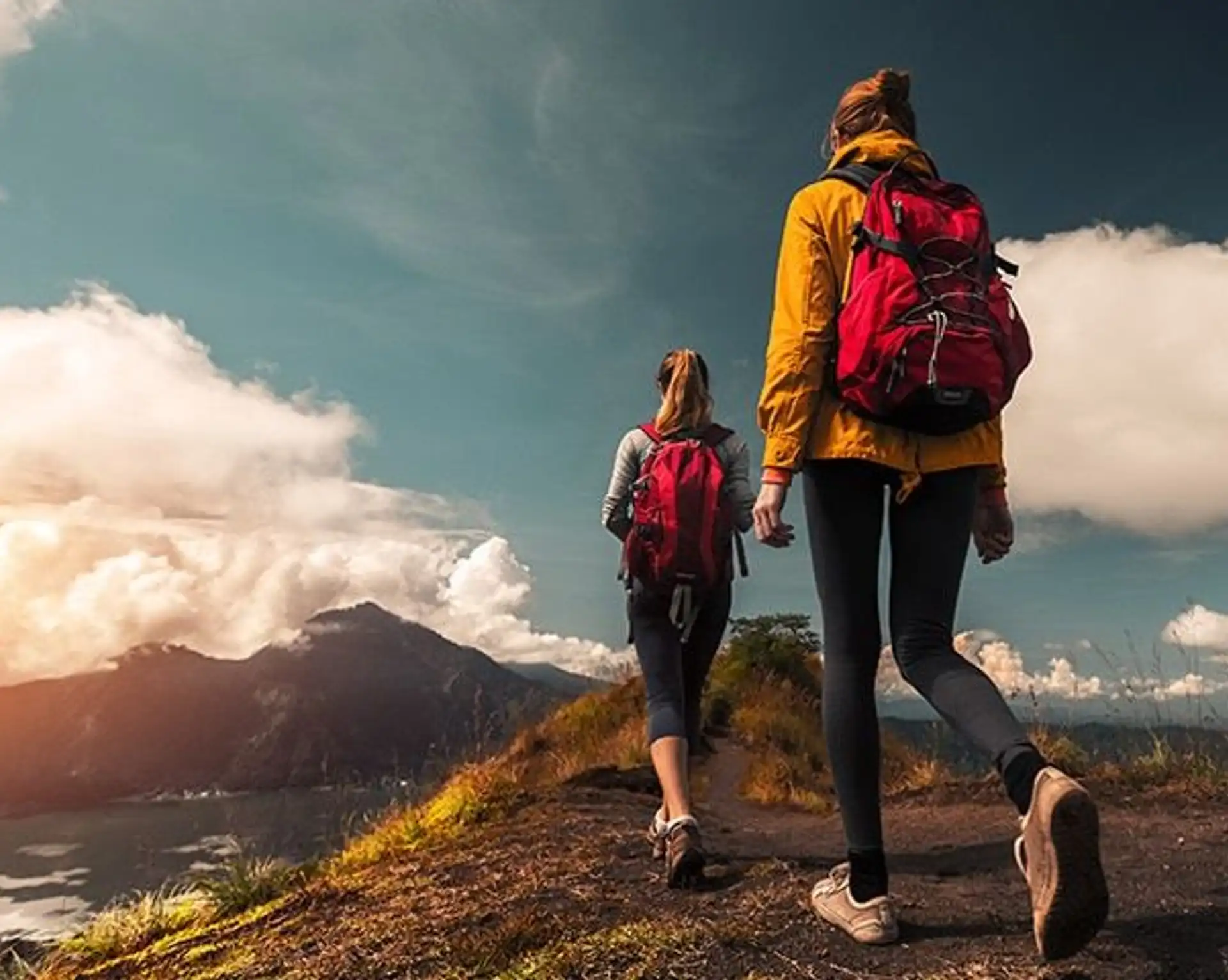
Travelling in a group means sharing the unforgettable moments of an authentic journey, building meaningful connections, and exploring the wonders of Asia with complete peace of mind. Discover why this shared adventure continues to inspire more and more travellers. Travelling in a group means sharing the unforgettable moments of an authentic journey, building meaningful connections, and exploring the wonders of Asia with complete peace of mind. Discover why this shared adventure continues to inspire more and more travellers.
Subscribe and receive our travel inspirations and practical advice twice a month.
Wanting to share your trip with a group?