
Your expert on destination Japan
Gastronomy, a great love story for the Japanese!
Discovering Japanese culinary traditions is an integral part of any trip to Japan . Eating is a universal language in Japan, where the diversity of dishes, the attention to rituals, and the quality of the ingredients create a unique experience with every meal.
The Japanese love to eat, and this is evident throughout the country. There are over 160,000 restaurants in Tokyo alone, 12 times more than in Paris! Tokyo tops the list of cities with the most Michelin-starred restaurants, followed by Kyoto, and then Paris in third place. Japan's culinary richness is expressed as much in haute cuisine as in street food and popular bistros .
The quality of the products is paramount: two melons were sold for €25,000 and a 278-kilo bluefin tuna fetched $4 million. This passion for food isn't limited to the table: it's reflected in the presentation of each dish, the diversity of flavors, and the refinement of the utensils.
Eating is a true ritual in Japan, and each meal has its own specific customs. From a very young age, Japanese children learn to respect food and the people who prepared it. Before a meal, it is customary to say "itadakimasu" to express gratitude, and "gochisôsama deshita" at the end to thank everyone for the feast.
Table manners are highly codified: chopsticks are not used to pierce rice (this is reminiscent of a funeral rite), one never points at people or dishes with them, and it is customary to alternate between different dishes rather than mixing the food. Slurping noodles loudly is perfectly acceptable, unlike other mouth noises. The arrangement of the dishes is also important: the bowl of rice on the left, the miso soup on the right, both held at mouth level when eating.
Green tea is the essential beverage that accompanies most meals. Several varieties exist, such as sencha, genmaicha, and matcha, often offered free of charge in restaurants. During festive meals or at dinner, it's not uncommon to enjoy a glass of sake (nihonshu) or a light Japanese beer. In winter, hot drinks like soba-cha (roasted buckwheat tea) or amazake, a sweet fermented rice beverage, are popular.
In bars (izakayas), the selection is even wider: chu-hai (a cocktail made with shochu and fruit), local beers, umeshu (plum liqueur), or unique sodas made with melon or other fruit flavors. For non-drinkers, oolong tea or the famous ramune, a sweet, fizzy drink, round out the offerings. At a restaurant, never serve yourself at the end of your meal; it's the host or the eldest person who refills your glasses.
There are two types of breakfasts, Japanese and Western .
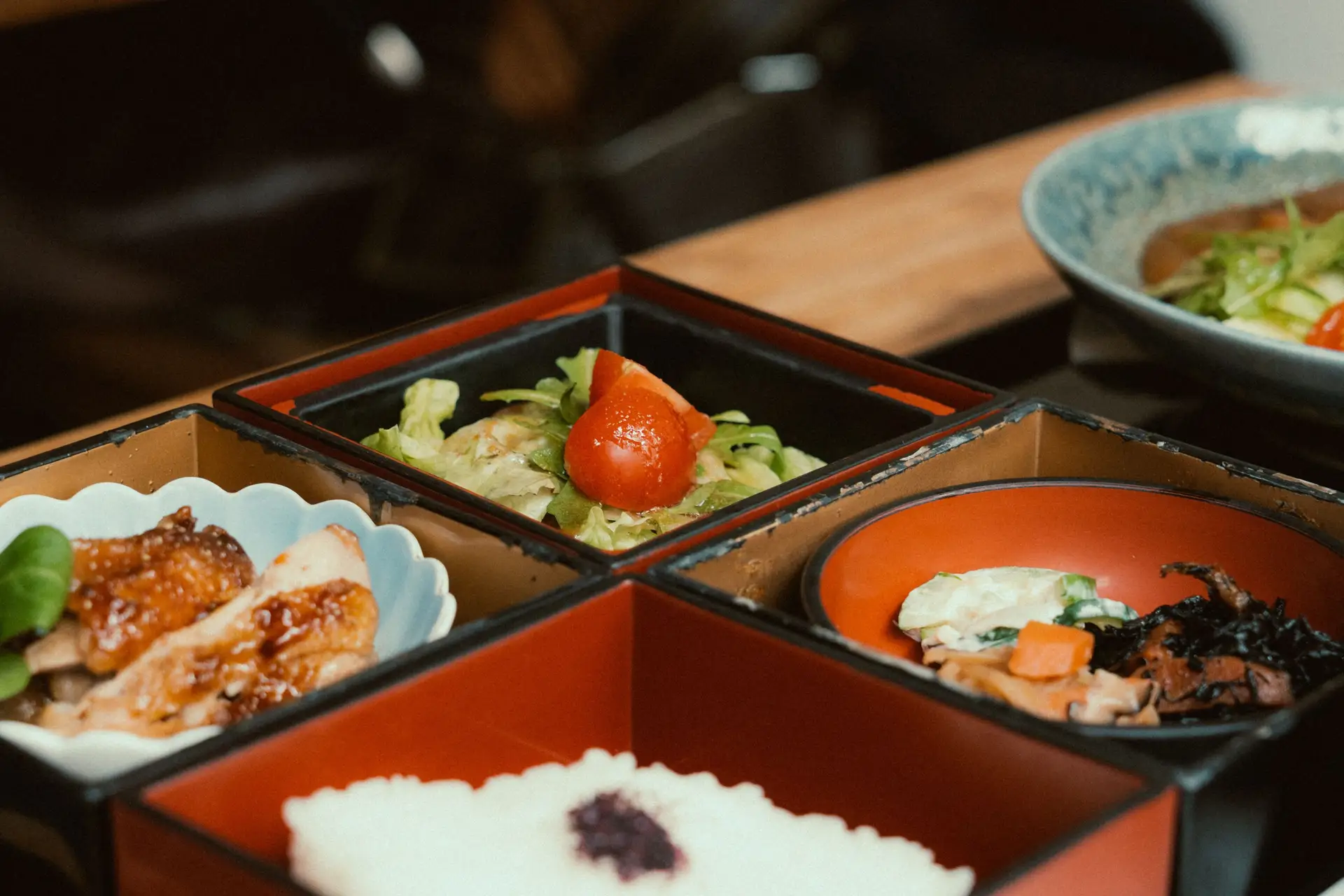
In Japan, lunch is often a quick meal, eaten on the go at work or school. The tradition of obento structures this part of the day. Wives or mothers prepare obento with care: it includes rice, vegetables, meat or fish, eggs, pickles, all carefully arranged for the pleasure of both the eyes and the palate.
There is a real popular culture around obento, and you don't need someone to prepare it: you can find it everywhere in konbini (convenience stores), train stations, supermarkets and street stalls.
For those looking for variety, fast-food restaurants serving noodles (ramen, udon, soba) or donburi (rice bowls with various toppings) offer budget-friendly options. A standard lunch costs on average between 800 and 1500 yen (5 to 9.5 euros), but it's possible to enjoy a simple meal for under 5 euros at some chain restaurants or convenience stores.
Dinner is the highlight of the day's culinary experience in Japan. It's often eaten outdoors, which explains the abundance of restaurants throughout the country. The Japanese enjoy sharing this meal with family or friends, enjoying a variety of small dishes, following the ichiju sansai rule (one soup, three side dishes, and rice). The soup is often miso or vegetable broth, while the main courses typically include meat, fish, seasonal vegetables, pickles, and various salads.
Variety is the rule: the Japanese like to adapt their menu to the seasons. Products change according to harvests and fishing, offering a constantly renewed range of flavors throughout the year.
An izakaya is a must-visit evening destination in Japan. It's a Japanese-style pub where you can relax over drinks (beer, sake, shōchū) and a variety of small dishes to share, hot or cold, depending on what's fresh at the market that day. The atmosphere is friendly and lively, with conversations flowing freely in a relaxed setting.
There are various types of seating, from counters to low tables with tatami mats where you must remove your shoes. At the entrance, customers are greeted with an enthusiastic "Irasshaimase!" Ordering several dishes at once and chatting with the staff or other patrons is part of the experience. Each izakaya offers its own regional specialties or chef's creations: don't hesitate to ask for recommendations for a personalized culinary experience.
Izakayas are popular in the evening to extend the night in an authentic and warm atmosphere.
Japan is a country where each region offers its own cuisine and treasures:
To discover these flavors, visit local markets, small shops, or restaurants specializing in regional cuisine. In each city, districts like Dotonbori in Osaka or Nishiki in Kyoto are veritable temples of taste.
Although Japanese cuisine often incorporates fish, shellfish, or fish broth, it's possible to find many vegetarian and vegan dishes: vegetarian sushi (kappa maki, inarizushi), miso soups with vegetable broth, tofu in all its forms, seaweed salads, edamame, seasonal vegetables, vegetable tempura, or vegan curry in some chains. However, it's important to specify your preferences (ask for the absence of dashi or bonito flakes ), especially in traditional restaurants. Large cities now offer vegetarian and vegan options, and some mobile apps make it easier to find them.
The average cost of a standard meal in Japan ranges from €6 to €7 per person (1000 to 1200 yen). It's possible to eat for €3.80 to €5.50 in small chains, convenience stores, and street food stalls; in mid-range restaurants, expect to pay between €15 and €25 for a more elaborate meal. Dinner at an izakaya (Japanese pub) is affordable, generally between 800 and 1200 yen for several small dishes to share. To keep your budget down, opt for convenience stores (konbini) for lunch, local food stalls, and avoid overly touristy establishments.
Immersing yourself in Japanese culinary culture is much more than just eating: it's about discovering the importance of harmony, seasonality, and sharing. Exploring izakayas, markets, and regional specialties is part of the joy of travel. Respecting table manners and taking the time to appreciate the presentation and variety of dishes will often earn you a knowing smile from the Japanese! Food lovers and curious minds alike, Japan awaits you for a true adventure for the senses.
Subscribe and receive our travel inspirations and practical advice twice a month.

Wanting to share your trip with a group?

















![Alignement de maisons de pêcheurs traditionnelles funaya au bord de l'eau dans le village de pêcheurs d'Ine au Japon[cite: 10].](https://dozjp40rj04ea.cloudfront.net/eyJidWNrZXQiOiJzaGFudGktc3RyYXBpLXVwbG9hZHMiLCJrZXkiOiJKYXBvbl9JbmVfVmlsbGFnZV8wMDk0MjE5MTYwLmpwZyIsImVkaXRzIjp7InJlc2l6ZSI6eyJmaXQiOiJjb3ZlciIsIndpZHRoIjoyNTZ9LCJ0b0Zvcm1hdCI6IndlYnAiLCJ3ZWJwIjp7InF1YWxpdHkiOjU1fX19)