To prepare a tailor-made trip to the Philippines, here is an updated and concise overview of key data, built on our on-the-ground experience and the most recent available figures. This snapshot offers a clear view of the major trends shaping the archipelago today.
Geography
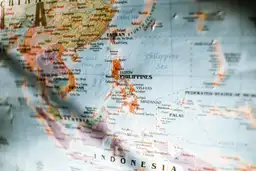
The Philippines covers an area of about 298,170 km², with 7,641 islands making up the archipelago — far more than the previously cited figure of 7,107. The population density is about 378 inhabitants/km² based on the 2024 census.
The Metro Manila area — the cultural and economic centre — is home to over 13 million
people, making it one of the densest capitals in the world, including cities such as Manila,
Makati, and Quezon City. Elsewhere in the Philippines — including Palawan (Luzon), Cebu (Visayas), and parts of Mindanao — population distribution is uneven, ranging from bustling
cities to remote villages.
Population
According to the 2024 census (1 July 2024), the population of the Philippines was 112.7 million people, with an annual growth rate of 0.80% between 2020 and 2024.
- Median age: 26.1 years. More than 64% are between 15 and 64 years old, and over 30% are under 15: youth dominates!
- Household structure: The average household size is gradually decreasing: 4.1 people per household in 2024, down from 5 recently. Nuclear families coexist with extended families, but the model is evolving, especially in urban areas, where the number of single people or couples without children is growing.
- Literacy rate: 90% for ages 5 and up.
- Languages: Filipino (Tagalog) and English are official, but more than 120 indigenous languages are spoken, including Cebuano, Ilocano, Hiligaynon, and Waray.
- Urban-rural distribution: Nearly 49.3% of the population lives in urban areas, a rising share.
- Gender distribution: Generally balanced.
- Ethnic groups: Predominantly Austronesian; minorities include Negritos, Chinese, Spanish, and American heritage.
Economy
The Philippine economy shows strong resilience and rapid growth:
- GDP 2024: Between 440 and 462 billion USD.
- GDP growth 2024: 5.6%.
- GDP per capita: Approximately 3,860 USD (nominal), 12,079 USD (PPP).
- Unemployment rate: 4.4% to 4.5%.
- Poverty rate: 13.6%, significantly decreased in recent years (compared to 17.8% in 2021).
- Average salary: Real incomes have been rising since 2023, returning to pre-pandemic levels; the average wage is around 250 to 300 euros per month in cities, with wide regional disparities.
- Main exports: Semiconductors, electronics, agricultural products (coconut, banana), textiles.
- Major trading partners include the United States, China, Japan, and South Korea.
Religion
Spirituality permeates daily life in the Philippines:
- Around 80% of Filipinos are Catholic, making the Philippines the most populous
Christian country in Asia.
- Muslims (mainly in Mindanao) form the largest minority, followed by Protestants and
other Christian denominations.
- Holy Week (Semana Santa) and Christmas bring together almost the whole country in
community-focused celebrations lasting several days — processions, reenactments,
family gatherings and local festivities.
- Fiestas, celebrated throughout the provinces, remain vibrant expressions of popular
devotion and communal identity.
Tourism
- Post-pandemic recovery: The sector welcomed around 5.95 million international visitors in 2023, with continuous improvement in early 2024 (+9%), but still below the 8.2 million tourists of 2019. The majority now comes from South Korea (about 1.57 million), followed by the United States, Japan, China (in sharp decline), Australia, and Canada.
- Tourism revenue: Approximately 8.7 billion USD in 2023, with 4.83 billion USD in the first half of 2024 (+32.8%). The sector remains a pillar of the national economy.
- Average length of stay: Generally between 7 and 10 days.
- Visitor profile: Mostly leisure travelers seeking beaches, cuisine and outdoor activities.
- Cost of travel: Prices remain attractive — roughly 50% lower than in France — though
quality varies. A mid-range hotel with breakfast in major tourist areas costs around €100
per room per night.
This overview of the Philippines in numbers helps travellers better understand the social and
economic context of the archipelago. At Shanti Travel, our local Philippines travel experts draw
on real field experience to design itineraries that reflect the country’s cultural richness.
Whether you imagine a family trip to the Philippines, a honeymoon in the Philippines, or
exploring the islands through island-hopping in the Philippines, our Philippines travel agency helps you explore the country confidently and authentically.