Tattoo Friendly Onsen in Japan: What to Know Before You Go
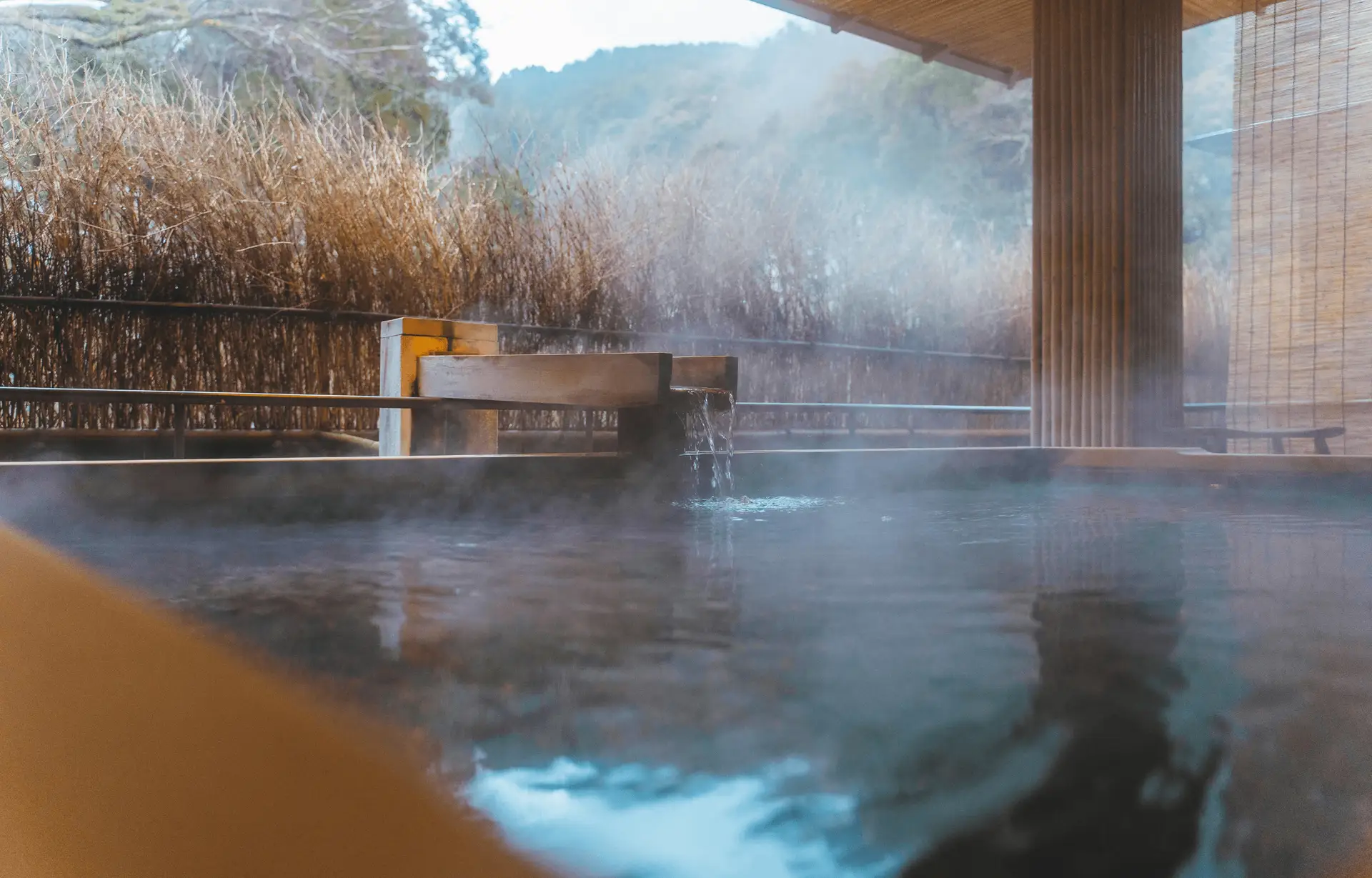
Yes, you can bathe in a Japanese onsen with a tattoo, but it depends on the bath. Japan has no national rule on tattoos in onsen: according to the Japan National Tourism Organization's onsen and tattoo guidance (June 2024), each operator sets its own policy. Some tattoo friendly onsen welcome everyone, some accept small tattoos that are covered, and some refuse tattoos in the shared baths.
The safest options are a private bath you book for a set time (kashikiri) or a ryokan room with its own open-air bath. Below: how to find the right onsen, what to ask, how covering works, and the etiquette once you're in.
How tattoo rules work in Japanese onsen
Japan has no national rule on tattoos in onsen. Each operator sets its own policy, and small tattoos are often overlooked by other bathers, according to the Japan National Tourism Organization (June 2024). Some baths accept everyone, some accept covered tattoos, and some refuse tattoos in the communal baths.
So the question is never "is Japan tattoo friendly?" but "is this particular bath?" A tattoo friendly onsen in one town can sit a short train ride from a bath that turns you away, and the same ryokan may apply different rules to its communal bath, its private bath and its guest rooms.
Why many baths restrict tattoos
Traditional tattoos, irezumi in particular, were long associated with the yakuza, Japan's organised crime groups. Many baths introduced restrictions to reassure other customers, even though a visitor's tattoo has nothing to do with that history. Attitudes are shifting, and some places have lifted their bans. Bans remain common, but they aren't universal.
Onsen, sento and private baths
An onsen uses water from a natural hot spring. A sento is a public bath that generally uses heated tap water. Both follow the same routine: you wash first in the area provided, then enter the bath without a swimsuit.
For a tattooed traveller, some sento can be a useful alternative, but they set their own rules too. A kashikiri (sometimes written kashikiri-buro) is a private bath you reserve, and it's usually the simplest answer when the communal bath is a question mark.
Your options as a tattooed traveller
The right choice depends mostly on how many tattoos you have and how big they are.
| Your situation | Best option | What to do |
|---|---|---|
| One small tattoo | A bath that accepts covered tattoos | Ask what size is allowed, bring your own waterproof patch |
| Several or large tattoos | Private bath or a bath that welcomes tattoos | Skip cover-ups, book a private slot or pick a listed bath |
| You want a communal bath | A bath that says it welcomes tattoos | Check its current policy and keep written confirmation |
| You want zero risk | Ryokan room with a private open-air bath | Confirm the bath rules when you book |
| You're arriving late with no time to check | Private bath or room bath | Ask by message before the day you travel |
Book a private bath (kashikiri)
A kashikiri is a private bath you book for a set time, usually 45 to 60 minutes, according to other guides. The space is yours alone for that slot, so the tattoo policy of the communal bath doesn't come into play.
Prices vary by place, and the sources don't give a figure worth quoting, so ask when you book. In busy periods these slots go first, which is why it pays to reserve ahead. Our experts also suggest looking for this option before you choose the ryokan, not after you arrive.
Choose a ryokan room with a private open-air bath
A ryokan room with a private open-air bath (kyakushitsu tsuki rotenburo) lets you bathe without using the communal bath. Ryokan policies vary, so confirm the bath rules when you book.
Expect to pay more than for a standard room. Don't assume the bath is open around the clock: availability and cleaning times follow the ryokan's own schedule, so ask what applies to your room.
Pick a tattoo friendly onsen
Some baths state clearly that they accept tattooed guests, and the experience is then the same as for anyone else: changing room, shower, a thorough wash, then the water. The seven tattoo-friendly onsen listed by JNTO are Dogo, Kinosaki, Otakinoyu, Shibaseki, Yamato-no-yu, Saki-no-yu and Hottarakashi.
Two come with transport times. Yamato-no-yu is about 40 minutes from Narita Airport, which suits a first or last night in Japan. Kinosaki is about 2.5 hours by train from Kyoto, and Kinosaki's official tattoo guide explains how its baths handle tattoos.
Policies change, so treat any list as a starting point. Check the bath's website or ask before you go, and keep a screenshot or email of the answer in case the conditions aren't posted at the entrance.
Cover-ups: when a patch works
Some baths let you in if a small tattoo is fully covered with a waterproof patch, but covering never guarantees entry. Ask the bath first and bring your own cover.
Patches and adhesive covers made for tattoos are sold in advance and sometimes offered on site, but don't count on reception having one. Ask which sizes are allowed, because a bath that accepts a covered wrist tattoo may not accept a covered sleeve. If you have large or several tattoos, a cover is rarely the right plan.
Tattoos in Japan beyond the bath
Onsen are where most travellers meet the question, but tattoos in Japan raise it in a few other places too. The logic is the same throughout: it comes down to the establishment, not the state.
Is there a law against tattoos?
The JNTO guidance describes no national rule on tattoos in onsen. What you meet is an establishment's policy, written into its house rules or applied at the door. The same applies to a sento or a ryokan, which is why two similar places can answer differently.
Tattoos and attitudes
Irezumi carried a heavy reputation for a long time, and that reputation explains the rules more than any dislike of visitors. Most tourists have tattoos chosen for their looks, and many baths now recognise the difference. In practice the rule often exists to reassure older local customers, which is why attitudes vary so much from place to place and why small, covered designs are more likely to be tolerated.
If you are asked to cover up or leave
Stay polite and accept the rule. Arguing at the counter won't change a bath's policy, and a calm "thank you, I'll go elsewhere" leaves a better impression for the next tattooed visitor. Switch to your backup: another bath that welcomes tattoos, a sento that allows them, or a private bath. For the wider picture, see our pages on cultural differences in Japan and travelling responsibly in Japan.
How to check a tattoo policy before you book
What to look for
Start with the establishment's own site. Some baths write "tattoo friendly" outright, others set out conditions in their house rules. Look at which bath type the wording covers, since the public bath, the private bath and the rooms may follow different rules.
Be wary of old forum posts and dated articles. A place that welcomed tattoos a few years ago may have changed its mind, and the reverse is true as well.
What to ask a ryokan or onsen
Send a short message before you book, not at check-in. Mention that you have a tattoo and ask:
- Do you accept tattoos in the communal bath?
- Can I cover the tattoo, and what size is allowed?
- Do you have a private bath or a room with a private open-air bath?
- How do I book it, and for how long?
- Can you confirm this by email?
If the policy isn't stated anywhere, that last question matters most. A written answer saves you from finding out in front of the bath.
Planning onsen into your itinerary
If onsen matter to your trip, think about them when you pick where to stay. Hot-spring regions with several baths give you alternatives if one refuses, and private baths or tattoo-welcoming places book out in busy periods. You can browse trips to Japan to see where bathing fits the route.
Not sure which ryokan fits? Tell our Japan experts you have a tattoo and they will build the stay around baths you can use.
Onsen etiquette once you are in
Once a bath accepts you, the routine is the same for everyone, and it's the part that surprises first-timers most. Bathing is without a swimsuit, which is also the short answer to whether you can wear your underwear in an onsen: no.
- Wash first. Sit at a washing station, use the shower and toiletries, and clean thoroughly. The bath is for relaxing, not washing.
- Enter the water without a swimsuit.
- Keep the small towel out of the water. Rest it on the edge of the pool or on your head.
- Tie up long hair so it stays dry.
- Leave phones and cameras out of the bathing area, which protects other bathers' privacy.
- Keep your voice low, and don't swim or splash.
- Remove jewellery and use the lockers.
Other guides put the water at about 40 to 44 C (104 to 111 F), so go in slowly and step out when you feel hot.
In ryokan, baths are often open early in the morning and late in the evening, with closures for cleaning. For a quieter soak, check the opening hours and avoid the busiest times. For more habits worth knowing before you land, our Japan travel guide has the rest.
Plan onsen into a tailor-made Japan trip
A tattoo shouldn't keep you out of Japan's bathing culture. It just changes how you choose where to stay: a ryokan with a private bath, a room with its own open-air bath, or a bath that says it welcomes tattoos.
Create your tailor-made Japan trip: our local experts will choose ryokan with private baths and check the tattoo policy before you book. Start your request and tell them about your tattoos from the start.
Tattoo friendly onsen towns FAQ
Reports say yes. A January 2024 travel blog states that the bathhouses in Shibu Onsen let guests with tattoos in. Rules can change and each bathhouse decides for itself, so message your ryokan or the bathhouse about your tattoos before you travel and ask them to confirm the current policy.
Recent reports say yes. A July 2025 tattoo guide states that all three major public baths in Kusatsu officially allow tattoos, and a December 2025 Stars and Stripes report says no coverings are required and there are no limits on tattoo size or number. Check with the bath before you go, as policies can change.
Our travel ideas for Japan

Our travel guides to Japan
Japan Itinerary: 3 Weeks – My 21-Day Route
Japan Luggage Forwarding: How Takkyubin Works, Cost and T...
Japanese Temples and Shrines: Our Experts' 5 Best Picks
Japanese Desserts: 10 Sweets to Try on Your Trip to Japan

5 places in Japan inspired by manga and anime