Anime Locations in Tokyo: 10 Real Places to Visit
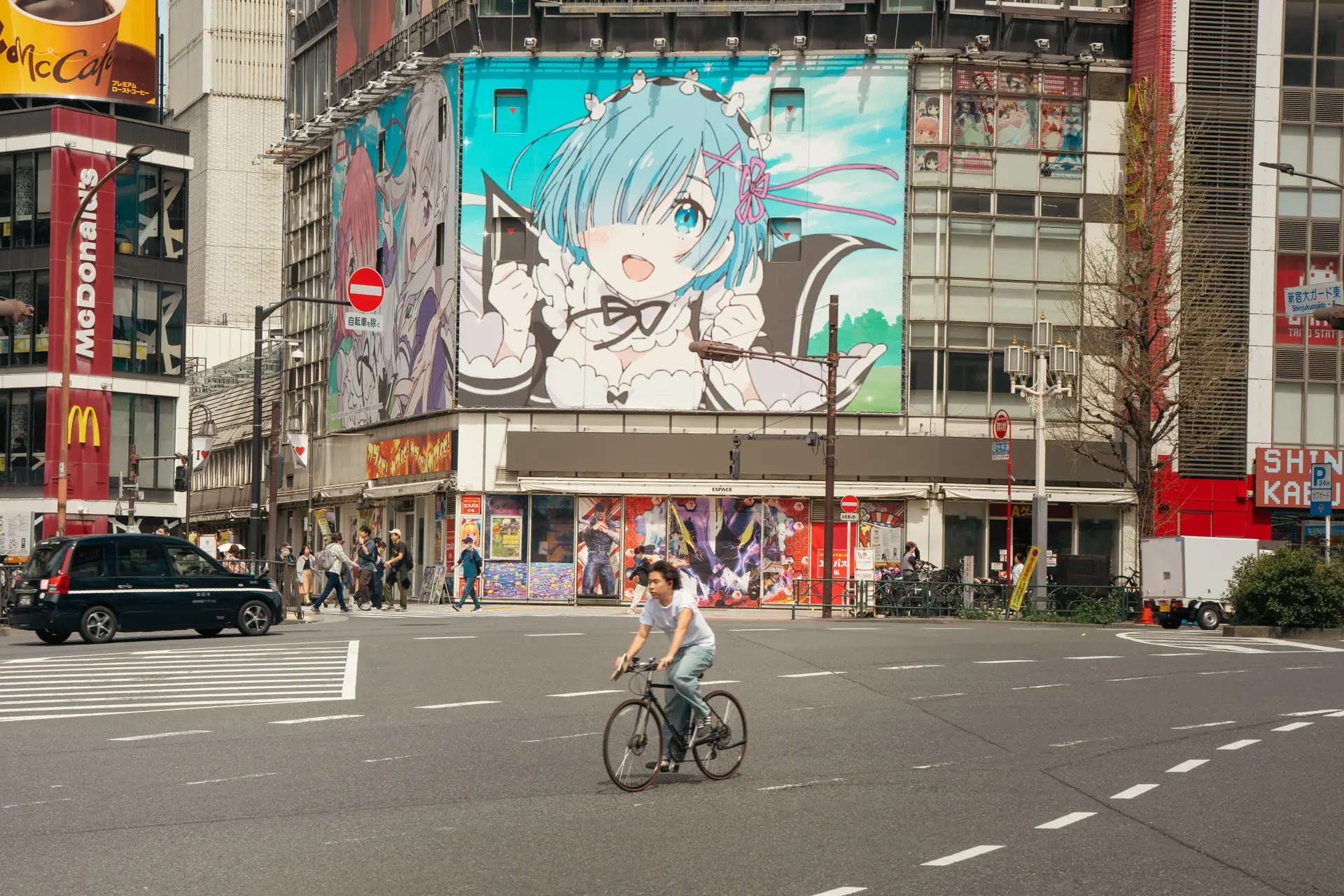
The best anime locations in Tokyo are real places you can visit: the Suga Shrine steps from Your Name in Shinjuku, Shibuya for Jujutsu Kaisen, Hijiri Bridge in Ochanomizu for Suzume, Tokyo Tower, Sensō-ji in Asakusa for Demon Slayer, plus Akihabara, Nakano Broadway and the Ghibli Museum in Mitaka for fan culture.
The connection between Japan and manga is, in many people's minds, almost inseparable. Perhaps, like me, manga were even your gateway to Japan. Some stories take place in parallel worlds, where the similarities are hard to find. Others are set in our modern world, so you can visit the real locations.
So I would like to introduce you to 10 places in Tokyo featured in famous manga and anime. Most sit in districts a first trip to Tokyo already includes, so they slot into a Japan travel guide itinerary without a special detour.
Table of contents
- Your Name
- Jujutsu Kaisen
- Suzume
- Sailor Moon and Detective Conan
- Demon Slayer
- Akihabara and Steins;Gate
- Nakano Broadway
- Odaiba
- Ghibli Museum
- How to combine anime places in Tokyo
- Beyond Tokyo and planning your trip
Anime places in Tokyo at a glance
| Place | Anime | Area | Closest station | Time needed | Cost |
|---|---|---|---|---|---|
| Suga Shrine staircase | Your Name | Shinjuku | - | - | - |
| Shibuya | Jujutsu Kaisen | Shibuya | Shibuya Station | - | - |
| Hijiri Bridge | Suzume | Ochanomizu, near Akihabara | Ochanomizu | - | - |
| Tokyo Tower | Sailor Moon, Detective Conan | Minato | - | - | - |
| Nakamise-dori and Sensō-ji | Demon Slayer | Asakusa | - | - | - |
| Akihabara | Steins;Gate | Akihabara | - | - | - |
| Nakano Broadway | Anime shopping | Nakano | Nakano | 3 to 4 hours | Free |
| Odaiba | Captain Tsubasa | Odaiba | Tokyo Teleport area | 4 to 6 hours | Free |
| Ghibli Museum | Studio Ghibli | Mitaka | Mitaka | 2 to 4 hours | JPY 1,000 (adult) |
Your Name: the Suga Shrine staircase in Shinjuku
Released in Japan in 2016, Your Name, directed by Makoto Shinkai, tells the story of Mitsuha, a high-school girl living in a small town, and Taki, a young Tokyoite, who mysteriously begin switching bodies. It is a story of love, time and destiny, with many locations that actually exist in Tokyo and can be visited during a trip to the capital.
The best-known is undoubtedly the staircase near Suga Shrine in Shinjuku. I recommend making a detour there if you are a fan of the film.
It is a chance to revisit one of the most iconic settings from Your Name, particularly the one in the final scene, and perhaps even recreate the moment with your loved ones.
Jujutsu Kaisen: Shibuya
Created by Gege Akutami, Jujutsu Kaisen follows Yuji Itadori, a high-school student drawn into the world of jujutsu sorcerers after swallowing a cursed object. Between battles against curses and lessons in sorcery, it has become one of the best-known shonen manga of recent years. The series regularly puts Tokyo in the spotlight, and several locations in Shibuya can be recognized in the city.
For me, the essential stop is still Shibuya, particularly Shibuya Station, which has become an iconic location associated with the series. From there you can explore the district, which remains one of the liveliest areas of Tokyo.
Suzume: Hijiri Bridge in Ochanomizu
Directed by Makoto Shinkai, who also made Your Name, Suzume follows Suzume, a high-school girl who meets a young man responsible for closing mysterious doors across Japan to prevent further disasters. Their journey takes them from Kyushu to Tokyo, through landscapes marked by earthquakes and the traces they leave.
While exploring Akihabara, I recommend stopping at Hijiri Bridge in Ochanomizu. Wait a little while and the trains will emerge from underground, just as they do in the film. It is an easy stop to add to a walk through the neighborhood, and a fun way to rediscover Suzume's world in real-life Tokyo.
Sailor Moon and Detective Conan: Tokyo Tower
What could these two anime possibly have in common? Tokyo Tower!
In Sailor Moon, created by Naoko Takeuchi, Tokyo Tower is one of the landmarks that appears in the series. Detective Conan, created by Gosho Aoyama, also regularly features the Japanese capital and its landmarks. Two very different worlds, both deeply tied to Tokyo.
Whether you love Tokyo Tower or prefer Tokyo Skytree, Tokyo Tower remains an enduring symbol in many anime and Japanese works. I can only recommend stopping by and, who knows, perhaps you will even find the Sailor Moon manhole covers.
Demon Slayer: Nakamise-dori and Sensō-ji in Asakusa
The story of Demon Slayer (Kimetsu no Yaiba) takes place during the Taisho era, when Japan was gradually opening up to Western cultures. Nakamise-dori, with its traditional shops and historic atmosphere, can evoke the Japan depicted in the series.
I particularly recommend visiting after nightfall. The atmosphere of the street and Sensō-ji Temple changes completely, giving way to something calmer and more mysterious. It is one of my favorite times to discover Asakusa. And who knows, perhaps you might run into Muzan and his demons near the temple?
Akihabara anime: Steins;Gate and the manga district
Akihabara is Tokyo's main district for manga, anime, video games and merchandise. Its link to Steins;Gate dates to 2010, when the series set its story in the neighborhood's townscape.
That makes it the obvious base if you are searching for a manga district in Tokyo: the shops are the draw, and the Steins;Gate connection gives the streets a story. The Tokyo tourism board lists Akihabara among its anime tourism spots. Ochanomizu, home of the Suzume bridge above, is right next door, so the two stops combine easily.
Nakano Broadway
Nakano Broadway is a compact multi-level complex with a dense concentration of anime shops. Plan 3 to 4 hours; entry is free and the closest station is Nakano.
Where Akihabara spreads across streets, Nakano Broadway keeps everything under one roof, which suits a rainy afternoon of browsing for manga and collectibles. Expect to spend longer than you planned if you collect anything at all.
Odaiba
Odaiba is about 40 minutes from central Tokyo, and the Tokyo Teleport Station area is the usual way in. A travel guide estimates 4 to 6 hours for the district, and it is free to wander.
Football fans who know Captain Tsubasa can follow the series' Tokyo locations here; the same guide puts walking all of them at 4 to 5 hours. Treat it as a half-day or full-day outing rather than a quick stop, and pair it with the waterfront rather than trying to squeeze it between other sights.
Ghibli Museum in Mitaka
As of November 2026 the Ghibli Museum in Mitaka charges JPY 1,000 (about USD 6.25) for visitors aged 19 and over, JPY 700 (about USD 4.40) for ages 13 to 18, JPY 400 (about USD 2.50) for ages 7 to 12 and JPY 100 (about USD 0.60) for ages 4 to 6; children aged 3 and under enter free. Dollar amounts use 160 yen to the dollar.
The closest station is Mitaka, and most visitors spend 2 to 4 hours inside. Tickets and release dates are on the official Ghibli Museum tickets page. Do not confuse it with Ghibli Park, which is a separate park outside Tokyo.
How to combine anime places in Tokyo
Most of these stops fit into a standard Tokyo itinerary. Shinjuku, Shibuya, Asakusa and Ochanomizu are districts you would likely visit anyway, so you can see the locations without giving a whole day to a single series.
| Area | Anime spots | Fits with |
|---|---|---|
| Shinjuku | Suga Shrine staircase | A district you would visit anyway |
| Shibuya | Shibuya Station area | A district you would visit anyway |
| Ochanomizu and Akihabara | Hijiri Bridge, Steins;Gate, manga shops | Each other, side by side |
| Asakusa | Nakamise-dori, Sensō-ji | A district you would visit anyway |
| Minato | Tokyo Tower | Tokyo Skytree comparison |
| Nakano | Nakano Broadway | A half-day of shopping |
| Odaiba | Captain Tsubasa locations | A half- or full-day outing |
| Mitaka | Ghibli Museum | 2 to 4 hours on its own |
If you are still deciding how many days Tokyo deserves, the 10-day Japan itinerary shows where it fits in a first trip. And if you would rather not work out the order yourself, our local experts can do it for you via the trip request form.
Beyond Tokyo and planning your trip
Tokyo is full of places connected to manga and anime, and most of the fan districts are here. Ultimately, manga also reflect Japanese culture and everyday life, so it is natural to come across neighborhoods and atmospheres that echo the works you know. But Japan obviously does not stop at Tokyo. For other places across the country, see our guide to anime and manga locations across Japan.
That is precisely what I enjoy about this type of trip: starting with a manga you love and gradually discovering the real Japan behind its fictional world. The 14-day Japan trip between manga and temples shows one way to do it.
Want these stops built into a real Tokyo itinerary? Tell our local Japan experts which series you love and we'll plan the route around them, with the rest of Japan alongside. Start your trip request.
Anime locations in Tokyo FAQ
Yes. Admission is by advance reservation only, and no tickets are sold at the museum itself. Tickets go on sale on set release dates, so check the official Ghibli Museum tickets page for the current schedule before you fix your Tokyo dates.
Yes. The Toei Animation Museum opened in 2018 and shows storyboards and celluloid used in making anime. The Suginami Animation Museum is also on most lists. The Tokyo tourism board has an animation page with more ideas.
Yes. An itinerary can combine locations from your favorite works with major cultural sites across different regions, and our local team organizes the route around your titles. The manga-and-temples trip linked above is a ready-made starting point to adapt.
Our travel ideas for Japan
Our travel guides to Japan

Unique activities to experience in Japan

Where to Go Skiing in Japan in Winter?

Japan landscape: the 5 most beautiful places and when to ...

Japanese Animals: Native Species, Icons and Where to See ...

Japanese Ethnic Groups: Yamato, Ainu, Ryukyuans and Minor...