Japanese Desserts: 10 Sweets to Try on Your Trip to Japan
The Japanese desserts most worth tasting on a trip are mochi (daifuku, warabi mochi and dango), taiyaki, wagashi, dorayaki, kakigori, fluffy pancakes and Japanese cheesecake, purin, castella and baumkuchen, melon pan, and the modern wagashi sold in department-store food halls. Japan is often seen as the land of savory food, but anyone with a sweet tooth should slow down here. A Japanese dessert is a matter of texture, seasonality and restraint, and the sugar never hides the taste of the ingredients. The Japan National Tourism Organization also notes that desserts in Japan are generally less sweet than elsewhere.
Below, each of the 10 comes with what it is, how to eat it and, for most, the address our local experts like best. Hungry for something savory too? Start with our top 10 Japanese dishes to try.
Japanese desserts at a glance
| # | Dessert | What it is | Our experts' address |
|---|---|---|---|
| 1 | Mochi (daifuku, warabi mochi, dango) | Pounded glutinous rice, in many forms | Gungetsu (Ginza), Senso-ji stalls (Asakusa) |
| 2 | Taiyaki | Fish-shaped cake, usually filled with red bean paste | Taiyaki Wakaba (Yotsuya, Tokyo) |
| 3 | Wagashi | Traditional pastries served at the tea ceremony | Mannendo Honten (Ginza, Tokyo) |
| 4 | Dorayaki | Two small pancakes sealed with red bean paste | Usagiya (Ueno, Tokyo) |
| 5 | Kakigori | Finely shaved ice with syrup, fruit or matcha | Shimohodo Ice Shop (Tokyo) |
| 6 | Fluffy pancakes and Japanese cheesecake | Airy soufflé versions of Western classics | Flipper's Pancake, Rikuro Ojisan (Osaka) |
| 7 | Purin | Firm, creamy egg pudding with bitter caramel | Konbini shelves and retro cafés (kissaten) |
| 8 | Castella and baumkuchen | Honey sponge cake and German spit cake | Fukushaya (Nagasaki) |
| 9 | Melon pan | Brioche with a crunchy cookie crust | Kagetsudo (Asakusa, Tokyo) |
| 10 | Modern wagashi | Traditional sweets with chocolate, cream or fruit | Depachika at Isetan or Mitsukoshi |
Traditional Japanese desserts: mochi, taiyaki, wagashi and dorayaki
1. Mochi: daifuku, warabi mochi and dango
Mochi is the base of Japanese pastry: a paste of pounded glutinous rice that comes in many forms. Daifuku is a small filled ball, often stuffed with anko (sweet red bean paste) or with a strawberry. Warabi mochi has a gelatinous, melting texture and is eaten fresh with roasted soy flour (kinako). Dango are small dumplings served on skewers, often coated in a sweet-and-salty soy syrup.
Don't bite into mochi like a cookie. The texture is elastic, so eat it in small bites and keep a scalding hot green tea beside you to balance the stickiness.
For an exceptional daifuku in Tokyo, our experts send you to Gungetsu in Ginza. For dango, nothing beats the atmosphere of the stalls around Senso-ji temple in Asakusa.
2. Taiyaki
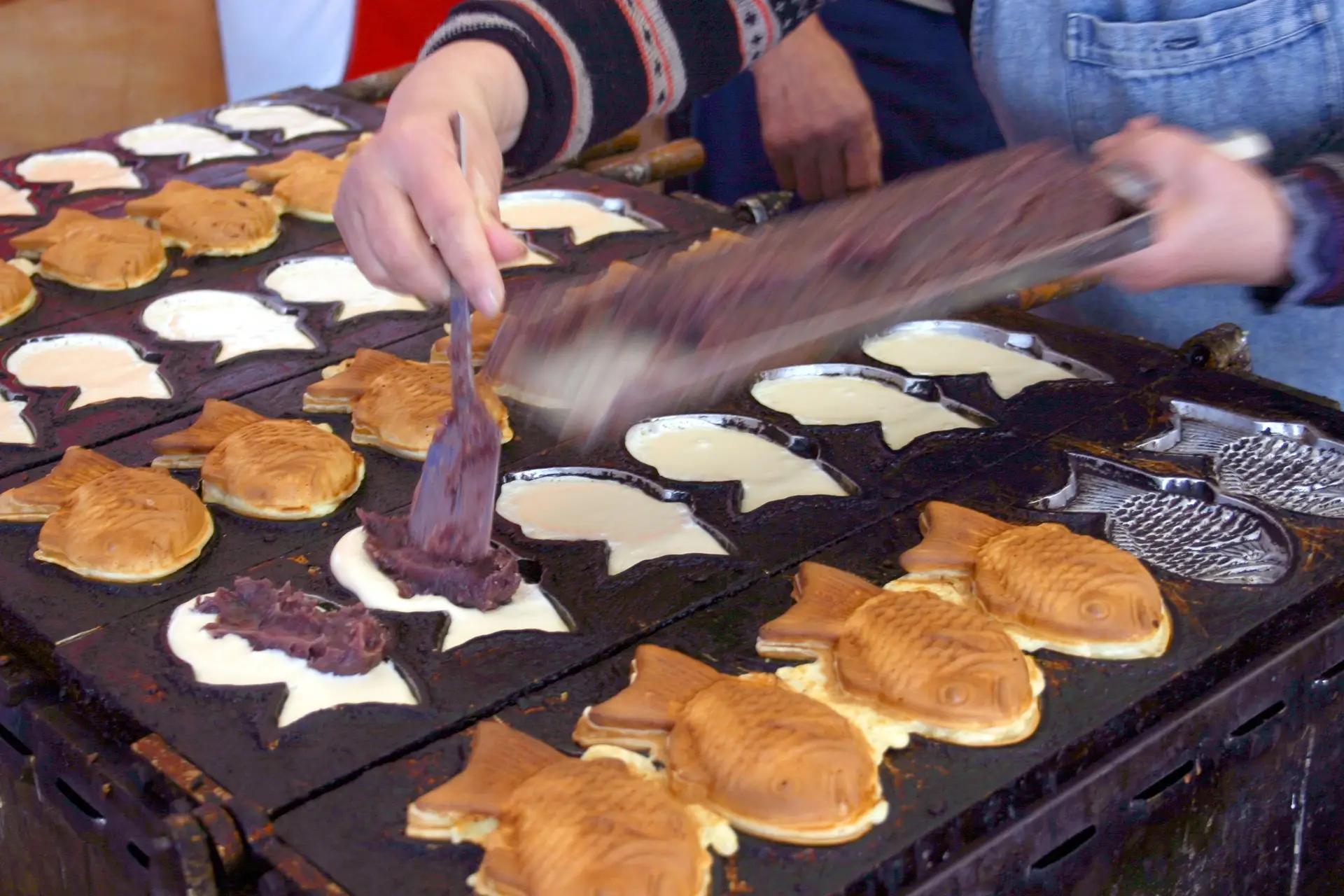
This little cake shaped like a sea bream, a symbol of luck, is the king of Japanese street food. It's traditionally filled with red bean paste, though you'll now find it filled with custard cream, chocolate or even sweet potato.
Japan has an eternal debate: do you start eating from the head or from the tail? The head is often softer, the tail crunchier.
Taiyaki Wakaba in Yotsuya (Tokyo) is an institution, with a thin, crisp batter cooked in traditional individual molds.
3. Wagashi
Wagashi are the traditional pastries served during the tea ceremony. They are more than desserts: they're miniature works of art that show the current season, with cherry blossoms in spring and maple leaves in autumn. The term is broad, and the Japan National Tourism Organization explains that it covers a wide range of sweets made with traditional Japanese ingredients and methods.
Their taste is deliberately very mild, to offset the bitterness of matcha. You admire them with your eyes first, then cut them gently with a small wooden pick.
Mannendo Honten is a tea room in Ginza (Tokyo) where you can sit down and enjoy a few sweets.
4. Dorayaki
Technically a wagashi, dorayaki earns its place in this list anyway. Made famous by the character Doraemon, it looks like two small pancakes sealed together with a layer of red bean paste. It is the ultimate comforting afternoon snack.
A good dorayaki is judged by the moisture of its cake: soft as a sponge, never sticking to the palate.
Usagiya in Ueno (Tokyo) is a classic stop for dorayaki lovers, and many consider it the best in the capital. The batter is exceptionally soft, and the honey adds a subtle sweetness that lifts the melting red bean purée.
Popular Japanese desserts for hot days and café breaks
5. Kakigori
Kakigori is the star dessert of summer: finely shaved ice, like snow, drizzled with syrups, condensed milk, fresh fruit or matcha.
A "real" kakigori uses natural ice from mountain springs. The texture is so fine that it melts instantly on the tongue, with no brain freeze.
Shimohodo Ice Shop in Tokyo makes seasonal creations that our experts rate as incredible.
6. Fluffy pancakes and Japanese cheesecake
Japan has reinvented Western classics by giving them an airy lightness. Fluffy pancakes are soufflés that jiggle on the plate, and Japanese cheesecake (soufflé cheesecake) is far less dense and less sweet than its New York cousin.
Bring patience. To get that cloud-like texture, the pancakes cook at low temperature for nearly 20 minutes, so don't walk in ravenous and in a hurry.
For pancakes, Flipper's Pancake (several locations) is a safe bet. For cheesecake, the famous Rikuro Ojisan in Osaka is a must.
7. Purin (Japanese pudding)
Inspired by French egg custard, "purin" is everywhere in Japan, from konbini (convenience store) shelves to retro cafés called kissaten. It's firm, creamy and topped with a slightly bitter caramel.
In traditional cafés it often arrives with a small mountain of whipped cream and a candied cherry, an aesthetic typical of the Showa era.
Japanese sweets with foreign roots
8. Castella and baumkuchen
Castella, brought by the Portuguese in the 16th century, is a dense honey sponge cake that's especially popular in Nagasaki. Baumkuchen, the German spit cake, has become a national obsession and is often given as a wedding gift, a symbol of longevity.
For castella, Fukushaya in Nagasaki is the historic reference address.
9. Melon pan
Don't trust the name: there's traditionally no melon inside. Melon pan is a brioche covered with a thin layer of crunchy cookie dough, scored so the ridges recall melon skin.
The secret is to eat it straight from the oven, when the contrast between the warm, soft center and the sugary crust is at its peak.
Kagetsudo in Asakusa sells giant, crunchy melon pan that all of Tokyo fights over.
Modern Japanese sweets, all under one roof
10. Modern wagashi
Japan now excels at fusion, bringing chocolate, fresh cream and exotic fruit into its base desserts. That means chocolate mochi and black sesame ice cream.
The easiest way to taste many of these at once is the basement food halls of department stores, called depachika, such as Isetan or Mitsukoshi. All these specialties are grouped together in one luxurious setting, so it's the quickest way to taste several in a single stop. For what else to order in Japan, see our guide to what to eat in Japan.
When to eat which Japanese dessert
Seasons set the menu. Wagashi follow the calendar, with cherry blossoms in spring and maple leaves in autumn, and kakigori is the dessert of summer. Local festivals are a good excuse to eat on the street: kakigori and taiyaki are the street-food stars at these events. If you want your dessert stops to land on a matsuri, check the dates before you fix your trip, and see the best time to go to Japan for the wider seasonal picture.
Plan your sweet stops in Japan
On a tailor-made trip to Japan, our advisors slip the best addresses for traditional tea rooms and modern pastry shops into your travel notebook, so every break becomes a discovery.
Japanese desserts FAQ
There's no single winner, but mochi is the base of Japanese pastry. Daifuku (a filled mochi ball), warabi mochi and dango are its best-known forms, while taiyaki, the fish-shaped cake, is the king of street food. Dorayaki, two small pancakes sealed with red bean paste, is the classic comforting snack.
Tokyo has several. Our experts send you to Gungetsu in Ginza for daifuku, Taiyaki Wakaba in Yotsuya for crisp taiyaki, Usagiya in Ueno for dorayaki and Kagetsudo in Asakusa for giant melon pan. For dango, the stalls around Senso-ji temple in Asakusa are the street-side stop.
Wagashi are the traditional pastries served at the tea ceremony. They are mild on purpose, to balance the bitterness of matcha, and shaped to show the season. Modern desserts such as fluffy pancakes, Japanese cheesecake and purin reinvent Western classics, and modern wagashi add chocolate, fresh cream or exotic fruit.
It depends on the sweet. Wagashi follow the calendar, with cherry blossoms in spring and maple leaves in autumn, and kakigori (shaved ice) is the star dessert of summer. Kakigori and taiyaki also appear as street food at local festivals (matsuri), so timing your trip around one adds a sweet bonus.
Eat it hot, so the crisp batter contrasts with the melting red bean paste inside. Japan has an eternal debate about where to start: the head is often softer, the tail crunchier. Taiyaki is traditionally filled with red bean paste and now also comes with custard cream, chocolate or sweet potato.










![Alignement de maisons de pêcheurs traditionnelles funaya au bord de l'eau dans le village de pêcheurs d'Ine au Japon[cite: 10].](https://dozjp40rj04ea.cloudfront.net/eyJidWNrZXQiOiJzaGFudGktc3RyYXBpLXVwbG9hZHMiLCJrZXkiOiJKYXBvbl9JbmVfVmlsbGFnZV8wMDk0MjE5MTYwLmpwZyIsImVkaXRzIjp7InJlc2l6ZSI6eyJmaXQiOiJjb3ZlciIsIndpZHRoIjoyNTZ9LCJ0b0Zvcm1hdCI6IndlYnAiLCJ3ZWJwIjp7InF1YWxpdHkiOjU1fX19)