
Your expert on destination Japan
Osaka has a different reputation from Kyoto or Tokyo: it is known as a city focused on food, a laid-back atmosphere and a sense of humor that Japanese people themselves readily associate with its residents. Two days are enough to understand this distinctive identity, between historic castles, lively neighborhoods and street food. For a trip to Japan that includes the Kansai region, here is an itinerary designed to capture the essentials of the city without unnecessary rushing.
Key information Advice Recommended duration 2 days to discover Osaka's main neighborhoods and sights without unnecessary travel between them. Day 1 Osaka Castle, Namba, Namba Yasaka Shrine and Dotonbori. Day 2 Umeda, Tennoji and Shinsekai. 3 days Add Universal Studios Japan for a full day. From Osaka Nara and Kobe are easily accessible by train for a day trip.
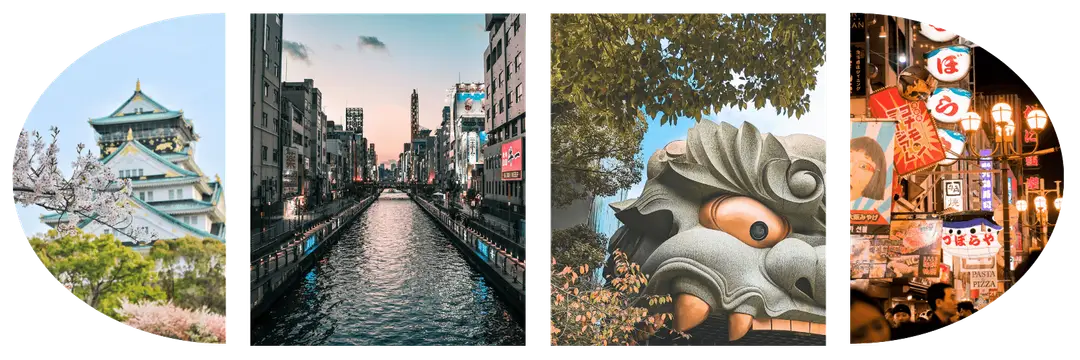
Start with Osaka Castle, built in 1583 by Toyotomi Hideyoshi, one of the unifiers of feudal Japan. Destroyed and rebuilt several times over the centuries, the current building dates from 1931 and now houses a museum dedicated to the site's history. The stone walls, some of whose blocks weigh several dozen tons, testify to the scale of the construction work carried out at the time. The park surrounding the castle, planted with more than 600 cherry trees, attracts large crowds in late March and early April during hanami.
My expert tip: Depending on the time of year, buying your ticket in advance can help reduce waiting times.
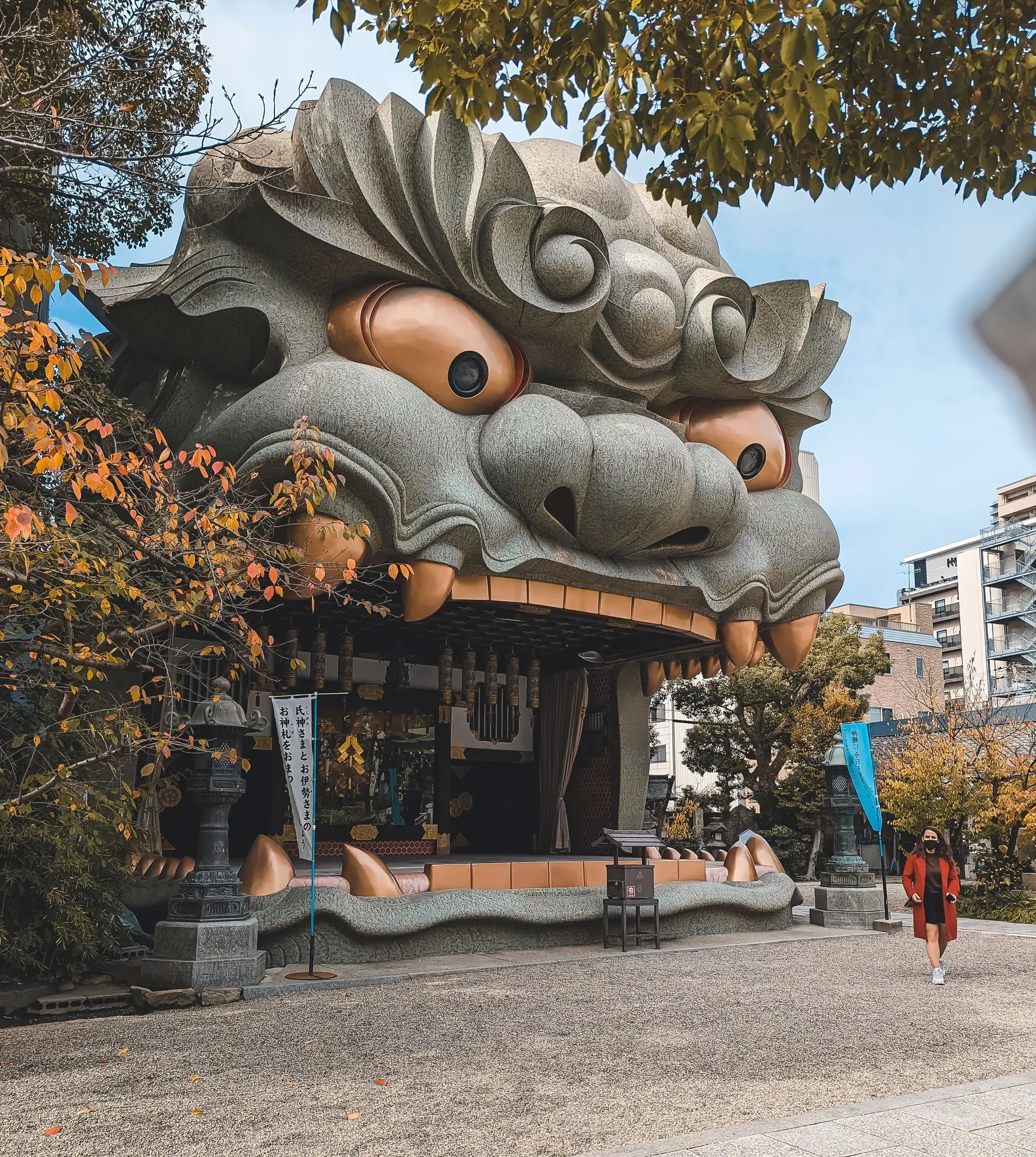
Head west into the city to discover Namba Yasaka Shrine, best known for its giant lion head, which is often mistaken for a tiger's. It is an opportunity to discover one of Japan's most unusual shrines. Then head to the Namba district, where you will find long covered shopping arcades.
My expert tip: For those with a sweet tooth, I recommend stopping at the Rikuro shop. In my opinion, they make the best cheesecakes.
Finally, make your way to Dotonbori, along the canal of the same name. This shopping street is home to some of the city's most recognizable illuminated signs, including the Glico Man sign, an illuminated running figure that has stood here since 1935. This is where you will find many of Osaka's local specialties: takoyaki, octopus balls cooked in a pan with round molds, and okonomiyaki, a cabbage-and-batter pancake topped according to individual preferences, often prepared in front of customers on a hot plate built into the table.
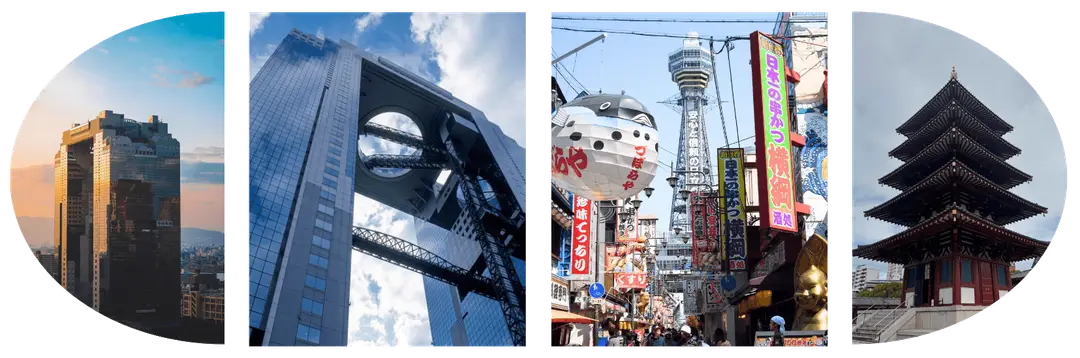
Start your second day at the Umeda Sky Building, a twin-tower complex connected at the top by a suspended bridge and featuring a circular open-air observatory. The different levels of the observatory offer a sense of the city's vast scale, with clear-weather views stretching as far as the surrounding mountains. The building's basement houses a recreated street in the style of the 1920s, with small restaurants recreating the atmosphere of pre-war Osaka.
Continue your day in Tennoji, one of the emblematic districts in southern Osaka. Start with a walk through Tennoji Park, a large green space in the heart of the city, before heading to Shitennō-ji Temple, considered one of the oldest Buddhist temples in Japan. Founded in the 6th century by Prince Shōtoku, it offers a chance to discover another side of Osaka, away from the bustle of the shopping districts.
Walk to the Shinsekai district ("new world" in Japanese). Built in 1912 on the former site of the 1903 National Industrial Exhibition, the area retains a retro atmosphere inspired by Paris and Coney Island. The Tsutenkaku Tower, rebuilt in 1956, dominates the district, and you can enjoy several experiences at the top. For lunch, don't miss the kushikatsu stalls, serving breaded and deep-fried skewers to dip into a shared sauce.
For families or theme-park enthusiasts, Universal Studios Japan, located around twenty minutes from the city center, offers attractions inspired by international franchises as well as an area dedicated to a popular wizarding universe enjoyed by both children and adults. A full day is needed to make the most of it, which means sacrificing part of the itinerary outlined above.
Osaka's greatest advantage is its strategic location: it is very easy to **use the city as a base for day trips, particularly to Nara and Kobe.
Osaka stands out as Japan's culinary capital, with a lively atmosphere that is much more relaxed than in Tokyo and Kyoto. When you travel with Shanti Travel, we organize your visits around activities, providing the perfect opportunity to discover the city's cuisine and local life.
Want to include Osaka in your next trip to Japan? Our local experts are available to help you create an itinerary that combines this food-loving city with the other must-see destinations in the Kansai region.
This FAQ covers the essentials for visiting Kyoto in three days, including transport, crowd avoidance, reservations and a realistic daily pace.
In two days, focus on Osaka's main neighborhoods and sights: Osaka Castle, Namba and Dotonbori on the first day, followed by Umeda, Tennoji and Shinsekai on the second.
Yes. Osaka's main tourist districts are accessible by subway or train and can then easily be explored on foot. A car is generally not necessary for a two-day stay.
Yes. The two cities are easily connected by train and can be combined in the same itinerary in Japan, particularly on a first trip.
Nara, Himeji and Kobe are easy day trips from Osaka. Nara is particularly interesting for its temples, gardens and historical heritage, while Kobe offers a chance to discover another side of the Kansai region.
With a third day, you can spend a full day at Universal Studios Japan, particularly if you are traveling with family or are a theme-park enthusiast.
Subscribe and receive our travel inspirations and practical advice twice a month.

Wanting to share your trip with a group?