Egypt Travel Tips: What to Know Before You Go
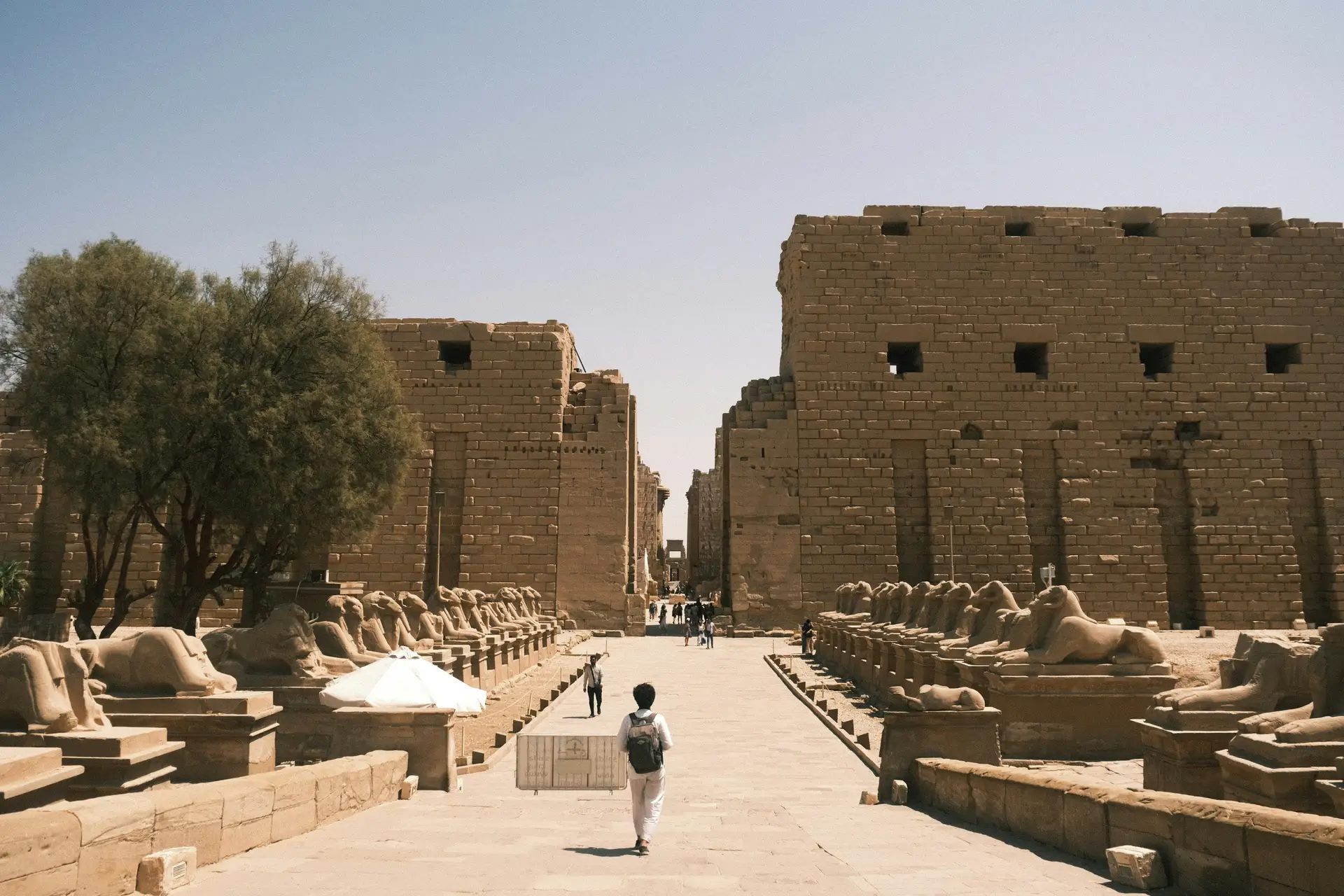
Egypt travel tips start with a few simple habits: check the official safety pages before you book, carry the right visa money, keep small notes for baksheesh, drink only bottled water and dress with respect. This page, written from the viewpoint of Shanti Travel's local Egypt experts, covers each of them, plus a local SIM and what to pack. Egypt is easier to travel than most people expect, once you know the codes. For a wider view of the country, see our Egypt travel guide.
Is it safe to travel to Egypt right now?
Conditions change, so check the US State Department travel advisory for Egypt, the UK government's Egypt travel advice and, if you're Australian, the Smartraveller page for Egypt before you book and again just before you leave. Those pages are updated by governments, and no article can replace them.
What you'll see on the ground is a country that depends on visitors. Tourism is a pillar of the Egyptian economy, and the State puts real resources into protecting sites and travellers. Tourist police stand around the monuments and in the cities. Hotels and temples run systematic security checks, with metal detectors and bag searches at the entrance. It becomes routine after the first day: you put your bag on the belt, walk through and carry on.
In the tourist areas of Luxor and Aswan, people walk around in the evening without any problem. Egyptians tend to be warm, curious hosts, and a friendly "welcome to Egypt" from a shopkeeper is part of the soundtrack of any street.
A practical point: when you read an advisory, look at the region you're actually visiting, not just the country summary. Advice can differ between areas, and your itinerary is what counts. Your travel insurance policy may also depend on the advisory level, so read the wording before you pay.
Entry requirements: passport and visa
Egypt makes arrival fairly straightforward. The procedures are simple and quick, and most visitors from the US, the UK and Australia need a visa that they can get either on arrival or online beforehand.
Passport
Your passport should be valid for at least 6 months after your return date. The rule is applied firmly, so check your expiry date before you book flights, not after. An ID card on its own isn't a good idea for a tourist trip; take the passport.
Visa on arrival and e-visa
Two routes are open to US, UK and Australian travellers. Both give a tourist visa, and the choice comes down to whether you'd rather queue at the airport or fill in a form at home.
| Option | Fee (as of August 2026) | How it works |
|---|---|---|
| Visa on arrival | USD 36 for a single-entry tourist visa, including a USD 6 digital service fee | Buy it at the airport on arrival |
| e-Visa, single entry | USD 30 | Apply online on Egypt's official e-visa portal at least 7 days before departure |
| e-Visa, multiple entry | USD 65 | Same portal, same 7-day lead time |
The USD 36 fee applies from 1 August 2026, according to the UK government's entry requirements page. Many older articles still quote USD 25, which is out of date. An e-visa allows a stay of up to 30 days. Fees and rules can change, so check the official portal or the UK government page before you travel.
Visa on Shanti trips
On a Shanti Travel trip the visa is arranged for you. Our local representative meets you at the airport before immigration, hands you the visa and helps with the formalities. Your passport must still be valid 6 months after your return date. If you'd like to see how this works for your dates, talk to our Egypt team.
Money in Egypt: pounds, cards and baksheesh
Money in Egypt is cultural as much as practical. Contactless payment is slowly spreading, but cash is still what you'll use day to day.
Cash, ATMs and exchange
The local currency is the Egyptian pound (EGP). You can change money at the airport on arrival or at exchange offices in town. Cities have plenty of ATMs, so keep your bank cards for withdrawing cash. In the souks, in taxis and in small shops you pay in pounds, in cash.
As of November 2026, 1 EGP is worth about USD 0.0186. That makes the small notes you'll want worth roughly this:
- 10 EGP: about USD 0.19
- 20 EGP: about USD 0.37
- 50 EGP: about USD 0.93
Rates move, so treat these as a guide and check a converter before you go. Ask your bank about foreign transaction fees and tell it your travel dates so your card isn't blocked on day one.
Tipping in Egypt (baksheesh)
You can't travel in Egypt without understanding baksheesh. It isn't begging. It's a social institution, a supplement to wages for a service rendered, and it's built into how many jobs are paid.
Tipping in Egypt is for:
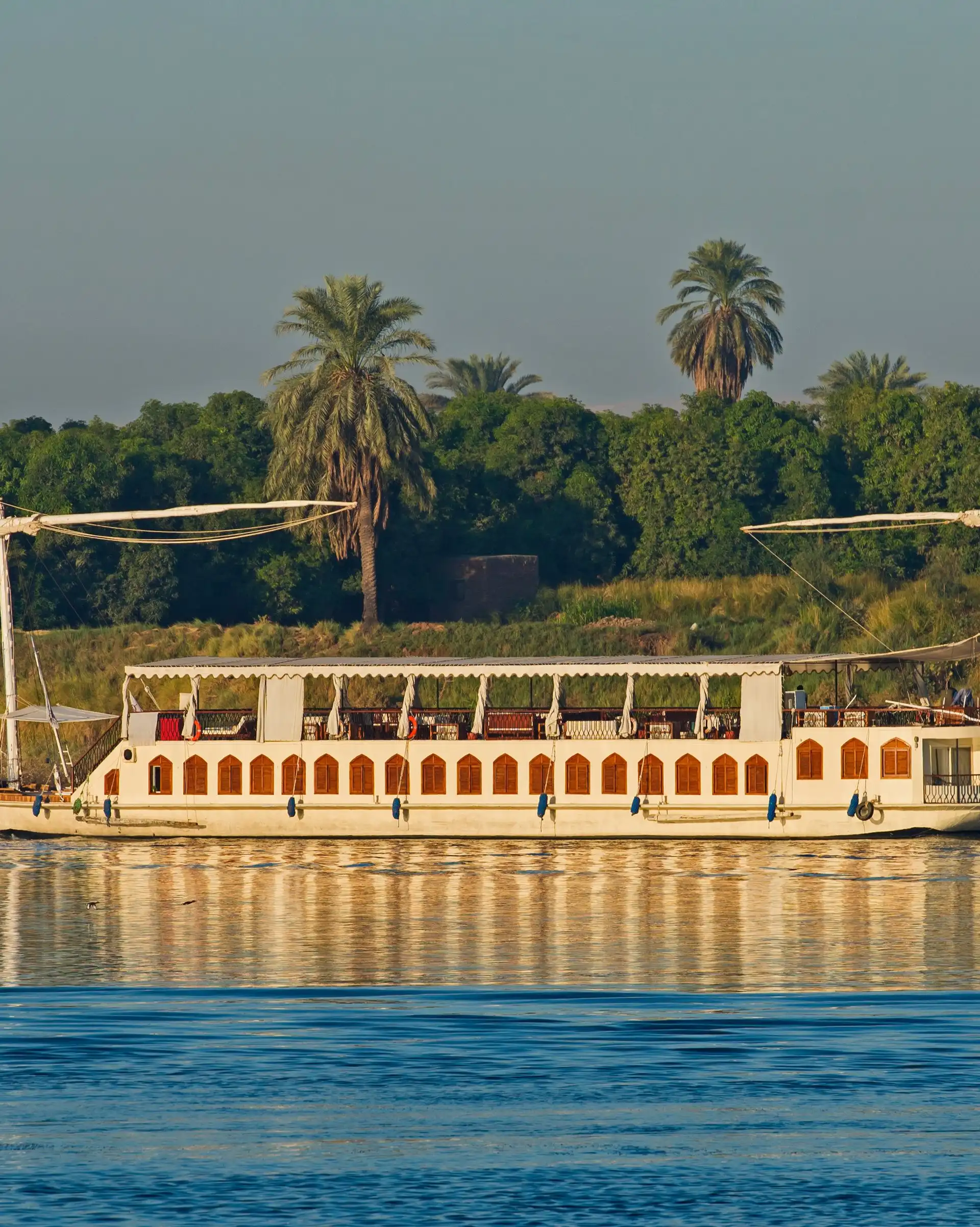
- the crew of your dahabeya (a traditional Nile sailing boat, also spelled dahabiya, like the one on our Nile dahabeya trip)
- your private driver
- porters carrying your bags
- service staff, from housekeeping to the person who opens a tomb door
Many restaurant bills already include a service charge, so look at the bill first. If service was good, add a little cash on top. For a taxi ride, housekeeping or help with luggage, around USD 5 or 5-10% of the service is a common benchmark (as of January 2026).
Whatever the amount, always have small notes on you: 10, 20 and 50 EGP notes. A big bill rarely gets change, and a handful of small ones makes every exchange easier, from the toilet attendant to the man who shows you the best angle for a photo.
Health and hygiene: water, food and sun
A change of climate and environment is enough to upset some stomachs, and the infamous "tourista" is common enough that it has its own nickname. A few habits keep it away. None of them is a reason to worry.
Water and food
Tap water in Egypt is not for drinking. Stick to sealed, bottled water, and check that the cap clicks when you open it. A few more rules:
- Skip ice cubes in small street places.
- If your stomach is sensitive, use bottled water for brushing your teeth too.
- Eat where the food is cooked in front of you and the place is busy.
Sun and heat
The Egyptian sun is strong, even in winter and even when a breeze is blowing. Wear a hat and sunglasses, apply SPF 50 and drink water all day. This matters most at archaeological sites with little shade, and the Valley of the Kings is the clearest case: a bare valley, limestone walls and almost no cover. Go early if you can, and carry water in your bag.
Internet and phone: local SIM or Wi-Fi
Staying connected is easy, but check your home operator's roaming charges before you leave. They can be high, and a day of maps and messages adds up fast.
The local SIM card
A local SIM is the cheapest and most effective option. As soon as you reach the airport you'll find kiosks of the local operators: Orange, Vodafone and Etisalat. They sell a 4G SIM with a large data bundle, and the seller sets it up in a few minutes. That gives you GPS, WhatsApp and internet from the first taxi. Bring your passport; you'll be asked for it.
Wi-Fi
Most hotels and boats have Wi-Fi, but it is often slow and unstable. Don't count on it to download films or to work for hours. A 4G connection through a local SIM is far more reliable, so keep Wi-Fi for light use.
What to wear and pack for Egypt
How should you dress in Egypt? Two words: comfort and respect. Egypt is a conservative country, and in towns and villages it's sensible to dress decently out of respect for the people who live there.
For women and men alike:
- Avoid very short shorts and plunging tops, except in beach areas such as the Red Sea.
- Choose light linen trousers, long skirts and T-shirts that cover the shoulders. Linen is cooler than shorts in the midday heat anyway.
In mosques, women cover their heads (a scarf is enough) and wear long clothes, with arms and legs covered.
A few essentials beyond clothes:
- Shoes: you'll walk on sand and uneven stone, so forget heels. Good trainers or comfortable walking sandals that slip off easily are ideal.
- Something warm: yes, it can be cool. In winter (December to February) and on desert evenings, temperatures drop, and a fleece or light jacket earns its place in the bag.
- A scarf: it shields you from the sun, from the wind on a boat and doubles as a head covering for a mosque.
For the full list, see our packing guide for Egypt.
Etiquette: photos and alcohol
Two small points will save you from blunders.
Photography. Always ask permission before photographing someone. It's basic respect, and many people will smile and say yes once you've asked. Some museums and tombs forbid photos or sell a special photo ticket. Your guide will tell you before you enter, so keep your camera in the bag until then.
Alcohol. It isn't sold freely in ordinary supermarkets. You'll find it in hotels, in licensed bars and on cruise boats, which is where most visitors have a drink at sunset on the Nile.
Plan your Egypt trip with a local expert
Egypt is intense, lively and easy to love. The logistics feel different from home, and most travellers get used to them within a day or two. Once your paperwork is sorted and your small notes are in your pocket, what's left is the part you came for: the temples, the desert light and the slow current of the Nile.
Whether you picture a slow cruise by dahabeya or a cultural trip from Cairo to Luxor, our local experts can build it around your dates and pace. Browse our trips to Egypt for ideas, or tell us your dates and what you want to see, and a local Egypt expert will design your trip: start your inquiry here. These Egypt travel tips are a starting point; the itinerary is where we can make it personal.
Egypt travel tips FAQ
Most sources point to October to April, when days are cooler and sightseeing is comfortable. Some travellers prefer March to May and September for thinner crowds. July is the hottest month, with temperatures between 34.7 and 43.3°C (94.5 to 109.9°F), according to Lonely Planet, so plan midday breaks if you go then.
Egypt uses plug types C and F, with a voltage of 220 V at 50 Hz. Devices from the US are built for 120 V, so check the label for a range such as 100-240 V before plugging in. Phone and laptop chargers usually cope; hair dryers often don't. A simple travel adapter is enough for most gadgets.
Most historical sites and museums in Egypt offer student rates of about 50% off the foreign adult ticket, according to a travel blog. Bring a valid student card, and ask at the ticket window before you pay. Cards that show your name, school and an expiry date are the ones most likely to be accepted.