Mongolia trekking at a glance
The horse is part of the Mongolian imagination, but going on foot is now one of the best ways into the steppe, the Altai massifs and the Gobi. You cover ground slowly, you sleep near herding families, and you reach places no road serves. Hiking in Mongolia is also gentle on the schedule: a day rarely involves more than six hours of walking, so the trips suit active travellers rather than only mountaineers.
The country has five main trek regions: Terelj, the Orkhon Valley, Lake Khuvsgul, the Gobi and the Altai. They differ a lot in altitude, landscape and the months that suit them, so choose the region and the month together.
For the wider case for visiting, see our 5 good reasons to travel to Mongolia.
Is trekking in Mongolia safe?
Treks in Mongolia run with support: a local guide, an interpreter and a satellite phone for emergencies. That matters because many trek areas are remote, with long distances between settlements, so going with a team is safer than going alone.
One practical point for the far west: the Altai Tavan Bogd area sits in a border zone where a permit is required. As of mid 2026 it is arranged locally in Ölgii, and a local team normally handles it for you.
Official advice changes, so read the US State Department's Mongolia advice (travel.state.gov) or the UK FCDO page before booking and again before you leave.
The best treks in Mongolia
Terelj National Park
Terelj lies close to Ulaanbaatar, which makes it the natural first taste of Mongolia trekking. Plan two to five days. Hikers who want a proper climb head for the Khentii mountains, where the panoramas reach 2,800 m. It is the easiest region to add to a short trip.
The Orkhon Valley
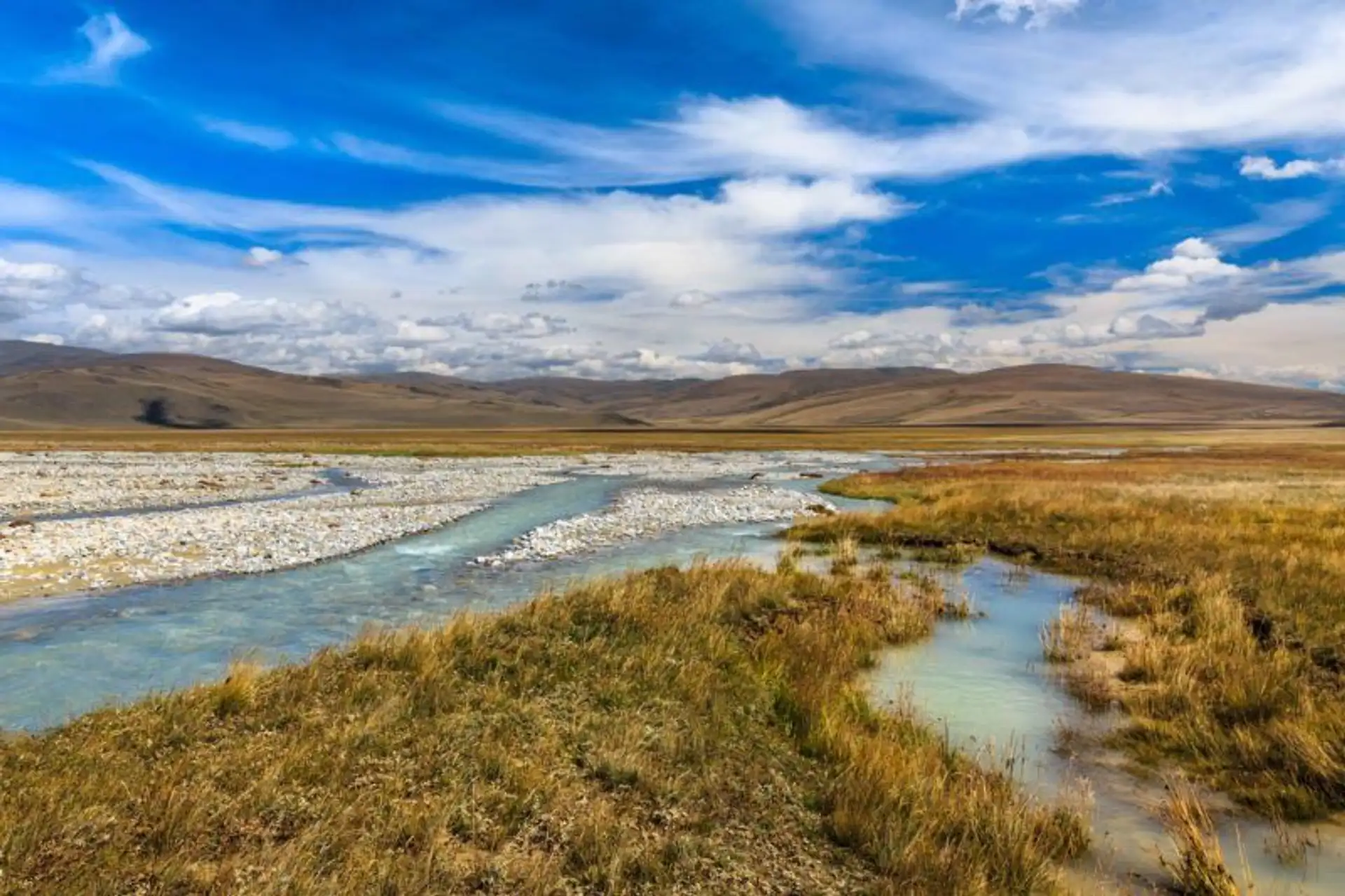
The Orkhon Valley mixes volcanic scenery with some of the richest cultural sites in the country: Karakorum, waterfalls, the Tovkhon monastery and the Naimaan Nuur park. You walk among the Khangai mountains and pass nomadic families, so the trek feels as much cultural as physical.
Lake Khuvsgul
Treks here start from Khatgal and lead through coniferous forest and the Khorido Saridag reliefs. This is also where you can meet the Tsaatan, a reindeer-herding people whose way of life is tied to shamanism. The forest and lake setting feels very different from the open steppe elsewhere.
The Gobi
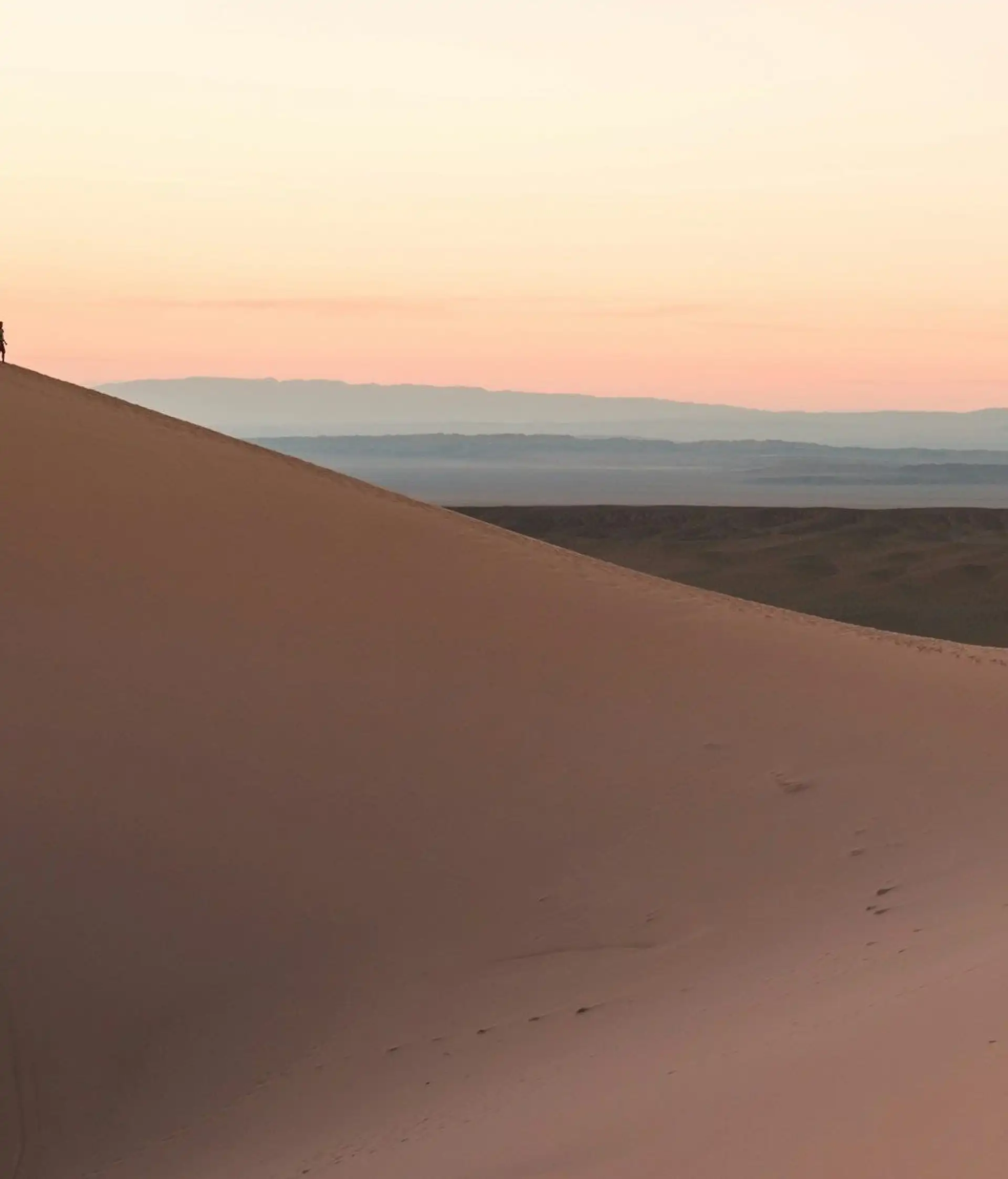
The Gobi is for seasoned walkers who want a real challenge. Walk in the early morning or late afternoon to reach the Khongor dunes, the Bayanzag cliffs or the canyons of Yolyn Am. Of the five regions, it is the one where timing matters most, and the season table below shows why.
The Altai mountains
The Altai fills the far west of the country, with peaks above 4,000 m. Malchin Peak reaches 4,050 m, with hikes of 5 to 8 hours a day, while Tsetsee Gun (2,256 m) is a moderate climb of one to two hours. Green valleys shelter Kazakh eagle hunters and other local communities who keep their traditions and hospitality alive. The region is far from everything, so western Mongolia works best with two to three weeks. If you want to know which animals you might see on the trail, read our guide to the animals you'll encounter in Mongolia.
To see how several regions fit into one journey, have a look at the Grand Tour of Mongolia.
| Region | Base | What defines it |
|---|
| Terelj | Near Ulaanbaatar | Khentii mountains, 2 to 5 days |
| Orkhon Valley | Karakorum area | Waterfalls, monastery, nomadic families |
| Lake Khuvsgul | Khatgal | Forest, Tsaatan reindeer herders |
| Gobi | Southern desert | Dunes, cliffs, canyons |
| Altai | Far west | Peaks above 4,000 m, eagle hunters |
When to go trekking in Mongolia
The best months for Mongolia trekking are May to September, with a peak of greenery and activity from June to August, when temperatures sit around 20-30°C (68-86°F). May and September suit travellers who prefer quiet: it is milder, and there are fewer people. July is the busiest month, so book flights and accommodation several months ahead for summer.
| Region | Best period |
|---|
| Terelj and Orkhon Valley | Late May to late September |
| Lake Khuvsgul | June to August |
| Gobi | Late May to early July, or late August to mid-September |
| Altai | July and August; September and October for a quieter trek |
In the Altai, July and August bring roughly 15-25°C (59-77°F). Autumn, mainly in the west and the Altai, adds shimmering colours until October.
Winter is harsher and only for travellers after an extreme experience. From October to April, snowshoeing is possible in Terelj and the Orkhon Valley, and Khuvsgul has winter adventures for the boldest.
One cultural bonus: in spring and autumn you may see nomadic families move their herds to new pastures, a seasonal migration known as transhumance.
Not sure which region fits your month? Tell a local expert your dates and we'll suggest where to walk.
How a trek in Mongolia works
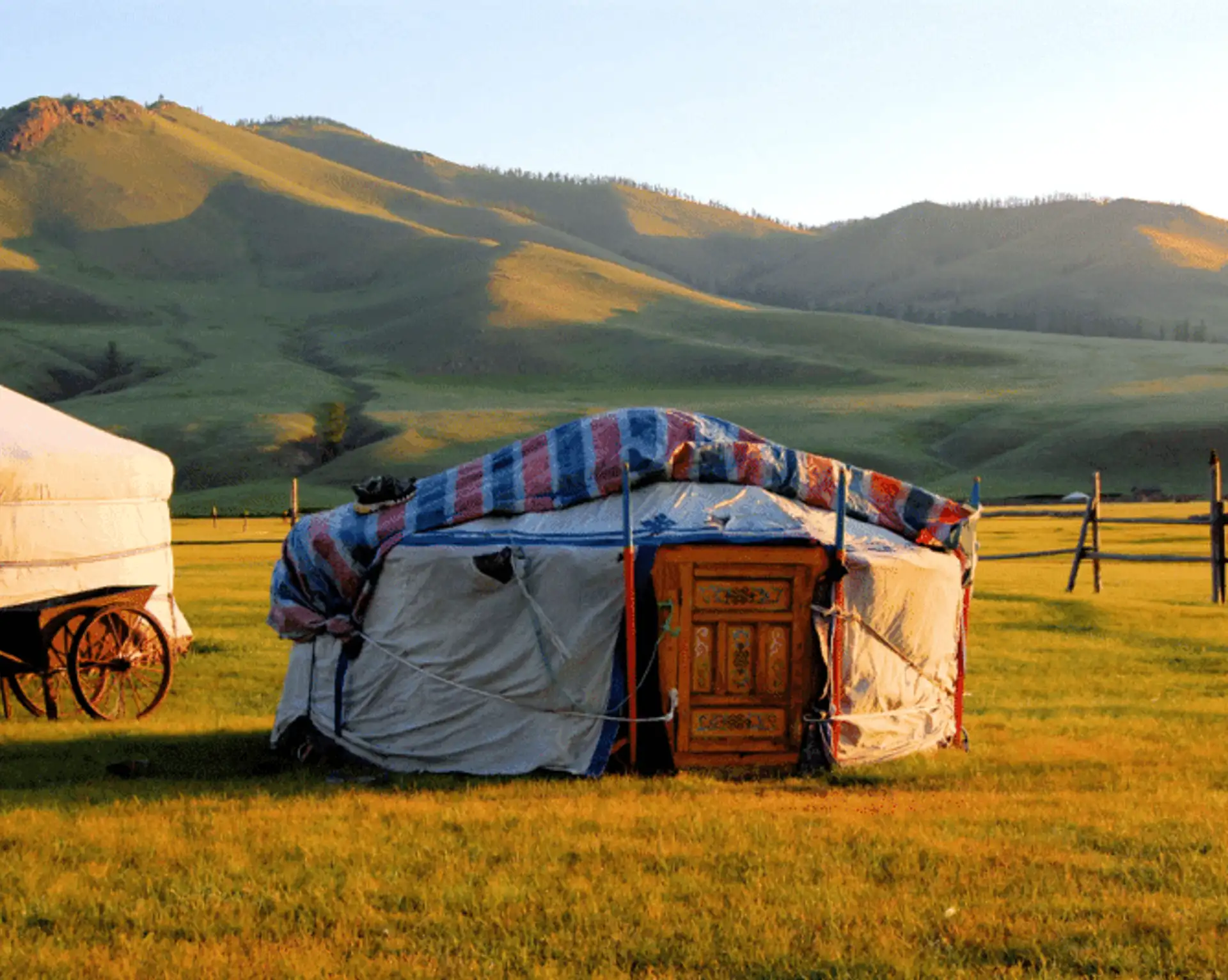
A supported trek is organised for you. The equipment is lent: tents, double mattresses, reinforced sleeping bags for cool nights, a dining tent, a portable shower and a satellite phone. You carry very little.
A local guide leads the way, often on horseback, while an interpreter explains nomadic culture and handles conversations with host families. So the trek is on foot, but the support is partly mounted. If you want to ride, horse trekking is a separate option worth raising when you plan.
Your luggage travels by vehicle or on horseback. Pack a soft bag, out of respect for the animals, and keep a small daypack for each day's walk.
The rhythm adapts to the group and rarely goes beyond six hours of walking. Setting up and taking down camp, joining daily community life and sharing time with your hosts are part of the experience, not extras.
For a sense of scale, a long trek on the steppe along the Chuluut River covers 120 km in eight days, about 20 km a day.
Plan your Mongolia trek with a local expert
Our local experts in Mongolia build treks around your month, your fitness and the time you have. You can start from the Mongolia travel page, browse the Mongolia travel guide or compare other options on our trek and hike in Asia page.
Tell us the month, your fitness and how many days you have, and a local expert in Mongolia will shape the route with you. Send your trip request.