Vietnam Animals: What You Can See, Where to Find Them and When
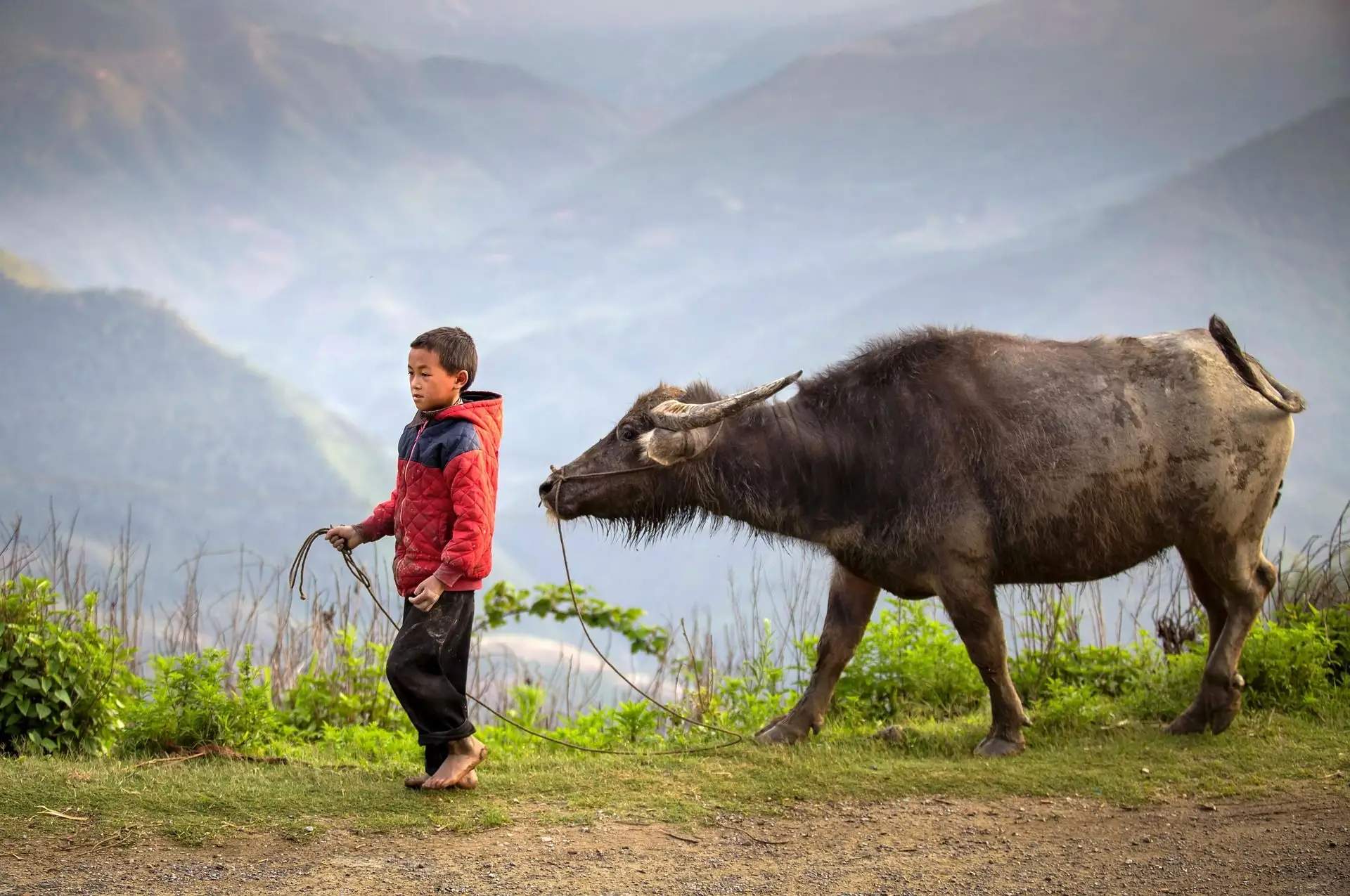
Vietnam has about 310 mammal, 296 reptile, 162 amphibian and 890 bird species. Most travellers see macaques, water buffalo, geckos, wetland birds and, on the coast, sea turtles. Langurs, gibbons and the last 100 or so wild elephants need a national park and a guide. Wild tigers are possibly extinct in Vietnam.
This S-shaped country runs about 1,650 km from north to south, which explains the spread of animals: mountain forest in the north, rainforest and wetlands in the centre and south, reefs and turtle beaches along the coast. This guide lists the species, the parks where you find them, the best months and what to avoid. For trip ideas, see travel in Vietnam.
Vietnam animals at a glance: 15 species and where to see them
If you only want the short list, this is it. Status comes from the IUCN Red List where the table says so. Sightings of rare species are never guaranteed, and a local guide makes the difference.
| Animal | Where to see it | Notes |
|---|---|---|
| Asian elephant | Yok Don National Park | About 100 left in the wild |
| Grey-shanked douc langur | Cat Tien area | IUCN Critically Endangered |
| Delacour's langur | Van Long Nature Reserve, Cuc Phuong | Seen by boat at Van Long |
| Cat Ba langur | Cat Ba Island | Also called golden-headed langur |
| White-cheeked gibbon | Cat Tien, Cuc Phuong | Known for its morning calls |
| Macaques | Cat Ba and forests across the country | The animal you are most likely to see |
| Sunda pangolin | Cuc Phuong, Cat Tien (rescue and release) | IUCN Critically Endangered |
| Slow lorises | Night walks, Cuc Phuong | Never pay for a selfie with one |
| Sun bear | Bach Ma | Shy and mostly nocturnal |
| Sarus crane | Tram Chim | Best in the dry season |
| Green peafowl | Cat Tien | One of several rare birds there |
| Great hornbill | Cuc Phuong | The park lists more than 300 bird species |
| Sea turtles | Con Dao | Nesting from April to September |
| Whale shark | Whale Island, Nha Trang | April to June |
| Water buffalo | Rice fields countrywide | Vietnam's national animal |
The water buffalo is Vietnam's famous animal, a symbol of strength and prosperity that you meet at work or at rest in almost every rice-growing area. Everything else on the list takes more planning. The sections below explain each group.
Elephants in Vietnam: about 100 left in the wild
Vietnam has about 100 wild Asian elephants in 22 herds, according to Mekong Eye (17 July 2023). The population was around 2,000 in 1990. Most of the survivors live in the provinces of Dak Lak, Nghe An and Thanh Hoa. Deforestation, habitat fragmentation and conflict between people and elephants are the main threats.
The country is not standing still. In November 2024 the Ministry of Agriculture and Environment published an Elephant Conservation Action Plan to 2035, with a vision to 2050, aimed at strengthening the herds, fighting poaching and restoring habitat. Ecological corridors between protected areas and training for mahouts in respectful practices are part of the wider effort.
For visitors, Yok Don National Park in Dak Lak is the reference point for responsible elephant tourism. Viewing happens without intrusion and always with a specialist guide. Nearby Buon Don, a village with a long link to elephants, is moving away from elephant-back rides toward gentler experiences. Don't ride elephants anywhere. Keep your distance, choose activities that put the animals first, and spend your money with local ecotourism projects. A wild elephant sighting is a matter of luck; the park is where the odds are best.
Monkeys, langurs and gibbons
Vietnam is one of the last refuges of several endangered primates. The grey-shanked douc langur of central Vietnam is listed as Critically Endangered by the IUCN (assessed 2015). The Tonkin snub-nosed monkey of the north is also Critically Endangered, with fewer than 250 mature individuals. The Cat Ba langur, also called the golden-headed langur, lives on Cat Ba Island. Macaques, gibbons, langurs and otters are the animals visitors are most likely to meet in forest parks, and the white-cheeked gibbon announces itself with morning calls that carry across the canopy.
Here is where the page's regular spots stand, with the months to aim for:
| Park | Primates | Best period |
|---|---|---|
| Cuc Phuong National Park | Gibbons, Delacour's langurs | January to April, early morning |
| Cat Tien National Park | Grey-shanked doucs, white-cheeked gibbons | Year-round, dawn outings |
| Van Long Nature Reserve | Delacour's langurs, seen by boat | October to April |
| Cat Ba Island | Macaques, Cat Ba langurs | March to May (lush vegetation) |
Go with an experienced local guide. Primates are hard to locate and easy to disturb.
If you want to see rescued primates, the Endangered Primate Rescue Center at Cuc Phuong works to rehabilitate animals and release them into the wild. Choose guided visits to specialist centres like this one, never take part in illegal captivity, and don't buy souvenirs made from animal parts.
Rare and lost animals: tigers, saola, Javan rhino and other big mammals
Tigers. Wikipedia lists the Indochinese tiger as possibly extinct in Vietnam as of 2014. Around 221 Indochinese tigers remain across the wider region, according to Global Conservation (10 January 2024). Don't expect to see one here.
Javan rhino. Declared extinct in Vietnam in 2010.
Saola. Nicknamed the "Asian unicorn", this ox-like animal was found in 1992 in the Vu Quang area of the Annamite mountains. It is Critically Endangered, and the Saola Foundation reports no confirmed record since 2013. Sources disagree on how many are left, so no honest number exists. It is among the most mysterious large mammals on the planet.
What survives. Several carnivores still live in Vietnam's forests but rarely show themselves: the sun bear, clouded leopard, dhole (Asian wild dog), marbled cat, binturong and Temminck's cat. Sun bears and smaller carnivores still roam forested areas such as Bach Ma, though they stay shy and mostly nocturnal. Most are known through tracks and the camera traps that scientists set up.
For travellers, the realistic goal is the place, not the sighting. A walk in Pu Mat or Cat Tien puts you in this habitat, and a guide can show you signs of what lives there. If a tour promises a tiger, be wary.
Pangolins, slow lorises and night watching
The Sunda pangolin is Critically Endangered on the IUCN Red List (assessed 2019). Poaching is the cause. Rescued pangolins are regularly released into parks such as Cuc Phuong and Cat Tien, and a pygmy slow loris was rescued at Cat Tien in 2024, according to a Vietnam Airlines guide. Save Vietnam's Wildlife combines scientific monitoring, including drone technology to track pangolins, with education.
Night walks are the way to see them, along with slow lorises, civets, wild cats and otters. Go in a small group with an experienced guide. At Cuc Phuong, outings run from 7pm to 10pm in electric vehicles to limit disturbance. Responsible night watching happens in the forest with trained guides who use red lights. Sightings remain a matter of chance, but this approach protects the animals.
One warning. Slow lorises, with their big eyes and slow movements, fascinate visitors, and that is exactly what makes them a target of the illegal wildlife trade. Many tourist venues still offer selfies with these animals. Never take part: the lorises used have usually had their venomous teeth removed, suffer intense stress and are often captured illegally.
Birds in Vietnam: about 890 species
Wikipedia counts about 890 bird species in Vietnam, some among the rarest in Southeast Asia. The main parks:
- Phong Nha-Ke Bang National Park: more than 30 rare species have been recorded there in recent years.
- Tram Chim: a refuge for more than 230 species, including the sarus crane and the black-faced spoonbill.
- Cat Tien: Germain's peacock-pheasant and the green peafowl.
- Cuc Phuong: more than 300 species, including the great hornbill.
- Cat Ba, Van Long and the Mekong Delta: round out the picture with coastal and wetland species.
Head out early in the morning or late in the afternoon, hire a knowledgeable local guide, stay quiet and wear clothing that suits the forest. Morning outings between 6am and 9am give the best conditions: the birds are more active and the light is good for photographs.
The best period is November to March, in the dry season. Migratory birds from Siberia and China join the resident species, which multiplies your chances. The rest of the year is quieter for migrants but not empty.
Sea turtles, whale sharks and reef life
The Nha Trang region has nearly 350 coral species and a crowd of tropical fish. It is one of the better diving and snorkelling areas in the country, with the islets of Hon Mun and Whale Island, where whale sharks can be spotted from April to June. Phu Quoc island is rich in untouched sites and holds seahorses, turtles, moray eels, rays and the occasional dugong. The sea is calm and visibility is excellent from November to April.
Vietnam's coast is home to five of the seven sea turtle species: green, hawksbill, olive ridley, loggerhead and leatherback. The Con Dao Islands are the major sanctuary, where hundreds of turtles come to nest between April and September. Conservation programmes there let visitors watch baby turtles being released. Book through certified, environmentally conscious operators.
On any reef, never touch or remove corals or marine animals, and follow local regulations. Marine protected areas are becoming more common along the coast. For the beaches that go with these dive spots, read our guide to the best beaches of Vietnam.
Snakes, crocodiles, frogs and endemic species
Vietnam has more than 150 snake species, from harmless grass snakes to reticulated pythons that reach 6 metres. Among reptiles, the country counts 296 species, and among amphibians 162, with new ones described almost every year. Wikipedia notes almost 1,000 new species found between 1997 and 2007.
- Crocodiles and monitors: the saltwater crocodile, the largest living reptile, still frequents some mangroves and wetlands of the Mekong Delta, though in very small numbers. The Bengal monitor can sometimes be spotted near waterways in parks such as Cat Tien.
- Frogs and salamanders: the mountain forests of the north hold brightly coloured frogs and endemic salamanders. Hoang Lien National Park, in the Sapa region, is especially good for high-altitude amphibians.
- Where to look: Cat Tien for pythons and monitor lizards; Cuc Phuong for giant geckos and box turtles; Tram Chim for freshwater turtles; the Mekong Delta for crocodiles in semi-natural captivity.
Endemic species exist nowhere else on the planet. Examples include:
- Silver-backed chevrotain (Vietnamese mouse deer): rediscovered in the wild in recent years, in dense forests along the coast.
- Puhoat muntjac and beelzebub's tube-nosed bat: mammals of isolated mountain regions.
- Vietnamese leaf turtle: found with rare amphibians in central and northern wetlands and hill forests.
- Delacour's langur and Cat Ba langur: both primates, both covered above.
- Edwards's pheasant: a pheasant found nowhere else.
Water buffalo, mentioned earlier, belong here too as the animal of rural life: they are domesticated, important in farming and honoured at traditional festivals.
Are there dangerous animals in Vietnam?
Very few animals are genuinely dangerous to travellers. The main risks are certain venomous snakes (cobras including the king cobra, the many-banded krait and several vipers), jellyfish on some coasts at some times of year, and, very rarely, saltwater crocodiles in remote mangroves. Stay on marked trails with a guide and the risk is minimal.
Encounters with dangerous snakes are rare for travellers who follow their guide's advice. For wider precautions on the road, read our guide to safety in Vietnam.
Where and when to see wildlife in Vietnam
Land wildlife is best in the dry season, roughly November to April: trails are passable, and animals are more active and gather near water. Early mornings and late afternoons are the best hours. The wet season, May to October, is better for amphibians, reptiles, butterflies and lush vegetation, especially in northern and central parks. Region by region, see our guide on when to travel to Vietnam.
| Park | Main animals | Best period |
|---|---|---|
| Cat Tien | Doucs, gibbons, green peafowl, pythons | Year-round, dawn |
| Cuc Phuong | Gibbons, langurs, hornbill, pangolins, lorises | January to April |
| Yok Don | Asian elephants, birds | Dry season |
| Tram Chim | Sarus crane, wetland birds, freshwater turtles | November to March |
| Cat Ba | Cat Ba langur, macaques | March to May |
| Van Long | Delacour's langurs | October to April |
| Con Dao | Sea turtles, coral reefs | April to September (nesting) |
| Hoang Lien | Mountain endemics, amphibians | May to October for frogs |
| Bach Ma | Sun bear | Dry season |
| Pu Mat | Forest carnivores (camera-trap territory) | Dry season |
About 7 to 8% of Vietnam's land is protected, according to a-z-animals, though figures vary. Wikipedia, citing WWF, puts the share of Vietnam's wildlife that is threatened at nearly 10%. That is why the choice of park and guide matters.
Tell a local expert what you most want to see and Shanti Travel will shape the route.
How to watch Vietnam's animals responsibly
- Observe from a distance. Never touch or feed wild animals.
- Never ride elephants or pay for selfies with lorises.
- Never buy products made from animals, including ivory, scales and fur.
- Hire reputable guides who put animal welfare and conservation first.
- Stay on established trails and leave no trace.
- Avoid flash photography and use eco-friendly gear.
- Follow national park rules.
Your behaviour has a direct effect on conservation. The full reference for species and counts is Wikipedia's Wildlife of Vietnam.
Want to build a trip around these animals? Tell a local expert in Vietnam what you most want to see and we'll shape the route and the season.
Vietnam wildlife FAQ
Cat Tien and Cuc Phuong are a few hours' drive from major cities. Pu Mat and Bach Ma are more remote and take longer, but they reward the extra travel with deeper immersion. Most major parks have accommodation, local guides and marked trails, so you can organise a visit without specialist gear or experience.
The vaccinations recommended for Vietnam as a whole also cover park visits: hepatitis A and B, typhoid and, depending on the area, Japanese encephalitis. Antimalarial treatment may be advised for some remote forest areas. See a travel health clinic 6 to 8 weeks before departure and check your national travel health service for current advice.
Yes. Many parks sit near ethnic minority villages or major cultural sites. A day of birdwatching at Tram Chim fits neatly with a Mekong Delta visit, and a primate trek at Cuc Phuong can be paired with ancient temples. A local expert can link the two in one itinerary.
Our travel ideas for Vietnam
Our travel guides to Vietnam

Vietnam Religion: Main Faiths, Numbers and Ancestor Worship
Vietnam Landforms: A Geography Guide to Mountains, Deltas...

Vietnam Landscape Guide: Where to See the Best Scenery an...

Famous People from Vietnam: 12 Icons and Where to Visit Them
Vietnamese Language Basics for Travelers