Which Ladakh treks are easy, and which are not?
Sham Valley is the only genuinely easy trek in Ladakh: it tops out at around 3,500-3,900 m, takes 3 to 4 days and suits children from 8. Markha Valley and Tso Moriri are moderate and call for fitness plus acclimatisation. Phyang to Hunder crosses a 5,430 m pass and is for fit walkers only.
Ladakh sits high in the Indian Himalaya, and even the gentle walks start at an altitude where most visitors feel it. So "easy" here means easy underfoot, never easy for the lungs. Here are the four treks side by side, from gentlest to hardest.
| Trek | Days | Max altitude | Honest level | Suits |
|---|
| Sham Valley | 3-4 | around 3,500-3,900 m | Easy | Families with children from 8 |
| Markha Valley | 6-7 | around 5,260 m (Kongmaru La) | Moderate | Teenagers and motivated hikers |
| Tso Moriri | 4-5 | 4,595 m | Moderate to demanding at altitude | Adventurous families and nature lovers |
| Phyang to Hunder | 5-6 | 5,430 m (Lasermo La) | Demanding | Fit walkers, already acclimatised |
An age limit exists only for Sham Valley. For the other three, ask the local team what they recommend for your children before you book. If you're still choosing a destination within India, our India travel guide puts Ladakh in context.
How much does it cost to trek in Ladakh?
The honest answer is that it depends on a handful of choices, and a fixed figure would mislead you. These are the ones that move the price most:
- Length of the trek. Markha Valley takes 6 to 7 days, Sham Valley 3 to 4, so the number of days on the trail, and the team supporting you, differs a lot.
- Camping or guesthouses. Sham Valley is walked from village to village with guesthouse stays. Markha can be done either way, and Tso Moriri is a camping trek with a local team.
- Local team and guide. A trek with a guide and support crew costs more than a loose plan, and it is the version we'd advise for families.
- Tailor-made or small group. A private route fitted to your dates costs differently from a shared departure.
- Extra days in Leh. You need time to adapt to altitude before you set off (more on that below), and those nights count.
- Getting to Leh. Flights or road transport to Ladakh come on top of the trek itself.
Want a number for your own group? Tell a local expert your dates and who is travelling and we'll price it.
Is the altitude "gradual"? What to do before you walk
No, not by default. Leh sits at about 3,500 m, and Ladakh trails rarely drop below that, so a Ladakh hike is nothing like an Alpine one. Altitude sickness is common above 3,000 m, which means plenty of walkers feel it here, including fit ones.
The one rule worth remembering: as of June 2026, the Leh district administration recommends spending at least 48 hours in Leh before going higher. In practice, plan 2 to 3 days. Spend them wandering the old town and the nearby monasteries at an easy pace, eat light and drink plenty of water.
The order of treks does as much work as the days in Leh. Start with Sham Valley, which keeps you close to 3,500-3,900 m, and only then move on to Markha Valley or Tso Moriri. Jumping straight to a 5,000 m pass in your first week is how holidays end early. If you want a family trek that goes wrong less often, build the acclimatisation into the plan rather than hoping the terrain will do it.
Sham Valley trek: the easy first trek
The Sham Valley trek is often called the "baby trek" of Ladakh, and the nickname fits. It runs 3 to 4 days and reaches around 3,500-3,900 m, with children from 8 welcome.
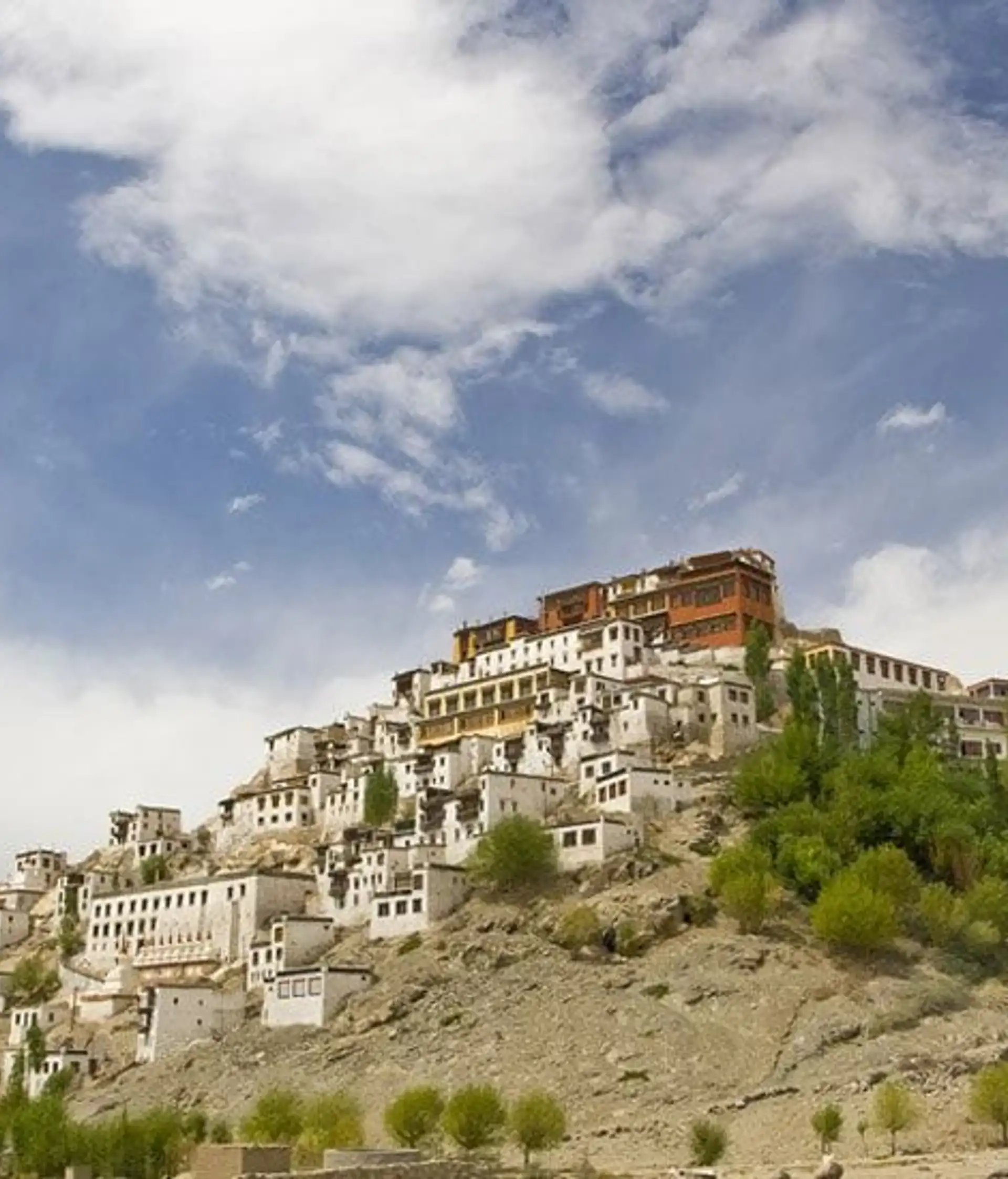
The route links villages such as Hemis Shukpachan and Tingmosgang, with monasteries far from the busy sites. Come in June or July and the wheat fields turn golden, and the small sweet apricots are ripe. You sleep in guesthouses, so there's no tent to carry.
One honest note: parts of the valley are touched by urbanisation, and some stretches run near built roads. A good guide keeps you on the preserved trails and routes away from the busy axes, which is what makes the walk feel like trekking rather than a roadside stroll. You can walk Sham Valley from April to September, although August gets very hot.
Even this gentle trek needs a day or two in Leh first. Do it as your opening trek, not as an afterthought.
Markha Valley trek: Ladakh's classic, for fit teenagers and motivated walkers
The Markha Valley trek is the most popular trek in Ladakh. It lasts 6 to 7 days (sources range from 5 to 8 depending on where you start), tops out at the Kongmaru La pass at around 5,260 m and is rated moderate, not beginner.
The scenery is the reason it's a classic. You walk through green meadows and beside small streams, past rock in purple, green and grey, and through traditional villages where you meet the people who live there. Hares and blue sheep move on the steep cliffs, so keep an eye on the slopes.
The numbers explain why fitness matters. Nimaling camp sits at 4,840 m with no village around it, and the climb to Kongmaru La follows soon after. This is the stretch where acclimatisation either pays off or doesn't. Walkers who arrive straight from sea level, or who skipped their days in Leh, are the ones who struggle.
The trek is flexible. You can adjust its length, and choose guesthouse comfort or camping under the stars. Our teams took up the challenge and explored this trek themselves, so we can advise on the route and the pace that fits your group. Teenagers who already hike regularly and adults who enjoy long days on foot do well here. Families with younger children are better served by Sham Valley.
For a longer route, our Great Crossing Zanskar trek is the natural next step once you've done a high-altitude walk like this one.
Tso Moriri trek: turquoise lakes and Changpa nomads
The Tso Moriri trek takes 4 to 5 days in the Changtang region and reaches 4,595 m. It is the wildest of the four: turquoise lakes, high valleys and a camping trek with a local team.
You wake in the mountains and drink tea by the river at sunrise. Along the way you meet Changpa nomads and their herds of pashmina goats. Pack warm clothes, because nights are cold even in summer.
Nothing on this route is described as steep, but you sleep high, and that is the catch. Treat it as a second trek, after Sham Valley and a few days of adapting. It suits adventurous families and nature lovers who are happy in a tent.
Phyang to Hunder trek: the hardest of the four
Phyang to Hunder takes 5 to 6 days, crosses the Ladakh range and ends in the Nubra Valley, known for its sand dunes and Bactrian camels. Its high point is the Lasermo La at 5,430 m, the highest pass in this article.
You may see it described as suitable for "beginner hikers in good physical condition". Read that carefully. It means first-time trekkers who are fit and already acclimatised, not a family trek and not a first outing in Ladakh. Do Sham Valley, then something like Markha, before you consider it.
Nubra is a restricted area, so a special permit is required, and your local team arranges it (more in the next section). September is the best month to finish here: the camels have regained their shiny winter coat and there are fewer tourists.
Permits, season and local help
As of September 2026, trekking in Ladakh runs from about June to September. Within that window, each route has its sweet spot:
- Sham Valley: from April, though August is very hot.
- Markha Valley: June and September are the most comfortable months.
- Tso Moriri and other high Changtang routes: from early June, because snow can block the passes in May.
- Nubra and Phyang to Hunder: September.
Some areas of Ladakh require permits. They are arranged locally in Leh, and the rules change, so check the Ladakh administration's official site at leh.nic.in before you go. A local team handles the paperwork for you.
If you want to turn one of these treks into a trip, our Himalayan trek trips are the place to start. The Great Crossing Zanskar and In the Heart of Zanskar trips cover the longer routes. To add some road time and monasteries before or after your walk, the Ladakh road trip combines well with a trek, and the days in Leh double as acclimatisation.
Plan your Ladakh trekking with a local expert
Choosing the right order of treks, the right number of days in Leh and the right level for your children is where most of the value lies. That's the part our local experts in India do every day.
Tell us your group, the ages of the walkers and your dates, and an expert will design the route and the sequence of treks for you. You can browse more ideas on our India trips page first, then create your tailor-made Ladakh trek when you're ready. There's no pressure: it starts with a conversation about what you'd like to do.