Your expert on destination Nepal
Nepal temples range from a gilded Buddhist monastery in Patan to a Himalayan pilgrimage site at 3,710 m (about 12,170 ft). This guide covers seven temples, with entry fees as of November 2026 and how each one feels to visit.

There is no single answer, because Nepal's temples are Hindu, Buddhist and often a mix of both. The names travellers look up most are Pashupatinath and Muktinath, followed by Boudhanath and Swayambhunath. Swayambhunath, the "monkey temple", is a UNESCO World Heritage Site and one of the oldest Buddhist sanctuaries in the world. Muktinath draws Hindu and Buddhist pilgrims alike, some from very far away.
From Kathmandu to the Mustang valley, Nepal moves between Buddhism, Hinduism and local beliefs, and each stop has its own atmosphere. The seven temples below cover Swayambhunath, Boudhanath, Pashupatinath, the Golden Temple in Patan, Budanilkantha, Panauti and Muktinath. If you are still shaping your route, our Nepal travel guide is a good place to start.
The hill gives you a wide view over Kathmandu, and a gleaming stupa with the painted eyes of the Buddha watches over the valley. Around it you find prayer flags, the smell of incense and lively alleys. Pilgrims and curious visitors both come, especially in the morning and at sunset, when the light adds to the spiritual feel.
You can climb the 365 steps on the eastern side or take a gentler ascent. At the top, walk around the stupa and spin the prayer wheels as you go. Entry for foreigners is NPR 200 (about USD 1.32) as of November 2026, according to the Nepal Tourism Board list.
Want a route that fits the valley's temples into your days? Our local experts can plan it with you.
Boudhanath is one of the Kathmandu Valley stupas that travellers search for most. Entry for foreigners is NPR 400 (about USD 2.65) as of November 2026, according to the Nepal Tourism Board list.
Pashupatinath is the most searched single temple in Nepal. Foreign visitors from outside South Asia pay NPR 2,000 (about USD 13.24) as of November 2026. Fees at heritage sites change, so check the current amount when you arrive.
Tucked north of Patan's Durbar Square, the Golden Temple is a Buddhist monastery that, according to legend, dates to the 12th century. You enter through a stone gate adorned with lions and step into a cramped courtyard crowded with gilded statues. The main sanctuary holds Sakyamuni surrounded by sculpted monkeys.
One detail stays with people: the temple's priest is always a child under 12, replaced every month. The surrounding alleys and squares hold more to see, including the Kumbeshvar temple, a rare five-storey temple. Entry for foreigners is NPR 100 (about USD 0.66) as of January 2026.
Budanilkantha stays away from the main tourist circuit and has an authentic feel. The rituals revolve around an imposing five-metre (16 ft) reclining statue of Vishnu, carved from a single block of stone.
Go early. You can admire the deity from the sacred pool before the crowd arrives for the celebrations. The busiest times are the monsoon, which marks Vishnu's annual sleep, and the great autumn festival of Haribodhini Ekadashi, when he wakes. No entrance fee is reported for the temple.
In the Kathmandu Valley, Indreshwar Mahadev is known for the grace of its Newar pagoda architecture and its finely carved woodwork. The sacred place houses a lingam of Shiva, and it also has a shrine dedicated to Vishnu. Panauti has a small museum and several other little temples too.
This is a good place to slow down. Stroll through the old village, enjoy the peaceful atmosphere, then walk on to Namo Buddha to see rural Nepal at its most unhurried.
At 3,710 m (about 12,170 ft), the Muktinath complex is the highest temple on this list and a place of pilgrimage for Hindus and Buddhists. Its springs and eternal flame bring water, fire and earth together, against a striking Himalayan backdrop. Inside you find a monastery, a shrine dedicated to Vishnu and the atmosphere of deep Mustang.
No temple fee turned up, but you need an Annapurna Conservation Area (ACAP) permit, which costs NPR 3,000 for foreigners (about USD 19.86) as of January 2026. Rules and prices can change, so confirm with the Nepal Tourism Board or on arrival. The temple is a key stop on a trip to Mustang, and our guide to plan your trip to Mustang covers the practical side. For other routes in the Annapurna region, see our Nepal trips.
Fees below are for foreign visitors, converted at NPR 151.09 = 1 USD (Nepal Rastra Bank, 16 November 2026). Check the Nepal Tourism Board entry-fee list for current amounts.
| Temple | Foreigner fee (NPR) | About (USD) | As of |
|---|---|---|---|
| Swayambhunath | 200 | 1.32 | November 2026 |
| Boudhanath | 400 | 2.65 | November 2026 |
| Pashupatinath | 2,000 | 13.24 | November 2026 |
| Golden Temple, Patan | 100 | 0.66 | January 2026 |
| Budanilkantha | No fee reported | - | - |
| Muktinath (ACAP permit) | 3,000 | 19.86 | January 2026 |
Temples are easiest to enjoy when the days around them are not rushed. Our local experts live in Nepal and can build a route that pairs the valley's temples with the rest of your trip. A good start is our Kathmandu Valley trip, and our page on the best time to visit Nepal helps you pick your month.
Both. Hinduism is the majority religion in Nepal, and Buddhism is also very important, so the country's temples mix the two. Some sites are used by both communities, and the same neighbourhood can hold a Hindu shrine beside a Buddhist stupa.
Yes. The temple is 2 km west of the city centre, which the Nepal Tourism Board puts at about a 40-minute walk. Allow extra time for the climb to the top and for stopping at the stalls and shrines on the way.
Budanilkantha is about 9 km north of central Kathmandu, and regular microbuses run there from the centre, according to the Nepal Tourism Board. Leave early if you want the pool and the statue before the day's visitors arrive.
Changu Narayan is 12 km east of Kathmandu. Bhaktapur is about 13 km (8 mi) from the capital and has been centred on its Durbar Square for more than a millennium. No entry fees for either turned up, so ask your hotel or guide before you go.
From 2070 €
From 2900 €
From 1675 €
Beyond the landscapes and cultures experienced, travel is also a journey of self-discovery. Traveling alone is the ultimate way to take stock, regain focus, recharge, and think and reflect for and by yourself. Undoubtedly the most demanding journey, yet also one of the most transformative. Self-centered solo travel? Quite the opposite. Finding harmony with yourself means fully opening up to others, becoming more available, freer, and more attentive. While there are countless ways to travel solo—introspective, sporty, focused on meeting people or learning—a kind of spirituality remains a continuous thread.
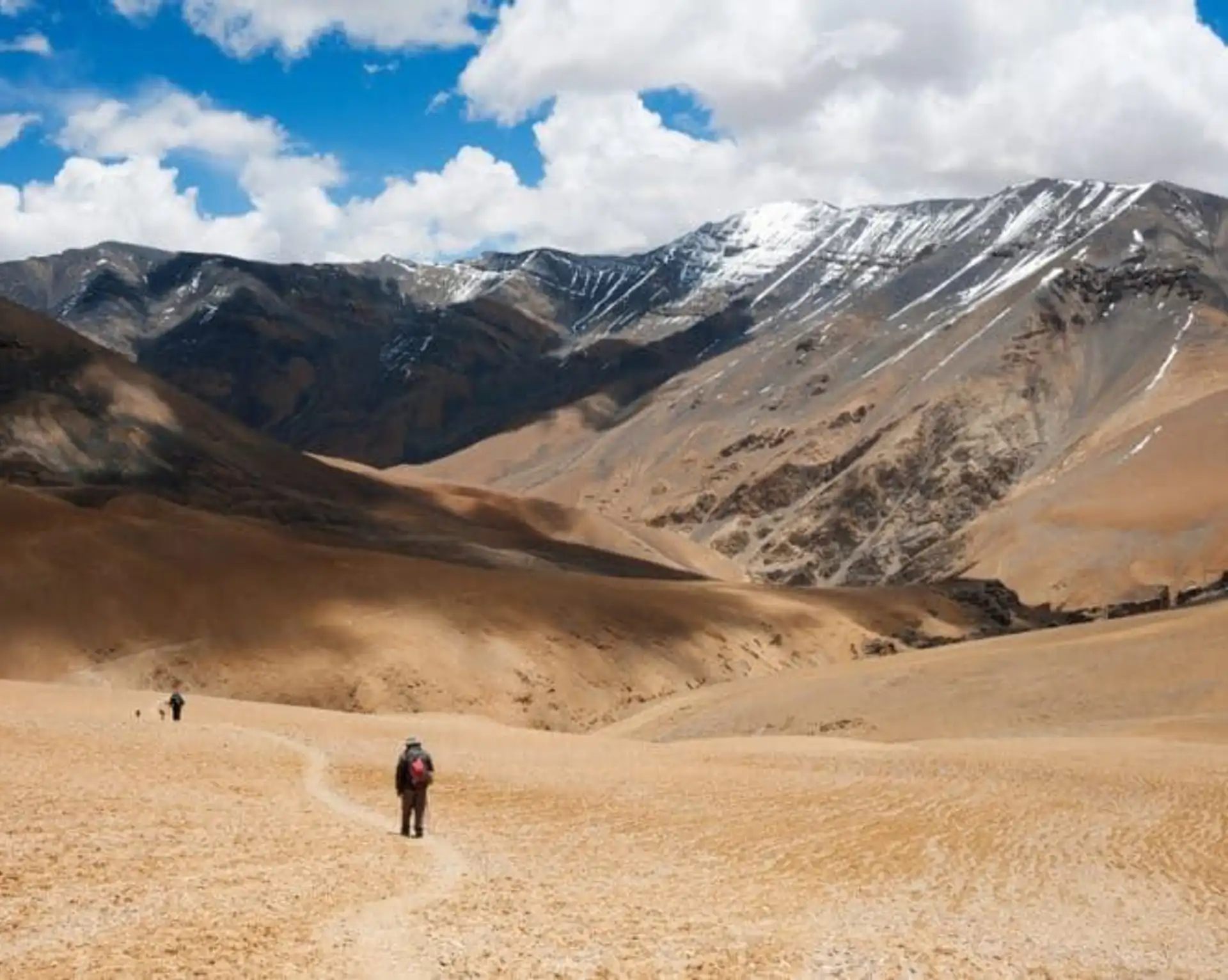
Let yourself be spellbound by Mustang, a fascinating Nepalese region with centuries-old Tibetan traditions, home to lunar landscapes and authenticity. Along its sculpted reliefs and living legends, this land promises a journey that is as spiritual as it is adventurous.
Set off to discover Mustang, a hidden gem of Nepal, blending ancestral traditions and lunar landscapes. This essential guide delivers everything you need to know to properly prepare your adventure in the heart of the Himalayas, covering culture, festivals and practical tips for an unforgettable journey.
Subscribe and receive our travel inspirations and practical advice twice a month.
Wanting to share your trip with a group?