Your expert on destination Vietnam
A Vietnam itinerary for 2 weeks that suits a first trip runs Hanoi, Ha Long Bay, Ninh Binh, Hue, Hoi An and Ho Chi Minh City. On a comfortable, organised 3-star basis, budget about US$160 to US$185 per person per day, so roughly US$4,500 to US$5,150 for two, flights excluded.

Yes, for a first trip. Two weeks covers several regions from north to south, with a balance of cultural visits, landscapes, transport and downtime. It won't cover the whole country, so you pick a few stops of 1 to 3 nights each.
That is the logic behind the route below. Vietnam is long and thin, and distances between the north, the centre and the south are large, so every extra stop costs you a transfer. Six stops give each place room to breathe without turning the trip into a relay race.
Here is the plan at a glance:
The cost of two weeks in Vietnam depends mainly on three things: your comfort level, how the trip is organised and its pace. Between a very simple trip and an organised tour with comfortable hotels and private transfers, the gap can be large. The figures here describe one clear case: a couple, friends or a family travelling in 3-star hotels with the main logistics arranged.
As of November 2026, a comfortable, organised trip costs about US$160 to US$185 per person per day, based on two travellers. These are approximate conversions of the agency's euro prices (140 to 160 euros, at about 1 euro to US$1.15). That covers 3-star hotels with air conditioning, a private bathroom and breakfast, transfers by private car, plane or train, and some guided visits and cruises such as Tu Long Bay.
Over 14 days, the budget works out like this:
| Per day | 14 days | |
|---|---|---|
| One person | US$160 to 185 | US$2,250 to 2,575 |
| Two people | US$320 to 370 | US$4,500 to 5,150 |
The totals are converted from the euro totals and rounded, so they don't match the daily figure multiplied by 14 to the dollar. This level suits an organised or semi-organised trip. It limits surprises, cuts the time you spend sorting out logistics on the ground and lets you enjoy each stop without worrying about daily bookings.
Want these figures built around your own dates and comfort level? A local expert can price it for you.
Even on an organised trip, some items stay with you.
Check the inclusions list carefully before departure so nothing comes as a surprise.
Costs shift by region. Hanoi and Ho Chi Minh City are slightly pricier, mostly for food and tourist services. Ninh Binh and the rural parts of central Vietnam are cheaper, which balances the overall budget. For help choosing a base in each place, see where to stay in Vietnam.
A balanced 14-day Vietnam itinerary runs north to south: Hanoi (3 nights), a Ha Long Bay cruise (1 night), Ninh Binh (1), Hue (2), Hoi An (3) and Ho Chi Minh City with a Mekong Delta day (3). You fly home on day 14.
| Days | Stop | Nights | Main thing |
|---|---|---|---|
| 1 to 3 | Hanoi | 3 | Old Quarter, Hoan Kiem Lake, temples, museums |
| 4 to 5 | Ha Long Bay area cruise | 1 | Karst scenery, caves, kayaking, a night on board |
| 5 to 6 | Ninh Binh | 1 | Rice fields, limestone, river boat ride |
| 6 to 8 | Hue | 2 | Imperial city, old fortresses, emperors' tombs |
| 8 to 11 | Hoi An | 3 | Old town, lanterns, nearby beaches |
| 11 to 14 | Ho Chi Minh City | 3 | Colonial districts, markets, Mekong Delta day |
The nights are a planning choice, and the day ranges overlap on transfer days. If you'd rather have the whole thing priced and arranged, you can send a trip request and adjust it with a local expert.
Hanoi is the capital and the country's main entry point, so most trips start here. Two to three days is enough to see the city without rushing. The Old Quarter is the heart of it, with lively lanes, local stalls and very dense scenes of daily life.
Add Hoan Kiem Lake, a few temples and a couple of museums that help you understand the country's history. In the centre you can walk. For longer trips, take a taxi or a car with a driver. A guided visit gives context and explains how the city is laid out. If you want to go further than the usual list, there is a piece on Hanoi beyond the main sights.
A cruise in the Ha Long Bay area is an essential stop on a trip to northern Vietnam. It usually lasts 2 days and 1 night, aboard a traditional junk or a comfortable boat. You sail among karst formations, and the scenery changes with the light and the weather.
The programme often includes cave visits, swimming or kayaking stops and calmer stretches of sailing. Sleeping on board lets you enjoy the bay early in the morning and late in the day, when other boats are fewer. The journey from Hanoi takes several hours, so the transfer needs organising beforehand.
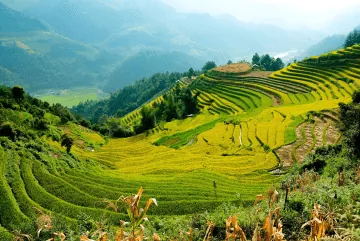
Ninh Binh is a few hours by road from Hanoi and a calmer stop. The landscape is rice fields surrounded by limestone formations, often described as a land version of Ha Long Bay.
The visit usually includes a river boat ride through caves and past farmland, such as the boat tour at Trang An. You can also rent a bike to ride between villages and natural sites. Sleep one night on site: you get the calm of the morning and avoid a day trip with long round trips. A homestay is an option here.
Hue is the main cultural stop in central Vietnam. You visit the imperial city, the old fortresses and the emperors' tombs. The sites are quite spread out, so plan half a day to a full day with organised transport. The Hue Imperial City article goes into the citadel itself.
If you want caves and a quieter, rural corner of central Vietnam, look at Phong Nha, a UNESCO-listed national park where you can also cycle through villages.
Hoi An feels gentler and more compact. You explore the old town on foot, through old houses, lanterns and small lanes. In the evening the lighting changes the mood of the whole town, yet the visit stays simple and easy.
Three nights lets you alternate visits and rest, with maybe a trip out to the nearby beaches. In busy periods, book an evening table ahead, as this is a very touristy area.
The last stage is in the south. Ho Chi Minh City is a large, energetic metropolis where you see the colonial districts, the markets and some museums on the country's recent history. Two days gives a good overview, and the third is for the Mekong Delta.
The delta day starts early and needs some transport time. Then you sail the canals on small local boats, with stops at markets and craft workshops. It shows another face of Vietnam, more rural and tied to the river.
In this budget you mainly sleep in well-located 3-star hotels. Rooms are simple but comfortable, with air conditioning, a private bathroom and breakfast. The service is good and suits a comfortable trip without excess luxury.
In Hoi An or Hanoi you can choose a boutique hotel, often more charming and better decorated. In rural areas such as Ninh Binh, homestays give a more local experience at a good level of comfort.
Distances are long, so between the north, centre and south most travellers fly or take a sleeper train, and use a private car with driver for shorter hops. As of 21 October 2026, a one-way Hanoi to Ho Chi Minh City flight costs about US$33 to US$62.
A private car lets you stop on the way and saves time on organisation, which matters on a 2 week trip with several stops. For more detail on each option, read the guide to transportation in Vietnam.
Breakfast comes with the hotel, which makes mornings easy. For the rest, you eat in local restaurants or in places aimed at travellers, and the choice varies a lot from city to city. Vietnamese food is accessible and simple to eat, with no organisational headache.
A guide is most useful on the culture-heavy stops. In Hanoi, Sapa, Hue or the Mekong Delta, a guide explains what you see, adds historical context and makes getting around easier.
You don't need one for the whole stay. A guide works best on specific days, for complex visits or organised excursions. Our local experts usually suggest guides on the culture-heavy days and free time elsewhere. You can see how that looks in our tailor-made Vietnam trips.
Going without a guide is entirely possible in the big cities and in places like Hoi An or Ninh Binh. The sites are easy to reach and getting around is simple to arrange.
It does take more preparation beforehand, especially for transfers and bookings. The trip is freer, but you rely more on yourself day to day.
A mixed format often works best: some stops with a guide, others fully independent. You get the comfort of occasional support and keep real freedom of pace across the whole trip.
As of November 2026, US citizens apply for a Vietnam e-visa, which costs US$25 for a single entry or US$50 for multiple entries and is valid for up to 90 days. UK citizens can stay up to 45 days without a visa for tourism, so a 2-week trip needs no visa.
Rules depend on your passport, so check yours before booking. Apply through Vietnam's official e-visa portal, and UK readers can read the UK government entry requirements for Vietnam. Other sites sell visa packages at much higher prices than the government fee.
The climate differs a lot between the north, the centre and the south, so adapt the route to the season. Some periods are more stable for rain and heat. The guide on when to travel to Vietnam covers the regions.
Start early. You get milder temperatures and the morning light, and busy sites are more pleasant at that hour. Keep afternoons for travel, rest or lighter visits. That holds a balanced pace over two weeks.
Even on an organised budget, leave a margin for personal spending. Massages, drinks, souvenirs or extra activities can change the final bill quickly. Our Vietnam travel guide has more planning help.
The itinerary above adapts to your wishes and the season. A local expert in Vietnam designs it with you: stops, nights, guides and pace. Ready to plan? Create your trip and design your 14 days with someone who lives there.
Not for the comfortable, organised style priced in the table above: that level costs several times more per person. US$1,000 only works with a very simple trip, using basic hotels and few paid activities. Street food is cheap and found almost everywhere, which helps a small budget go further.
Yes. The itinerary and the budget can be adjusted to your needs and the number of rooms you require. Our guide to a family holiday to Vietnam covers what to think about with children.
Often, but not everywhere. Cash is still common in small businesses, while more modern hotels and restaurants usually accept bank cards. Carry some local cash for small purchases and keep a card for larger bills.

The Hue Imperial City is the walled palace complex of the Nguyen dynasty in central Vietnam, a UNESCO World Heritage Site since 1993. Allow a morning for it (adult ticket 200,000 VND, as of June 2026), then spend the afternoon on the Perfume River, at Thien Mu Pagoda and at a royal tomb.
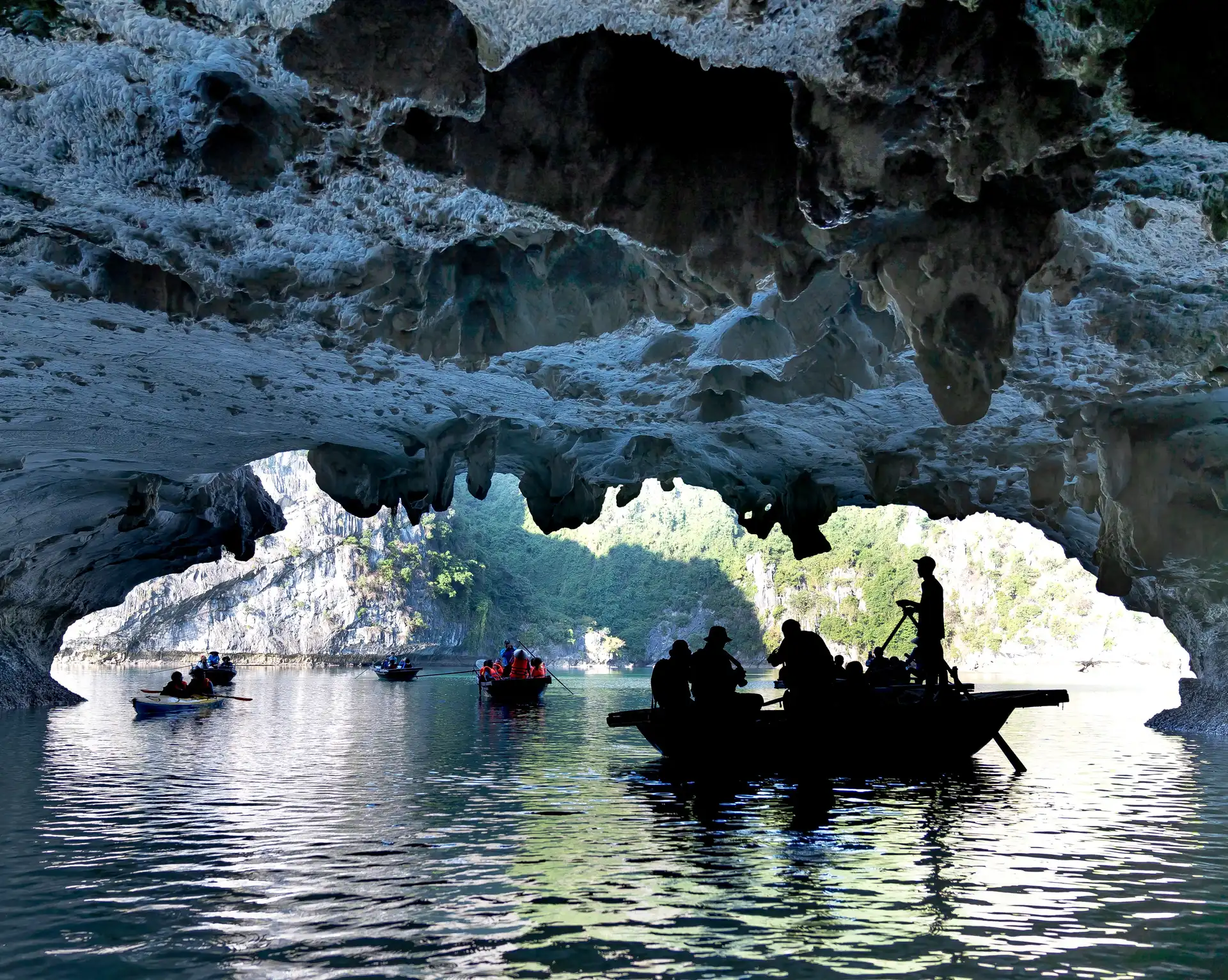
Phong Nha, in central Vietnam's Quang Binh province, is a UNESCO-listed karst region known for its caves, from the boat ride into Phong Nha Cave to the Son Doong expedition. Plan two to three days for the standard caves, countryside and river, and more only for expeditions.

A Trang An boat tour is a hand-rowed sampan ride of roughly 2 to 4 hours through limestone caves and temples in Ninh Binh, about 100 km south of Hanoi. Tickets cost 300,000 VND (about US$12) as of August 2026. Route 2 suits most first visits; Route 3 has the longest cave.
Subscribe and receive our travel inspirations and practical advice twice a month.

Wanting to share your trip with a group?