Bhutanese Food: Ema Datshi and 9 Dishes to Try
Bhutanese food is built on chilli, cheese and red rice. Its national dish is ema datshi, a chilli and cheese stew served at almost every meal. This guide covers ten dishes to try, table customs, drinks and vegetarian options.
What is Bhutanese food?
Bhutanese food is a Himalayan cuisine where chilli counts as a vegetable, not a seasoning, and cheese, red rice and dried meat carry most meals. The national dish is ema datshi, a spicy gratin of yak or cow's cheese and green chillies. Bhutan is known for one of the spiciest cuisines of the Himalayan arc.
Bhutan does not allow fast-food chains on its territory, which has kept traditional cooking at the centre of every meal. Despite the strong influence of Buddhism in Bhutan, the range of dishes is wide, and food is shared: bowls go to the middle and everyone helps themselves.
The heat is real. Hotel cooks are used to Western palates, so ask for "not spicy" on your first days and work up from there. Bhutanese cooks are attentive to adaptations, and asking is never rude. Most visitors find that Bhutanese cuisine rewards that patience, and that the cheese in most dishes softens the heat once you're used to it. For the wider picture of the country, see the Bhutan travel guide.
Ema datshi, the Bhutan national dish
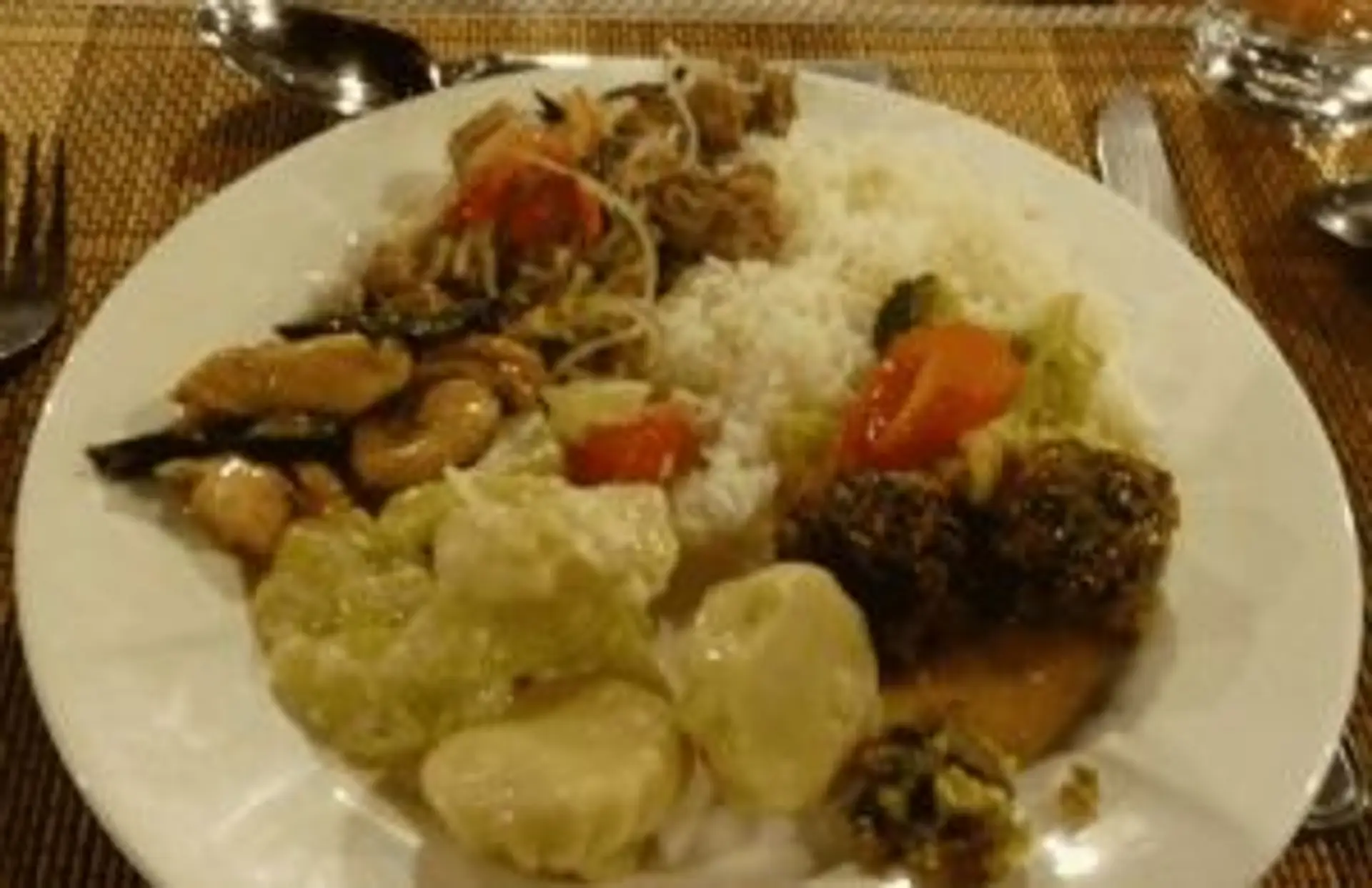
Ema datshi is Bhutan's national dish: green chillies cooked with yak or cow's cheese until it melts into a sauce, eaten with red rice. You'll find it almost everywhere in the country.
The classic version contains no meat: chillies and cheese, served in a bowl beside a plate of rice. Bhutanese red rice, with its hazelnut flavour, accompanies most dishes and is the natural partner here, because the rice is what lets you eat a stew this hot. Cooks then play with the formula, adding potatoes, mushrooms or even dried meat, so the ema datshi you eat in one valley will not taste quite like the one in the next. If a meal arrives and you aren't sure which version it is, ask: the answer matters if you eat vegetarian. Two of the best-known variants, kewa datshi and shamu datshi, are in the list below. Wikipedia has more on Bhutanese cuisine if you want the wider background.
Nine more traditional Bhutanese dishes
Traditional Bhutanese food leans on a few strong ingredients, and almost everything comes with chilli, cheese or both. Dishes arrive together, so one meal can include three or four of the following at once. These are the ones worth looking for.
- Kewa datshi: ema datshi made with potatoes.
- Shamu datshi: the same cheese sauce with mushrooms.
- Phaksha paa: pork stir-fried with dried red chillies and radish or spinach, served with rice, garlic and ginger.
- Jasha maru: a minced chicken stew simmered with tomatoes, garlic, onion, ginger and chillies. Spicy, but balanced.
- Shakam datshi: dried meat, yak or beef, cooked with butter and cheese.
- Sikam paa: dried pork fat fried with chillies. Rustic, rich and not for everyone.
- Puta: buckwheat noodles stir-fried with vegetables, eggs and sometimes meat, a speciality of the Bumthang valley.
- Momos: Tibetan dumplings, steamed or fried, filled with vegetables or meat. Look for them in markets and on treat stops during a trek.
- Honentay: small buckwheat parcels stuffed with turnip leaves and cheese, a rare speciality of the Haa valley.
| Dish | Main ingredients | Vegetarian? |
|---|---|---|
| Ema datshi (classic) | Green chillies, cheese | Yes |
| Kewa datshi | Potatoes, chillies, cheese | Yes |
| Shamu datshi | Mushrooms, chillies, cheese | Yes |
| Phaksha paa | Pork, dried red chillies, radish or spinach | No |
| Jasha maru | Chicken, tomatoes, chillies | No |
| Shakam datshi | Dried yak or beef, butter, cheese | No |
| Sikam paa | Dried pork fat, chillies | No |
| Puta | Buckwheat noodles, vegetables, eggs | Depends on the cook |
| Momos | Dough with vegetable or meat filling | Vegetable ones, yes |
| Honentay | Buckwheat, turnip leaves, cheese | Yes |
Want to taste these dishes with someone who knows where to find them? Our local experts in Bhutan can build meals and stops into your route: see our trips to Bhutan.
Table manners and how meals work
Dishes arrive together in small bowls and you build your own plate. Refuse the first offer of food, covering your mouth and saying "meshu meshu", and accept after the second or third.
That sounds like a contradiction next to the next custom, but it isn't: you are expected to take seconds, up to three times, to show you enjoy the meal. So keep the first portion modest. Refusing once is politeness, and a second helping is the compliment.
Meals are often eaten sitting on the floor, sometimes without a table. Rice is shaped into small balls with the fingers and dipped into the sauces or main dishes. Eating this way is a sign of how relaxed and shared a Bhutanese meal is, so there is no need to hurry.
Drinks in Bhutan: butter tea, ara and apple brandy
Suja is salted butter tea, served at any hour as a sign of hospitality. Expect it to be salty rather than sweet. For a sweeter cup there is milk tea, a gentle version inspired by India.
After a meal, some people finish with doma, a betel leaf rolled around areca nut and chewed as tradition dictates.
Fermented drinks are part of the culture. Ara is a home-made rice spirit of about 17 degrees, found in villages. Chang and changkey are farm beers, widely shared at festivals and rituals. In the Bumthang valley, the local distillery makes apple wine and the well-known apple brandy, a spirit worth looking for.
Vegetarian and vegan food in Bhutan
Vegetarians are better served than the meat-heavy reputation suggests. Classic ema datshi has no meat, and vegetable momos, mushroom shamu datshi, honentay and buckwheat puta (ask for it without meat) make a real range of choices. Local vegetables and mountain herbs give these dishes plenty of flavour and nutrition, and the table above shows at a glance which dishes work. Wild mushrooms, beans, spinach and mustard leaves all end up in the vegetarian bowl, depending on the month.
One limit: most Bhutanese dishes use cheese or butter. Vegans should say so at the start of a trip, not at the table, so the kitchen can plan around it.
Eating by season and on the trail
The menu follows the harvest, which ties the cuisine to the country's generous nature, and what you eat in April is not what you eat in October. Spring brings young shoots, summer fresh vegetables, autumn wild mushrooms and roots, and winter relies on tubers and dried vegetables. Beans, sweet potatoes, spinach, mustard leaves and even dried river algae turn up through the year.
On a trek in Bumthang, food is simple but hot and energy-giving, and your team adapts menus to your needs. Back in hotels and bigger towns, Western products such as honey, jam and Emmental are starting to appear, which helps on a long stay. In the Bumthang valley, a stop at the Swiss Farm gets you a cheese fondue, a European wink in the middle of the Himalayas. If Bumthang is on your list, a trip combining Sikkim and Bhutan is one way to build it into a longer route.
Eat Bhutanese food with a local expert
A good meal in Bhutan depends on knowing where to stop, what to order and how much chilli to ask for. Our local experts in Bhutan know the valleys, from Haa to Bumthang, and can plan the route so that the specialities above fall on your days rather than someone else's. Tell us when you plan to go and what you like to eat, and a local expert will design the trip around it. Send your trip request and we'll take it from there.
Bhutanese food FAQ
On Shanti Travel trips, all meals are part of the daily package, and you'll most often eat at your hotel. Only alcohol and other drinks are paid as an extra at the end of the stay or on the spot.
Outside the main hotels and restaurants, choose well-cooked dishes and check that the place looks clean. Avoid tap water and drink filtered or bottled water instead. For treks and long days on the road, it helps to pack a few snacks from home to supplement the meals.