Best Time to Visit Cambodia: Weather by Month and Season
The best time to visit Cambodia is November to February, the cool dry season, when days are warm rather than punishing, the roads and temple paths are dry and rain is rare. The dry season runs from November to April and the green (wet) season from May to October. The trade-off for the best weather is crowds: December to February is peak season, with the highest prices and the busiest temples.
When is the best time to visit Cambodia?
November to February is the best time to visit Cambodia for most travellers. Skies are clear, the heat is manageable and rain is rare. December to February is also the busiest and most expensive stretch, while the green season from May to October is quieter and cheaper, with short, heavy showers.
Cambodia has two main seasons rather than four, and they set the rhythm of daily life: the dry season (November to April) and the wet season (May to October). Inside the dry season there are two phases. November to February is cooler, with pleasant evenings. March and April are hot, and the heat builds toward the end of the dry season. Our local experts usually recommend November to March for a tailor-made trip, with March as the month that is still dry but already hotter.
Which month is right depends on what you want to do:
| If you want | Best months | Why |
|---|---|---|
| Temples (Angkor, Banteay Srei, Sambor Prei Kuk) | November to February | Bearable temperatures, dry paths |
| Hiking and trekking | November to March | Passable tracks, easier wildlife watching |
| Beaches and diving | December to April (February best) | Clear water, calm sea |
| Photography and quiet temples | May to October | Green jungle, far fewer visitors |
| Festivals | November and April | Water Festival and Khmer New Year |
| Avoiding crowds | May to October, plus November and March | Lower prices, fewer people |
Not sure which month fits your plans? Our local experts can match the season to your trip, and you can browse Cambodia trips built around each season.
Cambodia weather by month
Cambodia's weather follows the monsoon more than the calendar. The table groups the months that behave alike. Temperatures are typical ranges for the main tourist areas, Siem Reap and Phnom Penh, and the plains are hot in every month.
| Months | Weather | What it means for you |
|---|---|---|
| December to February | Roughly 20-32 °C (68-90 °F). Siem Reap lows are about 21.7 °C (71 °F) in January. Phnom Penh averages 26 °C (79 °F) in January. Little rain | Best sightseeing weather. Among the driest months of the year, and the busiest |
| March | About 30 °C (86 °F), little to no rain | Still dry, but hotter. Start temple days early |
| April | Average highs about 35 °C (95 °F), up to 38 °C (100 °F). Humidity around 75% | The hottest month. Khmer New Year. The countryside can pass 40 °C (104 °F) between February and May |
| May to August | 27-35 °C (81-95 °F). Rainfall 200-300 mm a month | Rains arrive. Heavy, short showers, usually late in the day, then sun |
| September | Wettest month, 254-286 mm of rain | Frequent downpours, lush scenery, the quietest sites |
| October | Around 27 °C (81 °F) on average, humid | Last of the green season. Feels hotter than the number suggests |
| November | End of the monsoon, the first dry month | Cooler days, drying roads, Bon Om Touk |
For readers asking about Cambodia weather in December: expect dry, sunny days of roughly 30 °C (86 °F) at their warmest, cooler mornings and evenings, and little rain. It sits in the peak-season window, so book flights and rooms early.
Humidity is the other half of the story. In the green season a 27 °C day can feel several degrees warmer, and in April the dry heat is made worse by the humidity. Pack light cotton, a hat and a refillable bottle in any month.
Dry season and rainy season in Cambodia
The dry season runs from November to April; the rainy season runs from May to October, with September the wettest month. Rain falls mostly in short, heavy bursts late in the day, and daytime temperatures stay high throughout the wet months.
Dry season. The cool phase (November to February) is the sweet spot: clear skies and warm days. The hot phase (March and April) is drier still but tiring, especially on the Mekong plains and in Phnom Penh, where temperatures climb toward the mid-30s °C (mid-90s °F). The dry season is also high season. Crowds peak around major sites such as Angkor and on the southern beaches, and prices rise, most of all from December to February.
Rainy season. The south-west monsoon brings 200-300 mm of rain a month and strong winds. Showers are usually heavy but short, so most mornings are clear. That is the reason many travellers choose it: the temples are less crowded, prices are lower, the landscape is lush green, and there is a great variety of birds. Monsoon light is also excellent for photography.
There are costs. Secondary roads can turn muddy or flood locally, especially in rural and mountain areas, though main roads and the main sites stay open. A good vehicle and some flexibility in your plans go a long way.
Two tips from the local team. Travel in the shoulder months, November or March, to dodge most of the crowds while keeping good conditions. And in the wet season, visit in the morning and expect a shower later in the day.
Best time to visit Angkor Wat
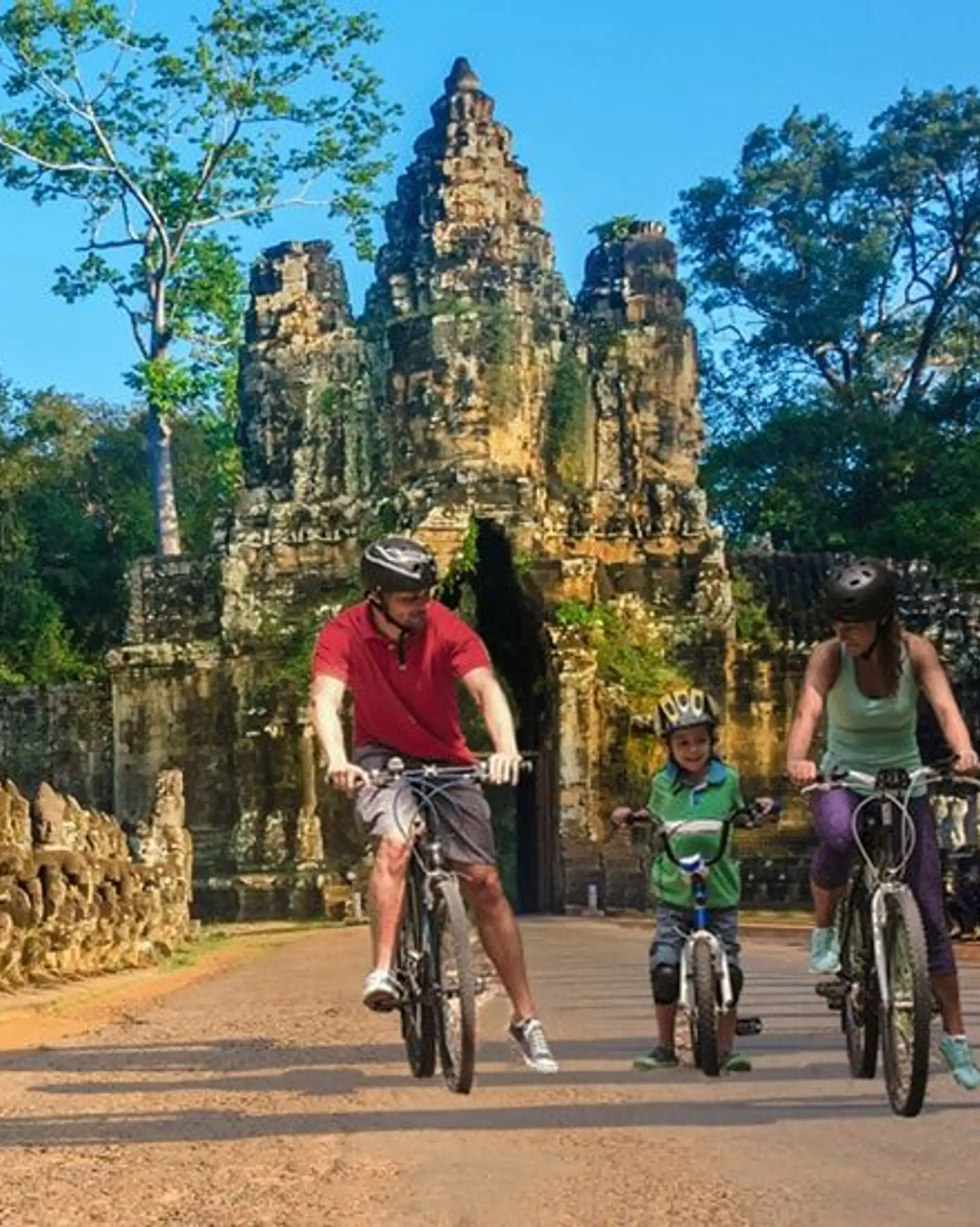
The best time to visit Angkor Wat is November to February. Temperatures are bearable, the paths are dry and you can spend a full day walking between temples without wilting. If you want the temples with fewer people and a more atmospheric feel, the green season (May to October) wraps the jungle around the stonework, and photographers often prefer it.
Banteay Srei and Sambor Prei Kuk are also best from December to February. Paths are dry in those months, which suits the forest sites.
Whichever month you pick, plan around the pass. As of November 2026, Angkor pass prices are US$37 for one day, US$62 for three days and US$72 for seven days; tickets are sold through the official Angkor ticket site. Angkor is a UNESCO World Heritage site, and the temples are spread over a large area, so a first visit rewards more than one day. For routes, timing and the order to see the temples, read our Angkor Wat visiting guide.
Weather by region: Phnom Penh, the coast and the highlands
Cambodia does not have one climate. The central plains, the coast and the mountains each behave differently, which matters if your itinerary crosses more than one.
Phnom Penh and Siem Reap
The central plains have a tropical monsoon climate and are hot all year. The dry season is better for Angkor and for Phnom Penh's markets, riverfront and historic monuments, with November to March the preferred stretch. Phnom Penh's January average is about 26 °C (79 °F), while April is the hottest month there. In the green season both cities stay warm, with rain mostly in the late afternoon.
Sihanoukville, Kep and the islands
On the south-west coast, the beach season runs from December to April, with February the best month: clear water, a calm sea and little rain before the first big rains arrive. This is the time for swimming, snorkelling and diving around Sihanoukville, Kep and Koh Rong. July to September is best avoided, with storms and a risk of rough seas. Our guide to Cambodia's most beautiful islands covers where to go once you have the month.
Eastern Cambodia
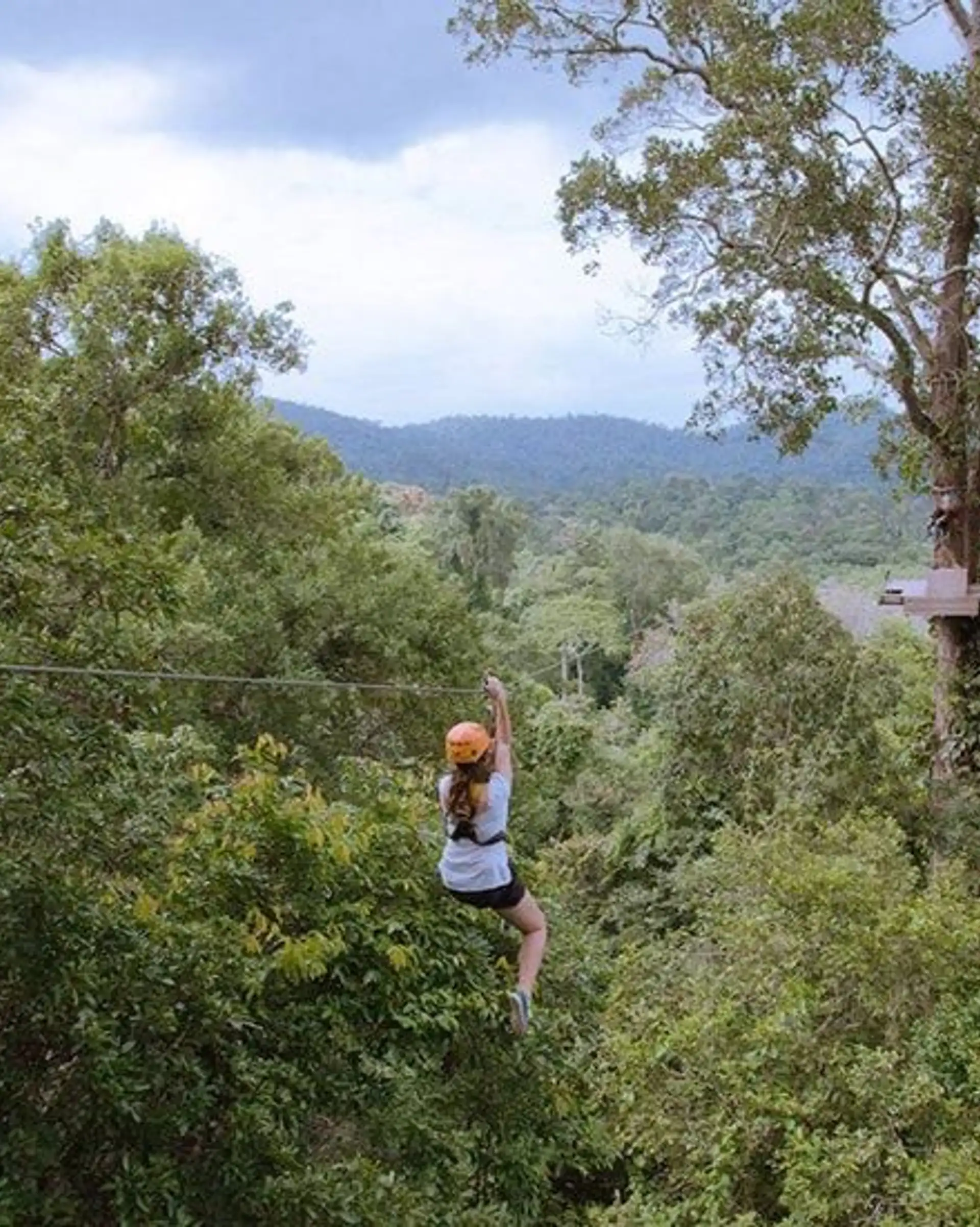
Less visited, the east has cooler temperatures that suit hiking, and you should bring a sweater for evenings in the Highlands. The best window for comfortable travel is November to February, when the jungle is still green and the journeys stay easy. If trekking is the point of your trip, this adventure trip with zip-lining, rock climbing and lost temples shows how the east can be combined with temples and wilder country.
Planning a mix of regions? See our Cambodia trips for itineraries that pair the temples with the coast or the countryside.
Festivals and the seasons
In Cambodia the seasons and the festival calendar are tied together, because many celebrations follow the farming year.
Bon Om Touk (Water Festival) marks the end of the monsoon, and the reversal of the flow of the Mekong and the Tonle Sap river, a change that renews the land's fertility. Expect traditional boat races, fireworks and crowds across the country. As of November 2026, it falls on 23-25 November 2026, and on 12-14 November 2027.
Khmer New Year falls on 14-16 April 2027. It marks the end of the dry season and the rice harvest, and the start of the rains. Over three days, families visit the pagodas for rites and splash water on one another as a sign of purification and renewal. It is also the hottest part of the year, so water fights are welcome.
Both festivals are a good reason to travel in a month you might otherwise skip. For the religious background to the pagoda rites and ceremonies, see our guide to religion in Cambodia.
How to choose your month
Start with what you want from the trip. If it is temples and easy days, go from November to February and book early. If you want beaches, aim for February. If you prefer fewer people, green landscapes and lower prices, the rainy season is a good choice, provided you start early each day and keep some flexibility for the roads.
The shoulder months, November and March, offer a good compromise between weather and crowds. April is for people who enjoy tropical heat and Khmer New Year.
Tell us when you can travel and what you want to see, and a local expert will build the Cambodia trip around the season. Start your trip request, or look through our Cambodia trips and the wider Cambodia travel guide first.
Best time to visit Cambodia FAQ
Yes. Major festivals require booking in advance because of local crowds, since the celebrations are popular across the country. Reserve your hotels and any internal transport early, and tell your local expert the festival is part of your plans so the rest of the itinerary is built around it.
You can, but the monsoon brings abundant rainfall in the south-west mountains, including the Cardamoms, and the state of the roads can make the east hard to reach. Trails are safer and more pleasant in the dry season, when they are passable and the views are clear.
The Royal Ploughing Ceremony in May, held in front of the National Museum in Phnom Penh, marks the start of the sowing season. Meak Bochea falls in February and Ancestors' Day in September. National holidays such as National Day, Genocide Remembrance Day and the Royal Birthday can also change tourist activity, so check dates when planning.