Getting around Georgia (the country): transport guide
Getting around Georgia, the country in the Caucasus, is easiest by metro and Bolt in Tbilisi, by marshrutka or train between cities, and by car with a driver in the mountains. Distances are short, but journeys can be long, so the right mode depends on where you are heading. Here is what each option costs in 2026 and when to pick it. For wider trip planning, see our Georgia travel guides.
Georgian roads cross some of the Caucasus' grandest scenery, and they ask for attention. Drivers can be fast and unpredictable, traffic is dense in the big cities and almost absent in the mountains, and secondary roads are sometimes damaged, shared with livestock or cut by roadworks. That is why getting around here deserves a little planning.
What is the best way to get around Georgia?
The best way to get around Georgia is to mix modes: metro and Bolt taxis inside Tbilisi, the train for Tbilisi to Batumi, marshrutkas for Kazbegi and most towns, and a car with a driver for the mountains. Overland travel dominates, because domestic flights are marginal and often cancelled for weather.
| Trip type | Best mode | Why |
|---|---|---|
| Tbilisi city | Metro and Bolt | Cheap, frequent, no parking stress |
| Tbilisi to Batumi | Train | Comfortable, fixed fare, no mountain driving |
| Tbilisi to Kazbegi and villages | Marshrutka or driver | Marshrutkas reach nearly every village; a driver lets you stop |
| Svaneti, Tusheti, high mountains | Driver with a 4x4, or horse | Rough roads, seasonal closures |
Tbilisi metro, buses and the Metromoney card
The Tbilisi metro is modern, efficient and safe, though it gets crowded at rush hour, so keep your bag in front of you. A ride in Tbilisi costs 1 GEL and covers 90 minutes of transfers across metro, buses, minibuses and the cable car (as of Aug 2026).
You pay with a Metromoney card. The card costs a 2 GEL deposit, which is refundable within 30 days if you return the card with its receipt. Passes are cheap if you stay a while: a day pass is 3 GEL, a week 20 GEL and a month 40 GEL (as of Aug 2026). For current prices, check the Tbilisi Transport Company tariffs.
The metro is the fastest way across the city, and buses fill the gaps. Tap the card on entry and again on every bus or minibus so the 90-minute window keeps working.
Airport to the city and taxis (Bolt, Yandex)
Taxis make sense in Tbilisi, Kutaisi and Batumi, where they work alongside the metro and buses. Long-distance taxi rides are expensive, so keep them for cities.
Bolt is the main app. Yandex is often a little cheaper, though some travellers report mixed driver quality. Apps show the fare before you go, which avoids haggling. A taxi from Tbilisi airport to the centre costs about 40-60 GEL (2026). Outside the big cities, agree the price before you get in.
Shared taxis fill a different gap. They link Tbilisi, Kutaisi or Batumi with other cities and tourist sites, and they leave when full, so the wait varies. They suit families and small groups, and they are usually more comfortable than marshrutkas. Book through an app or at the bus station.
Marshrutkas and buses between towns
Marshrutkas, the shared minibuses, are the backbone of intercity and rural transport. They leave from bus stations and depart when full, which in practice means every 20-40 minutes on popular routes and roughly hourly on quieter ones. Short trips cost about 1-3 GEL, and a six-hour ride can reach 25 GEL (fares from 2021, so expect some increase).
The atmosphere is friendly and a bit chaotic. Signage is often in Georgian only, so ask the driver or a fellow passenger before boarding, and keep an eye on your belongings. For reaching remote regions on a small budget, nothing beats them.
Tbilisi to Kazbegi
The marshrutka from Tbilisi to Kazbegi (Stepantsminda) costs around 20 GEL per person (as of May 2026). It runs through the Greater Caucasus, where high mountain roads can close in winter and spring, so check conditions the day before.
Trains: Tbilisi to Batumi and other lines
Georgia's rail network is limited, but a few links work well: Tbilisi to Batumi, and Tbilisi to Zugdidi. Carriages vary in comfort, and the views across the plains are good.
For Tbilisi to Batumi, second class costs 30-34 GEL and first class 66-74 GEL. The journey takes around 5.5 hours, with a departure around 08:00 from Tbilisi. Tickets go on sale up to 20 days ahead, and the Georgian Railway passenger information page has the current timetable and fares.
The Borjomi to Bakuriani line is a scenic retro railway, loved for its views and old-fashioned charm. It is more of an experience than a transfer.
Domestic flights
Flights are marginal in a country this small. The Mestia to Tbilisi route is often cancelled for weather, so do not build a tight schedule around it.
Driving in Georgia: self-drive or with a driver
The car reigns on Georgian asphalt, but it is not always restful. You have two choices.
Self-drive suits travellers who value freedom and accept some risk. For mountains and rural areas, a 4x4 is strongly advised, particularly away from main roads. Petrol stations are plentiful, even in the countryside. Before leaving the rental lot, inspect the vehicle and ask for equipment that fits the season: snow tyres, chains and an emergency kit. Snow tyres are essential from November to April.
Local habits take adapting to. Right of way is not always respected, road signs may be in Georgian only, and some drivers are bold. Drink-driving is met with zero tolerance and heavy penalties. Avoid night drives in the mountains, where lighting is often absent. Before setting off, check road conditions, because some high roads become impassable in winter and spring. Licence and permit rules change, so confirm the requirements with the Georgian authorities and your rental company before you book.
With a driver, you skip the traffic and the paperwork. A local driver in a car, van or minibus knows the roads, the weather and the little places you would never find alone, and you can look out of the window instead of at the bend ahead. Shanti Travel favours this option for travellers who want real encounters, since the drivers are often the best introduction to local life. If this appeals, talk to our Georgia experts about a driver for your route.
On foot, by bicycle and on horseback
Georgia suits a slower pace. Hiking runs from day walks to multi-day treks, especially in Svaneti and Kakheti. Summer opens the high trails, and autumn turns the vineyards gold. Plan by season and ask about snow cover and path conditions before you go.
Cycling is possible too, although city traffic needs care and cycling infrastructure is limited. The rural roads, Caucasus passes and wine valleys reward the effort. Bring a mountain bike, a repair kit and offline routes, and be ready for weather changes, particularly late in the season.
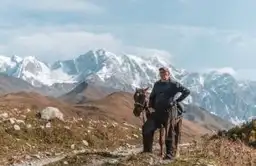
On horseback, Tusheti offers remote hamlets and panoramas that cars cannot reach. The riding season runs from June to September. Choose a reputable guide or stable, since your safety depends on them. You can browse tailor-made trips in Georgia that include walking and riding, or see the Georgia country page.
Practical tips for travelling around Georgia
- Download offline maps and charge your phone, because mobile coverage is uneven outside towns.
- Solo travellers and women get around without particular difficulty, but stay alert at night or away from main roads. Our safety in Georgia guide covers this in more detail.
- Families should book ahead and choose a vehicle with room for luggage.
- Use recognised taxi and bus companies, which matters for safety and insurance.
- On treks, carry enough water and warm clothes, and tell a local contact your route.
Plan your Georgia trip with a local expert
Shanti Travel has shared these tips with travellers since 2005, shaping each itinerary to the pace and profile of the people on it. Our local experts can match transport to your route, from train tickets to a driver in Svaneti. Create your tailor-made trip to Georgia.
Getting around Georgia FAQ
Uber does not operate in Georgia, so use Bolt or Yandex instead. Both work like any ride-hailing app and show a price up front. A local SIM or eSIM helps, since the apps need mobile data to book.
Yes, rentals are available in Tbilisi, Kutaisi and Batumi. Daily prices start at roughly 60-100 USD before insurance and fuel (2026). Bring your passport and driving licence. Licence and permit requirements can change, so confirm them with the Georgian authorities and your rental company before booking.
Georgia is generally considered welcoming to visitors, and most trips go smoothly. Check your own government's travel advice before you go, as it can change. For crime, scams, health and regional notes, read our safety in Georgia guide.