Where to Stay in Mongolia: Ger Camps, Hotels, Homestays and Tents
Where to stay in Mongolia comes down to four options: hotels in Ulaanbaatar, tourist ger camps, nomad homestays and tents. Most travellers combine a city hotel with ger camps in summer. This guide, part of our Mongolia travel guide, shows what each one is like and how to book it.
Where to stay in Mongolia: the four options
Outside the capital there are very few hotels, so you choose between a ger camp, a family's ger or your own tent. A city hotel is the easy base at either end of a trip, a tourist ger camp is the comfortable way to sleep on the steppe, and homestays and tents trade comfort for freedom and contact with nomadic life.
| Type of stay | Advantages | Drawbacks |
|---|---|---|
| Hotel in Ulaanbaatar | Easy access, modern sanitary facilities | Few options, high prices, basic service |
| Tourist ger camp | Some immersion with some comfort, local atmosphere | Comfort varies, possible sharing, seasonal |
| Nomad homestay | Maximum authenticity, sharing, experiences | Rudimentary comfort, little privacy |
| Tent | Total freedom, full nature, flexibility | Needs organisation, minimal comfort |
Planning the whole route first helps: our Mongolia travel experts can match each night to the type of stay that suits the region.
What is a ger camp in Mongolia?
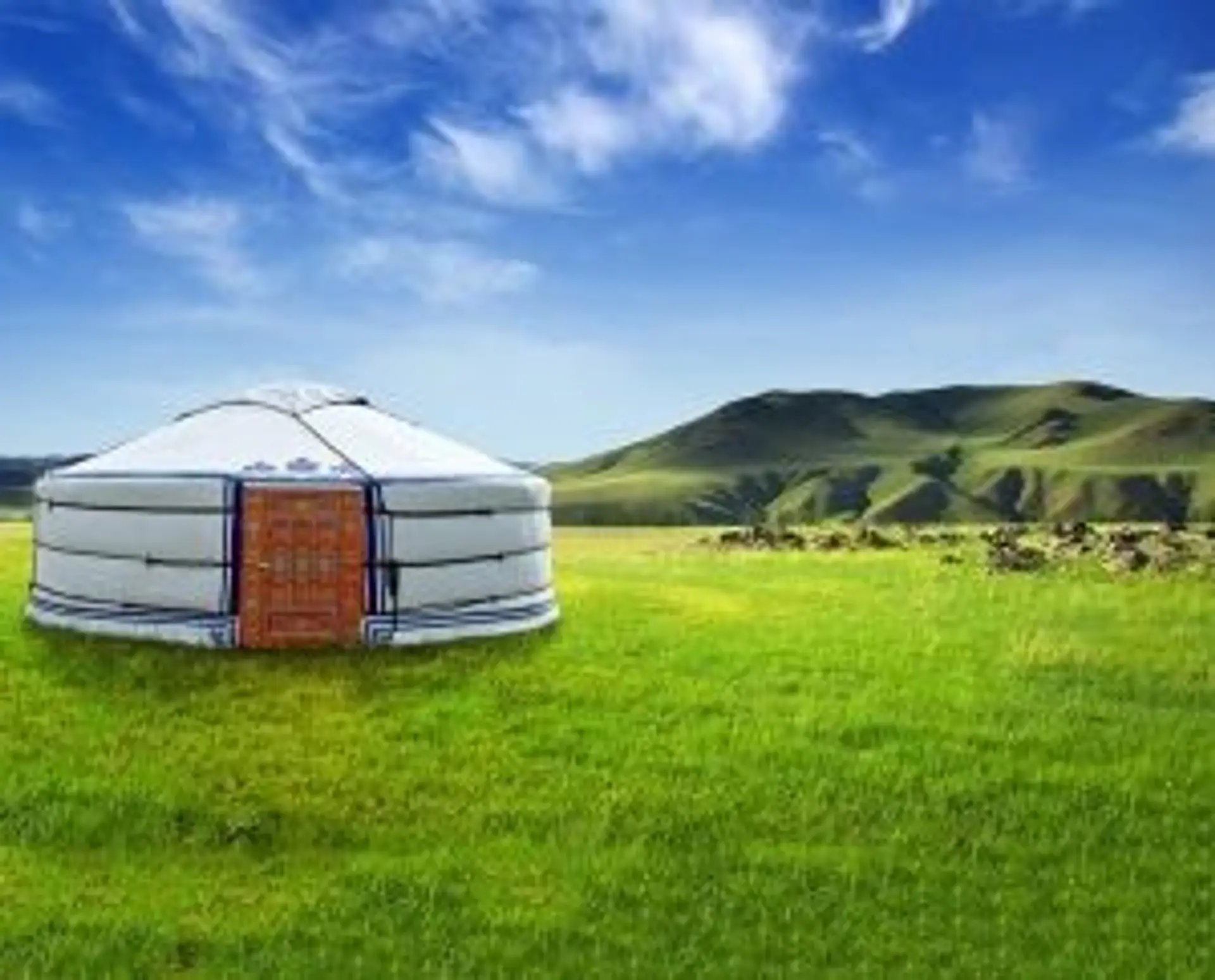
A ger camp is a campsite made only of gers, the round felt tents also known as yurts. It is the most popular way to sleep in Mongolia, because it gives you a night inside a traditional shape with a minimum of modern comfort. A standard ger sleeps 2 to 4 people and measures 5 to 8 metres across.
Inside a tourist ger you'll find real beds and a wood stove, and sometimes electricity or extra heating. Next to the gers, a restaurant building usually serves Mongolian and Asian food, and sometimes Western dishes. Every camp has a sanitary block with showers and Western toilets, so the question of toilets has a simple answer: yes, but in a separate building, not in your ger.
Comfort changes with the camp's remoteness and how many visitors it gets. Expect shared sanitary blocks, more people per ger and simpler heating in the remote ones. Some camps run electricity and hot water around the clock from the mains, while solar or fire-heated ones offer them only at set times. Ask what your camp has before you go.
Camps often sit close to the best scenery, in Terelj national park and around Lake Khövsgöl. A nomad's own ger is another matter: thinner mattresses and no amenities. That's the difference between a tourist ger and a working family's home, covered below under homestays.
Ulaanbaatar hotels
Hotels are concentrated in the capital, and the choice there is fairly limited: many guesthouses, several simple hotels and a handful of upscale ones. There is no boutique charm. Practical beats pleasant, and English isn't always spoken well by the staff.
Ulaanbaatar is the one place where online booking mostly works. Book ahead if you arrive between June and September, the busiest months. Prices are higher than elsewhere in the country, and the offer shrinks sharply once you leave the city. The service is simple but efficient, so favour function over refinement.
Nomad homestays
Families who welcome travellers keep one or two gers for guests. These are purely Mongolian: no soft mattress or pillow, no bathroom, no private toilet. In return you share the rhythm of the day, milking goats, gathering the herds, making cheese and cooking Mongolian dishes.
A snack of dairy products or a cup of milk tea is usually the welcome. If the occasion arises, you may be invited to a game of knucklebones, or even a shaman ceremony. Dress warmly, because summer nights are cool, bring a headlamp, and talk with your hosts: the evenings are where most of the value is.
Camping in a tent
A tent gives the least comfort and the most freedom. It makes sense on treks and in the most remote regions, where no camp exists. Conditions are best from May to mid-October, with the peak from June to September.
Bring:
- a sturdy tent, a comfortable sleeping mat and a sleeping bag for cold nights, which happen even in summer
- a water purifier and biodegradable toiletries
- a headlamp, hiking clothes and waterproof boots
Store your food securely, since curious animals and thieving rodents will find it. Pitch well away from watercourses, avoid dry riverbeds and don't camp under trees: weather turns fast. Plan your supplies and transport in advance, because you're self-sufficient out there.
When ger camps are open and how to book
Ger camps run mainly from mid-June to mid-September. A few open from late May and close in early October. The rest of the year most are shut, and only the Ulaanbaatar hotels stay reliable. Tent season is separate and longer, from May to mid-October.
Booking works differently for each type:
- Ulaanbaatar hotels: book ahead, especially in summer; the best addresses go first.
- Ger camps: rarely bookable online. A local agency secures places, which matters most during major events and at popular spots such as Lake Khövsgöl. Prices depend on the camp's standard and are quoted in your trip proposal.
- Homestays and tents: stay flexible, because nomadic hospitality is spontaneous and often arranged along the way.
For regions and events, the national tourism site is mongolia.travel. To see how these stays fit together, look at our Mongolia grand expedition. Our local experts book the ger camps for you and match them to your dates: send us your request.
Plan your stays with a local expert
Each option shows a different side of Mongolia: urban simplicity, a family's ger, a tent under the stars or the balance of a camp. Tell us when you travel and what you want from your nights, and a local expert will build the stays into your trip. Start your Mongolia trip request.
Where to stay in Mongolia FAQ
Yes, wild camping is legal and widespread. The main rule is to respect nature and keep off private or protected land. Leave no rubbish, and in remote areas check with locals before you pitch near a herder's winter pasture or a well.
Never step on the threshold, and avoid touching the central poles, which symbolise family stability. Don't enter a ger without being invited. Following these rituals is what makes the welcome so warm.
An experienced nomadic family can put up a ger in about 30 minutes. A wooden frame is covered with felt. The craft and its customs were inscribed on UNESCO's Representative List of the Intangible Cultural Heritage of Humanity in 2013.