Oman Culture: Understanding Etiquette and Customs for Travellers
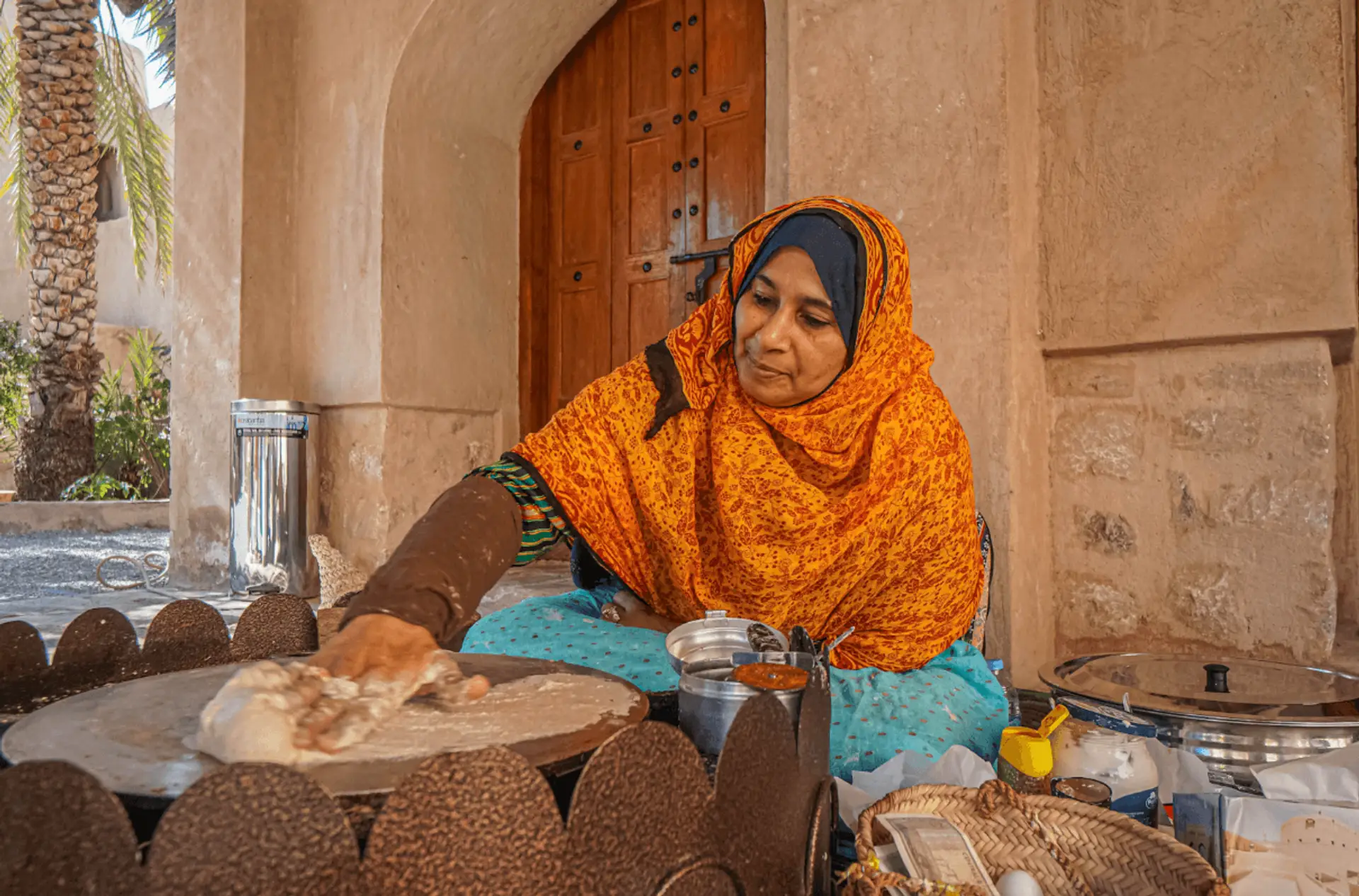
Oman culture rests on modesty, respect for elders and warm hospitality, shaped by Ibadi Islam's moderation. Speak calmly, dress covered, ask before photographing anyone, and you'll be welcomed. Here's how daily life, etiquette and the main taboos work for visitors.
Oman culture at a glance
Oman is conservative yet tolerant. Its culture draws on Ibadism, a school of Islam found almost nowhere else, on tribal and family solidarity, on respect for elders and on a clear line between public and private life. Visitors who follow that rhythm find a people who are courteous, patient and quietly generous.
Three habits cover most situations:
- Favour restraint, patience and discretion, whatever happens.
- Ask before photographing a person.
- Adapt your dress and gestures to local codes.
The rest of this page explains the reasons behind each one, so the rules feel logical rather than arbitrary. Most of them come down to one question: does this behaviour make someone lose face, or keep the peace? If you ask yourself that before you speak, point, photograph or lose your temper, you'll rarely go wrong. For planning beyond etiquette, the Oman travel guide covers the practical side of the trip.
The values behind Omani culture
Tolerance and Ibadism
The Sultanate of Oman is conservative, yet it shows a flexibility and a religious tolerance that are rare on the Arabian Peninsula. Modern infrastructure sits beside ancestral traditions, and diversity is met with a warm welcome rather than suspicion.
Much of this comes from Ibadism, an Islamic school unique to Oman. It promotes moderation, tolerance and social peace. In practice you meet it as a certain unhurried courtesy: people avoid confrontation, argue softly if at all, and expect the same from you. A visitor who stays calm under pressure earns respect quickly; one who raises their voice loses the room, and usually the favour they were asking for.
Tribe, family and respect for elders
Tribalism still marks society, although its influence is fading. Clan solidarity and deference to elders and figures of authority remain part of everyday behaviour, so address the oldest person in a group first and let them set the pace of a conversation.
The family is large and close-knit, and it stays the heart of social life. Mutual help is a founding value, and you may see it in small ways: a neighbour stepping in, a relative handling a problem, a group deciding together rather than one person pushing ahead. Relationships are marked by discretion and paced by religious and social obligations, which is why plans can shift around prayer, a family visit or a gathering you were never told about.
Greetings and behaviour in public
Modesty guides attitudes in public. Speak calmly, and keep both affection and anger out of sight. Losing control damages everyone's reputation, not just your own, so a raised voice at a slow hotel desk costs you far more than it gains.
Between men, shake hands with the right hand; a brief embrace is also common. With women, wait for them to offer a greeting. A nod and a hand on the heart is a safe fallback if you're unsure. Use honorific titles, and ask after your host's health or family: it reads as respect, not nosiness.
Some gestures carry more weight than visitors expect:
- Don't point at people.
- Don't cross your legs ostentatiously when sitting.
- Don't show impatience, in words or body language. Keep non-verbal communication calm.
Punctuality matters, and arriving late to an appointment is frowned upon. Disagreements rarely surface in public. The culture favours discreet, peaceful solutions and exemplary self-control, so if something goes wrong with a booking, raise it privately and politely. Tipping is customary and marks a discreet appreciation of good service.
Oman dress code for visitors
The Oman dress code is simple to follow once you accept one idea: sober and covered. For everyone, that means long trousers and tops that cover the shoulders and chest. Shorts, sleeveless tops and anything tight stand out, particularly away from beach resorts.
Women should choose loose clothing, and carry a headscarf for certain places. The source of the rule is not a list of venues but a habit: keep a light scarf in your bag and put it on when you see local women doing the same. Dress is stricter still in religious places, where covering up is expected of everyone.
You don't need to dress in local costume to be respected, and a plain, covered outfit is enough. What people notice is effort: sleeves down, knees covered, nothing clinging. Pack light, loose layers in breathable fabric, since loose cuts cover well and keep you more comfortable than tight ones. Think of the outfit as part of the greeting, the first sign that you've read the room.
Hospitality: visiting an Omani home
Omani hospitality is an art. Being invited to a local's home is common and hard to refuse, and the invitation is meant sincerely. Access to a home is a rare privilege, because the separation between public and private space is very clear. It comes with a strict protocol, so follow your host's lead.
Bring a small gift such as dates, honey or local sweets, remove your shoes at the door and never show the soles of your feet. The soles are considered dirty, so sit in a way that keeps them tucked away rather than stretched toward anyone.
Meals are key moments, and they are not rushed. Accept what is offered, stay at the table and let the conversation set the pace. Use the right hand to eat or to pass a dish. It is polite to taste everything that is served, even a small spoonful of something unfamiliar. Dates and honey often appear early, and accepting them is a good way to settle in.
Religion in daily life
Islam governs most of the rules of communal life, from food to social ethics. Five calls to prayer set the rhythm of the day, and you will hear them in cities and villages alike. Friday is sacred and reserved for family and worship, so don't plan a visit to someone's home or a business meeting without checking it suits them.
Pork is forbidden for everyone, and tolerance stops at that religious taboo.
During Ramadan, eating, drinking or smoking in public is forbidden from dawn to sunset, including for non-Muslims. The dates move each year, so check them against your travel dates before booking. Plan meals and drinks around that window, and keep a water bottle in your bag rather than drinking in the street.
Taboos and sensitive subjects
| Avoid | Why |
|---|---|
| Criticising the sultan or the royal family | Frowned upon, even risky |
| Photographing people without consent, especially women | Ask permission first, always |
| Showing impatience out loud | Calm is a sign of respect |
| Pointing at people | Considered rude |
| Showing the soles of your feet | They are considered dirty |
| Public displays of anger | It damages everyone's reputation |
| Eating, drinking or smoking in public during Ramadan | Forbidden from dawn to sunset |
| Public displays of affection | Modesty guides public life |
Photography is the rule visitors break most often. Photograph a landscape or a street scene as you like, but treat a face as a request. Raise your camera, catch the person's eye and wait for a nod. A woman may refuse, and her answer ends the discussion. If someone declines, smile and move on.
How Omanis welcome foreigners
Omanis are known for their politeness and for their tolerance toward foreigners who respect their traditions. In the big cities, society is cosmopolitan, but local customs still matter if you want to be well received. A sincere smile and a humble attitude open many doors.
You don't have to get everything right: nobody expects perfection from a visitor, only a sincere open mind. Our local experts, such as Astrid, brief every traveller on these codes before the trip, and the tailor-made trips to Oman we organise leave room for the kind of invitation that makes a visit memorable.
Plan a respectful trip to Oman
Knowing the codes is half the preparation. The other half is a route that gives you time to use them: an afternoon in a village, a slow coffee after a market, a day that isn't packed. Create your tailor-made trip and a local expert will build the itinerary with you, then answer your questions on etiquette before you leave.
Oman culture FAQ
Yes, in licensed venues. Tourists can buy and drink alcohol in hotels, restaurants and clubs, according to Oman's foreign ministry visitor advice (September 2026). It isn't sold in supermarkets or corner shops. Recent guides give a minimum age of 21 for non-Muslim adults, so check the current rule before you go.
Mosques generally ask visitors to cover their hair, arms and legs, and to avoid sheer or tight clothing. A long loose dress or trousers with a long-sleeved top, plus a scarf, covers every case. Rules can differ from one mosque to another, so confirm at the entrance,.