Thailand etiquette: what to do and not do

Thailand etiquette comes down to respect, calm and modesty: greet with a wai, cover your shoulders and knees at temples, keep your feet and your voice low, and never touch someone's head. Thais prize restraint and harmony, and a smile goes a long way. This page covers the rules that matter most, and the reason behind each one. For the wider picture, start with our Thailand travel guide.
What are the main dos and don'ts in Thailand?
The short version fits in six rules. Most of Thai manners grow out of one idea: keep things calm, and don't make anyone lose face.
- Do greet with a wai, palms together and a slight bow.
- Do cover shoulders and knees at temples and other sacred sites.
- Do take your shoes off before entering a home, a temple and many massage parlours or small shops.
- Don't touch anyone's head, adults and children alike.
- Don't point your feet at people or sacred images.
- Don't raise your voice or show anger. Stay calm and smile.
The sections below explain each one and add the details that catch visitors out.
The wai greeting and polite phrases
The wai is a slight bow with palms together in front of the heart or chest. It shows respect, especially toward elders or people of higher status. As a visitor you aren't expected to get the height of the hands exactly right. A wai with a warm smile, returned when someone offers one, is enough.
Politeness in Thai is carried by a closing particle: krap for men, kha for women. Three phrases cover most situations:
- Sawat dii krap / kha: hello
- Khop khoun krap / kha: thank you
- Khothot krap / kha: sorry
Even clumsy attempts land well. If you want more than these, our page on the polite particles goes further.
Temple etiquette and dress
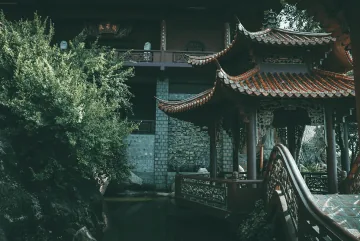
Temples are the place where most visitors get turned away or quietly judged, so it pays to dress for them from the first morning. Cover your shoulders and knees. Short or tight clothing is not allowed. A light scarf in your bag handles the shoulders, and slip-on sandals save you fiddling with laces at every doorway, since shoes come off before you step inside.
| Wear | Avoid |
|---|---|
| Sober, loose clothing covering shoulders and knees | Short, tight or see-through clothing |
| A scarf for the shoulders | Sleeveless tops and vests |
| Slip-on sandals | Shoes you can't remove quickly |
The Grand Palace and Wat Phra Kaew are stricter. The official dress code rules out sleeveless tops, vests, see-through or short tops, shorts or hot pants, torn, tight or cycling pants, mini skirts or pant-skirts, and pyjama-style suits. Admission for foreigners is 500 THB (about USD 15 at roughly 33.86 THB per US dollar, Bank of Thailand exchange rate) as of November 2026. Check the Grand Palace official visitor page before you go, as rules and prices change.
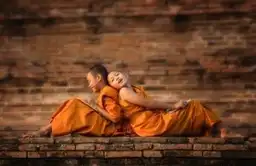
Monks come with their own rules:
- Women never touch a monk or hand him anything directly.
- Don't stand higher than a monk.
- Women shouldn't sit next to a monk on public transport.
Statues and shrines get the same care. Never point your feet toward a sacred statue. Many homes, shops and hotels have a small spirit house for protective spirits: don't touch it and don't move anything around it. If you want the background, read about Buddhism in Thailand.
Not sure how to dress or greet on your route? Our local experts in Thailand can brief you before you go, as part of a trip to Thailand built around you.
Body language: heads, feet and public affection
The head is the most sacred part of the body, so don't touch it, and that includes a friendly pat on a child's head. The feet are the lowest. Never point at something or someone with your foot, and don't stretch your legs out toward a person.
Public affection is read as inappropriate. Kisses and overly intimate gestures are best saved for later, so if you wonder whether you can kiss your partner in public, the answer is no.
Hand things over and accept them with both hands. And ask permission before photographing locals.
Respecting the monarchy and Buddha images
Thais hold images of the Buddha and of the royal family in very high esteem. Treat both with care and don't disrespect any picture or object tied to the monarchy or to Buddhism.
Conversation has limits too. Steer clear of the royal family, politics, ethnic conflicts and religion as topics. They can provoke strong reactions even among friendly acquaintances, and a polite change of subject is always welcome.
Table manners and sharing food
Thai meals are shared. Dishes sit in the centre of the table and everyone takes small amounts, which reflects attention to others. The spoon goes in your right hand and the fork is only there to push food onto it. Chopsticks are for noodle dishes.
- Never stick chopsticks upright in a bowl of rice: it recalls funeral rites.
- Let the eldest at the table begin eating.
- Taste what your hosts serve, in small amounts, to honour them.
- Cover your mouth slightly when you use a toothpick.
For drinking, choose bottled water over tap water.
Staying calm, tipping and bargaining
Raising your voice, criticising someone in public or confronting them with a mistake is very much frowned upon. Thais value restraint, so even a real problem at a hotel desk is better handled with a smile and a low, even tone. You'll usually get a better result.
Bargaining is expected at markets, but it is done with humour and tact. Agree a fair price with a smile, never aggressively or insistently, and if the price doesn't suit you, thank the seller and walk on.
Tipping isn't mandatory. It is appreciated in restaurants, in taxis and in tourist places, especially for good service, and rounding up the bill is a discreet, polite habit.
Respectful travel: children, locals and local beliefs
Some of the most important etiquette has nothing to do with gestures.
- Don't buy from or give directly to children in the street. It may encourage begging. Support a recognised association instead.
- Avoid orphanage and slum visits, and any activity that promotes the exploitation of children.
- Avoid places linked to prostitution, as many exploit minors.
- Never take a local child to your accommodation. It could be seriously misinterpreted.
- Buy from local craftspeople, which brings income directly to village families.
Festivals are open to visitors. At Songkran, the New Year in April, and at Loi Krathong, join in while remembering their sacred side.
A few beliefs are good to know. Some Thais say whistling at night attracts evil spirits. The number 4 is sometimes avoided as unlucky. Thais also link a colour to each day of the week, and some choose their outfit accordingly.
Plan your trip with a local expert
Our local experts live in Thailand and design each trip around your pace. Tell us what you have in mind and we'll build it with you: start your Thailand trip request.
Thailand etiquette FAQ
Section 112 of the Thai criminal code is the lese-majeste law. Criticising or insulting the monarchy is a serious crime, with prison terms of 3 to 15 years according to a secondary legal source (thailawonline, as of August 2026). Treat the topic as off limits, online as well as in person.
No. E-cigarettes and vapes are banned in Thailand, and fines can be heavy. Rules and enforcement can change, so read the UK Foreign Office travel advice for Thailand before you travel, and leave the device at home.
Our travel ideas for Thailand

Our travel guides for Thailand

Is Thailand Safe? A Practical Guide for Tourists

The Best Beaches in Thailand: Where to Go by Coast and Se...

Animals in Thailand: Main Species and Where to See Them
Famous Thai People: Kings, Monks, Artists and Icons
Thailand Religion: Beliefs, Buddhism and Temple Etiquette