Getting Around Cambodia: Bus, Train, Tuk-Tuk, Boat and Flights
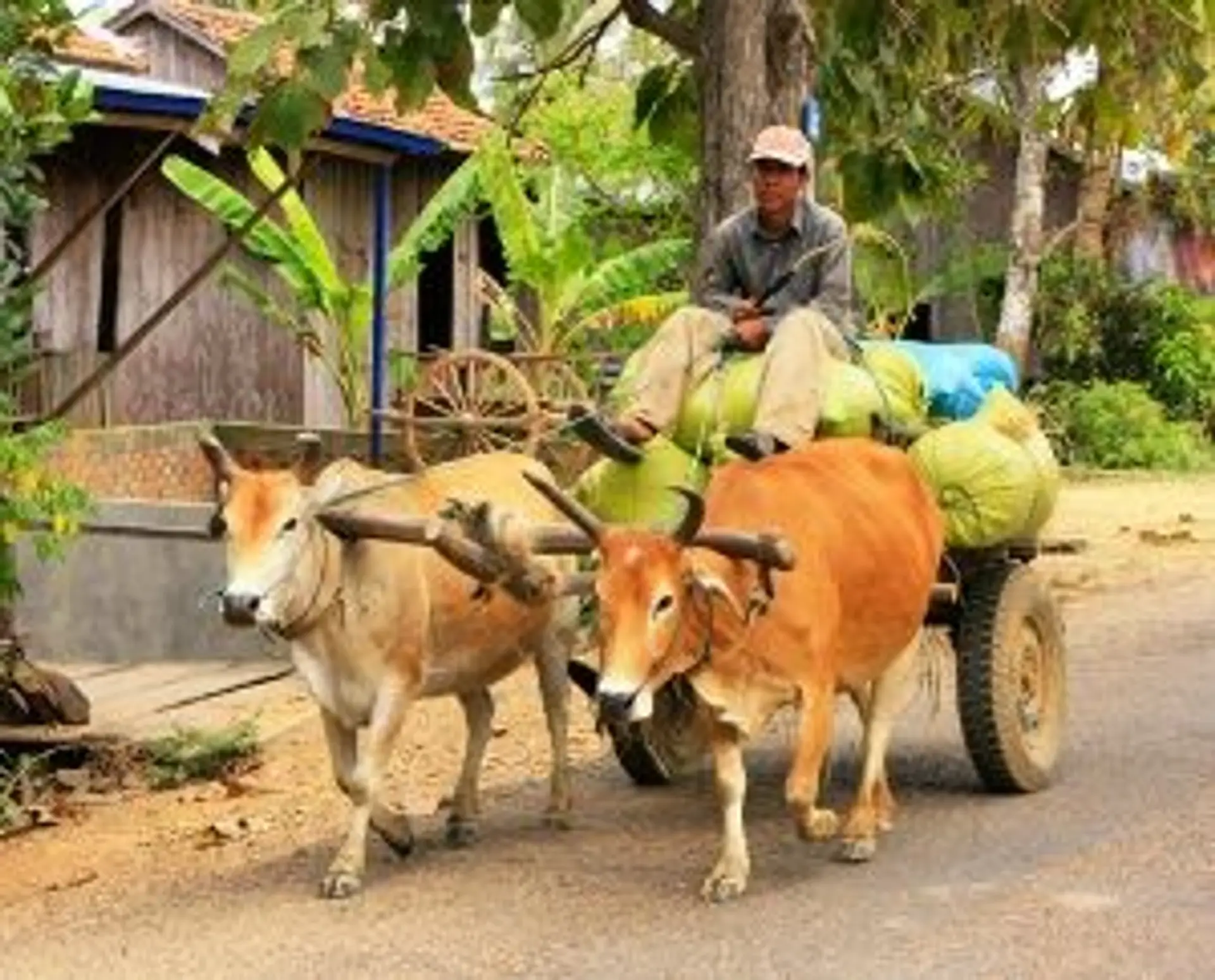
Getting around Cambodia is easy and cheap: buses link the main cities, tuk-tuks cover town trips for a few dollars, and a short flight joins Phnom Penh and Siem Reap. This guide gives the real times, fares and local-expert tips for each way of travelling, bus to boat.
What is the best way to get around Cambodia?
The best way to get around Cambodia depends on the trip. Buses link the main cities, tuk-tuks cover short trips in town, and a car with a driver is the easiest choice for families and long distances. Flights save time on the longer legs, while the train and the boat are mostly for the scenery.
Here is transportation in Cambodia at a glance, with the figures we trust most. Fares are in US dollars, which is what you'll pay in most places.
| Mode | Best for | Typical cost or time | Note |
|---|---|---|---|
| Bus | City to city | Phnom Penh to Siem Reap about 5 to 6 hours, from about $9 | Book ahead in high season |
| Flight | Saving time | Phnom Penh to Siem Reap about 50 minutes | Worth it on long legs |
| Train | Scenery, slow travel | Phnom Penh to Sihanoukville $12, to Battambang $10 | Not always punctual |
| Tuk-tuk | Town trips, day excursions | $1 to $4 a city ride, $15 to $30 a day | Agree the fare first |
| Moto taxi | Short hops | Price set before you go | Little protection |
| Boat | Islands, river views | $17 to $21 for island speedboats | Seasonal, check first |
Most travellers mix three or four of these. A typical route takes the bus or a flight between cities, tuk-tuks inside them, and a boat or train for one slower day. Rain and heat change what is comfortable, so check the season in our best time to visit Cambodia guide, and find the wider picture in our Cambodia travel guide.
Phnom Penh to Siem Reap by bus
The Phnom Penh to Siem Reap bus takes about 5 to 6 hours (over 300 km by road) and costs from about $9 as of November 2026. Fares run from $8 to $16 depending on the company and where you book.
It's the route most visitors take, since it joins the capital to the gateway for Angkor. Several companies run it, among them Giant Ibis, Mekong Express and Virak Buntham, with services from budget to very comfortable. Book ahead in high season, when the better departures fill up. The same network serves other routes too, such as Phnom Penh to Kampot, where the bus is the usual way to reach the coast.
Buses stop often, for toilets, meals and passengers. Bring water, food and patience, and keep small notes handy for roadside snacks.
Choosing a bus company
Reliability and comfort vary more than the ticket price suggests. Stick to companies with a track record, and pick a daytime departure if you want to see the countryside. Night buses with sleeper berths suit very long distances, although comfort varies from one company to the next.
Our local experts always select the most reliable companies for the travellers we look after, especially families, where safety and a predictable ride matter most. If you're planning a family trip through Cambodia, a private car with a driver is often the calmer option.
Local buses and minivans
Local buses and minivans are the cheapest way to cover ground. They are also sometimes crowded and not very punctual. Rural shared transport is basic, and for some travellers that's the appeal: you share the ride with local people and see how the country actually moves.
Not sure which bus company or route fits your dates? Our local experts in Cambodia can book the reliable ones for you: talk to a local expert.
Flying within Cambodia
Phnom Penh to Siem Reap is the main domestic flight, about 50 minutes. Four airlines were operating in Cambodia as of September 2026, according to Travelfish, and the regional carriers offer regular domestic flights.
Flying makes sense when time is short or the distance is long, since it turns most of a day on the road into under an hour in the air. Safety standards are satisfactory. For short hops between nearby towns, the road is usually simpler once you count the trip out to the airport.
Trains in Cambodia
Cambodia has two main railway lines, Southern and Northern, as of October 2026. The Phnom Penh to Sihanoukville train runs daily and costs about $12.
| Route | Departs and arrives | Fare |
|---|---|---|
| Phnom Penh to Sihanoukville | About 07:00 to 13:00, daily | $12 |
| Phnom Penh to Battambang | About 06:40 to 13:00, daily | $10 |
Figures come from Travelfish. The Sihanoukville line stops at Takeo, Kep and Kampot on the way, which makes it a handy slow route to the coast.
The service isn't always punctual, and nobody takes the train to save time. What you get is rice fields, village platforms and a relaxed pace that suits anyone who wants to travel at local speed. If the schedule is tight, take the bus or a car; if you have a spare morning, the train between Phnom Penh and the coast is a scenic journey in its own right. For what to do once you arrive, see Cambodia's most beautiful islands.
Boats and ferries
Travelling by water in Cambodia means choosing slowness and beauty. The riverboat from Phnom Penh to Siem Reap offers views of the Mekong and floating villages, and it runs except at the end of the dry season. Services change from year to year, so check with an operator before you build a day around it, and keep the bus as a fallback.
On the coast, boats leave from Sihanoukville, Kampot and Kep for remote islands. Speedboats take 45 minutes to 1.5 hours and cost about $17 to $21 per person, per Travelfish. Comfort varies, but the setting makes up for it. Timetables depend on the season and the weather, so confirm departures the day before. The islands themselves are covered in Cambodia's most beautiful islands.
Tuk-tuks, moto taxis and cyclos in town
Inside Cambodian cities you'll rely on three kinds of transport, and the tuk-tuk is the one you'll use most.
Tuk-tuk
A tuk-tuk ride in a Cambodian city costs about $1 to $4, and a full-day excursion $15 to $30. Agree the fare before you set off.
The tuk-tuk is everywhere in Phnom Penh, Siem Reap and Battambang. It's more comfortable than its Thai cousins, with soft seats for up to 4 people. Choose a driver recommended by your hotel or an agency, which avoids most disputes and gives you a peaceful ride.
It's also a good way to feel the place. Chat with your driver, ask where he eats lunch, and watch daily life go by in the open air.
Moto taxis
Known as "moto dops", these motorbikes with a driver are very common in town. They slip through traffic and suit short trips. Settle the price before you get on.
The catch is protection. Helmets are compulsory, but not every driver has a spare, so insist on one. The riding can be sporty. For families or longer journeys, a car with a driver is the safer choice.
Cyclos
A colonial relic, the cyclo (cycle rickshaw) is a gentle way to see the historic districts of Phnom Penh. Locals use it less these days, but travellers who care about slow, low-impact transport still enjoy it.
Scooters, bicycles and walking
Scooters are easy to rent by the day or for a few days, and popular for leaving the main roads. Wear a helmet, which is compulsory for every passenger, and inspect the vehicle before you sign anything. Renting requires an international licence, and having one matters if you have an accident. Police checks are rare, but being legal is what counts when something goes wrong.
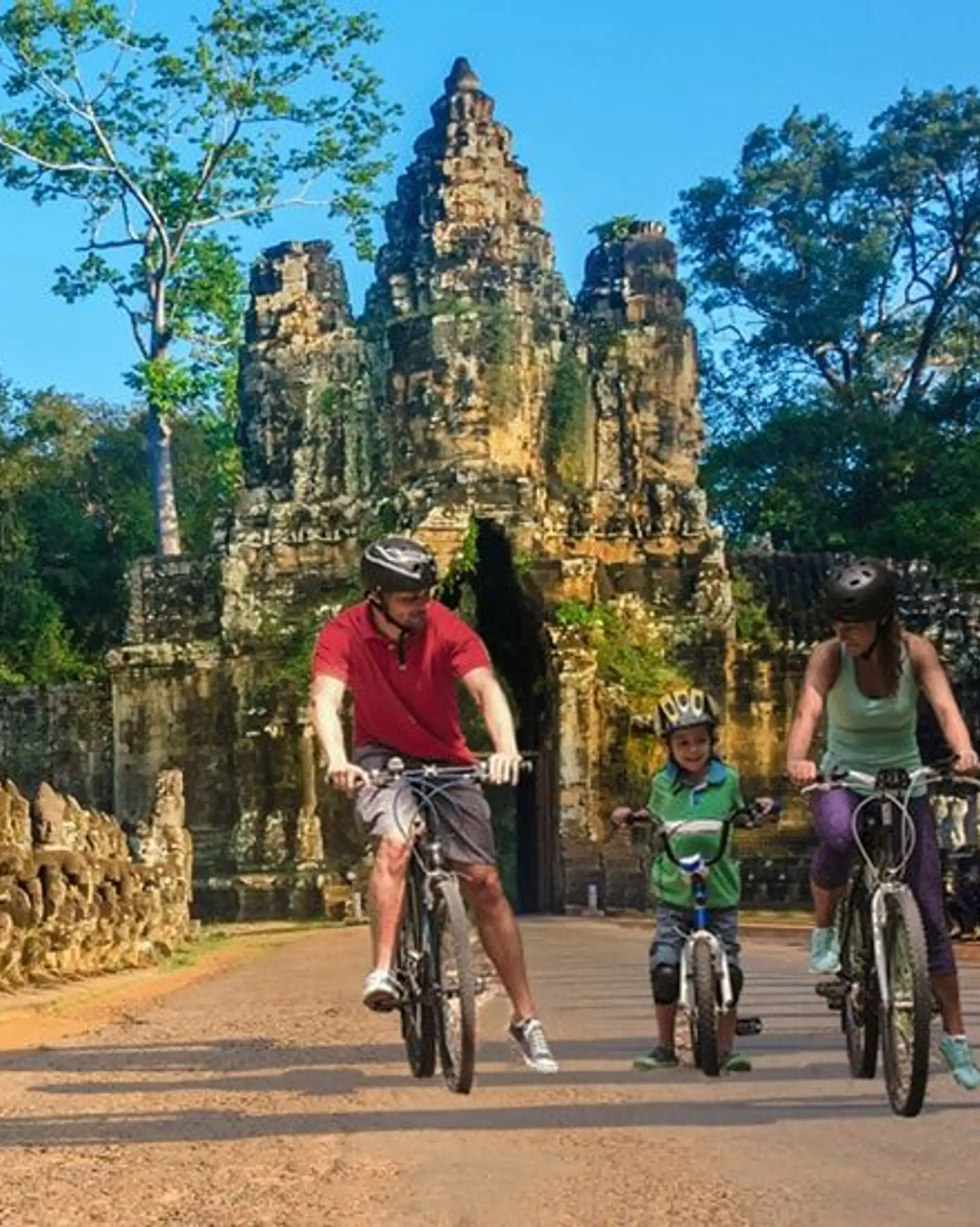
Bicycles are ideal around Siem Reap, the Angkor temples and the countryside near Battambang. Many hotels lend or rent them. Ride in the coolest hours, because the heat can be overwhelming. In Phnom Penh the traffic makes cycling less advisable.
Walking is the best way to take in neighbourhoods, markets and temples at your own pace. Outside the cities there is good hiking, particularly in the countryside and the mountains of the north. Carry water and a hat.
Driving and road rules
On paper, traffic and priority are on the right, and the limit is 50 km/h in towns. In practice, things look different. In Phnom Penh and the larger cities traffic is often disorderly, priority rules are rarely respected and a traffic light is more of a suggestion. Motorbikes, overloaded trucks, odd trailers and animals share the road, and the biggest vehicle rarely gives way. Outside towns, the state of the road sets the pace more than any sign.
Our advice: don't drive yourself unless you're used to Asian traffic. Hire an experienced driver instead, for safety and peace of mind.
If you'd rather not drive or haggle, we arrange a private driver and tuk-tuk days as part of your trip. Ask a local expert how it works.
Practical tips for getting around
- Negotiate the price before you get into a tuk-tuk, a moto dop or a boat.
- Carry water, snacks and small change for long journeys.
- Favour well-known companies for comfort and safety.
- Match the mode to your itinerary, your budget and how much local contact you want.
- Around Angkor, a bicycle or a tuk-tuk from Siem Reap is the easiest way to move.
- Allow for flexibility. In Cambodia the pace of the journey is part of the experience.
Plan your Cambodia route with a local expert
Tell us when you're travelling and who with, and a local expert will build the route with the right mix of road, rail, boat and flight. We work with reliable partners, so safety is covered and the trip stays local. Browse Cambodia trips for ideas, or create your tailor-made trip and we'll take it from there.
Getting around Cambodia FAQ
Yes. Grab, PassApp and Tada all operate, and Grab has been running in Cambodia since 2023. PassApp was described as the cheaper of the two in January 2025. A short trip costs about $1 and longer ones start from $2, according to Rough Guides, so check the live fare in the app before you ride.
Not yet. A highway has been announced (TTG Asia, January 2025) and was reported to be awaiting a go-ahead, but no opening date has been published. Until it opens, plan on the existing road and the bus times above.
No. Techo International Airport serves Phnom Penh and sits in Kandal Province, on about 2,600 hectares, designed for up to 15 million passengers a year. Siem Reap has its own airport, roughly an hour by car from town, according to Travelfish.