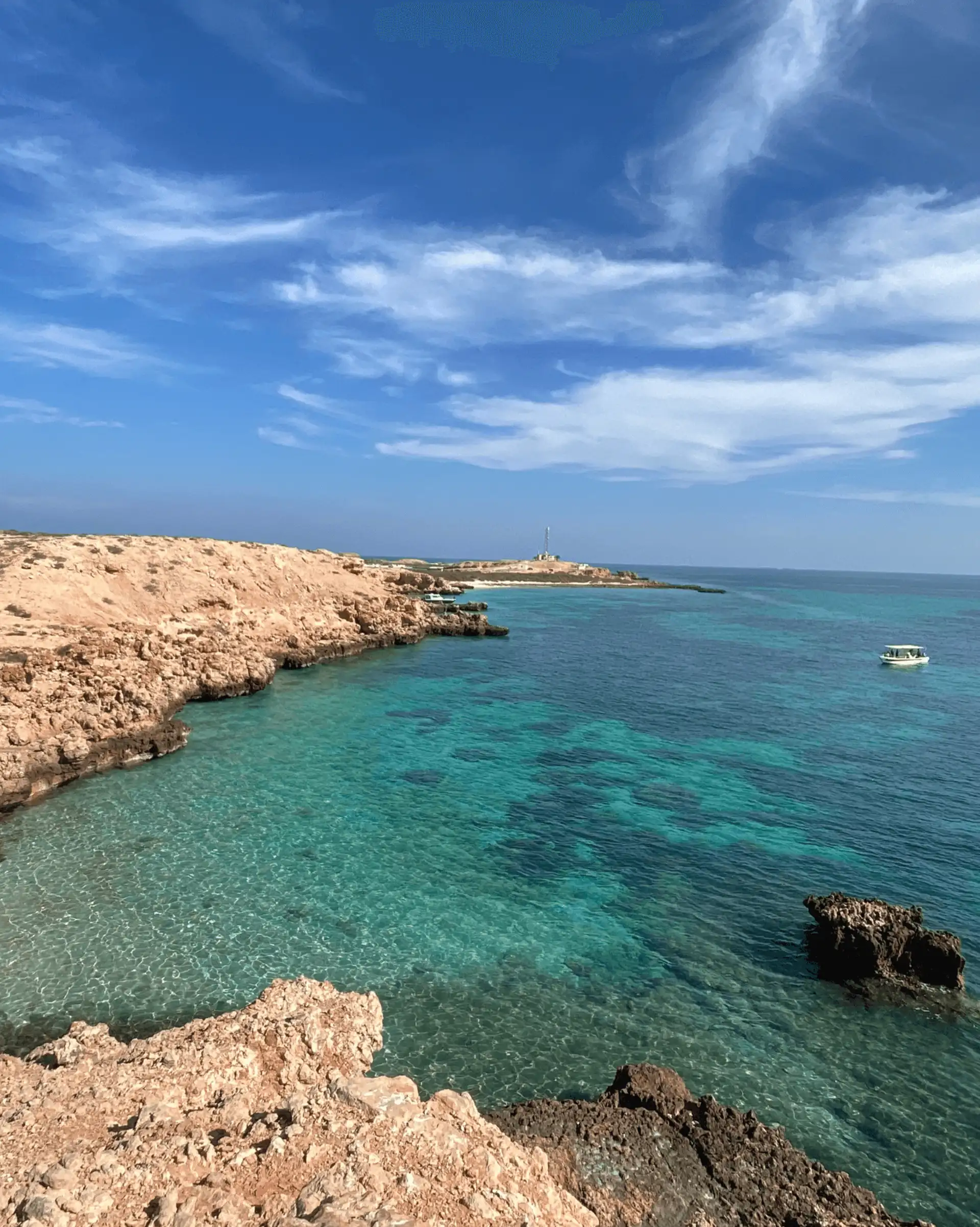
Hiking in Oman: best hikes, wadis and mountain trails
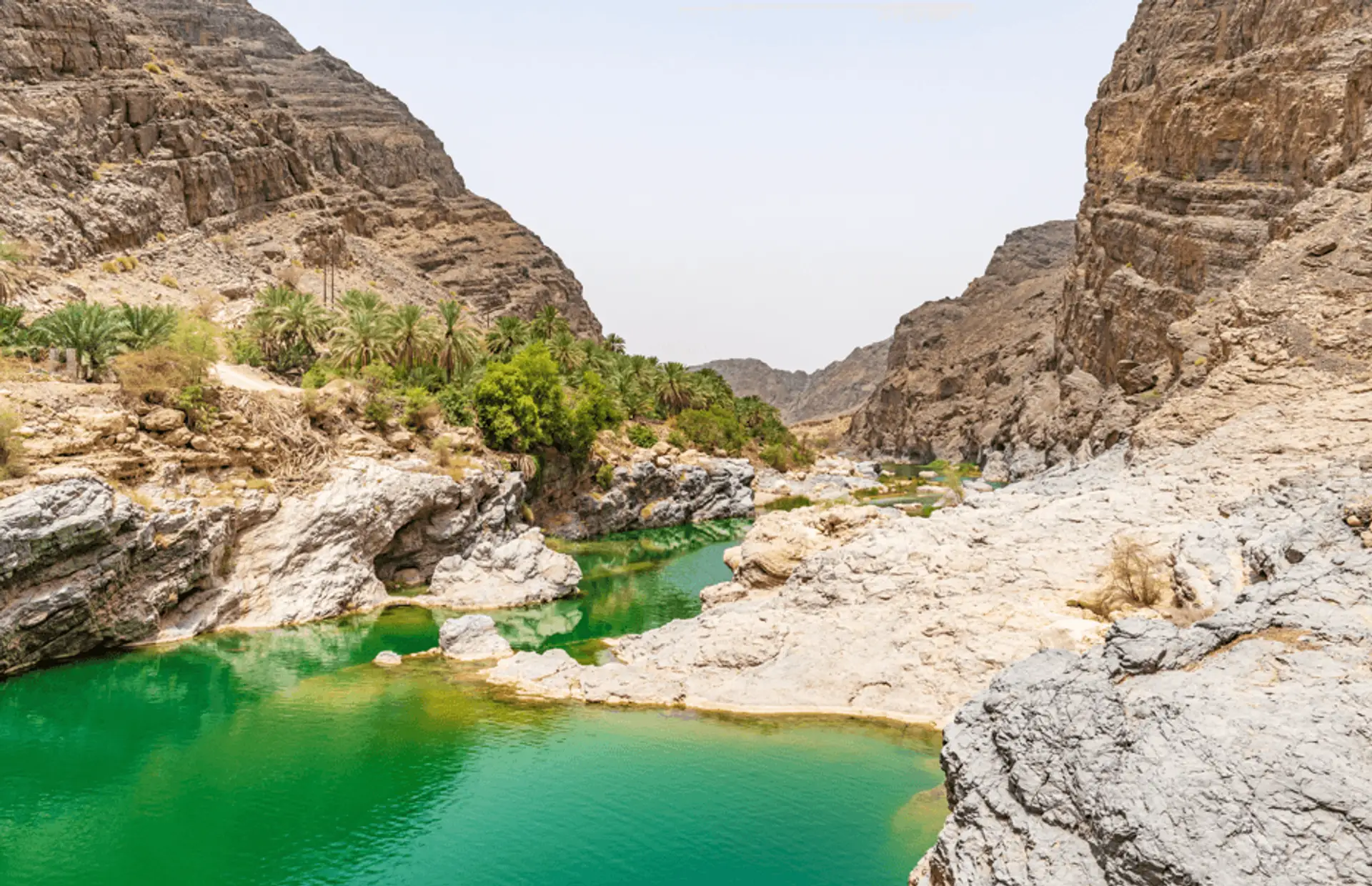
Hiking in Oman means canyon rims at Jebel Shams, swimming wadis like Shab and Tiwi, and terraced villages on Jebel Akhdar. The best season runs from November to March or early April. Below: the hikes worth doing, how hard each one is and how to prepare, from our Oman travel guide.
What is the best hike in Oman?
There is no single best hike in Oman. The Jebel Shams Balcony Walk is the standout for views, Wadi Shab for swimming and pools, and Jebel Akhdar for village and orchard walks. Pick by terrain and fitness first, then by season.
| Hike | Region | Type | Effort | Bring |
|---|---|---|---|---|
| Jebel Shams Balcony Walk | Jebel Shams | Mountain, cliff path | About 3 to 4 hours round trip, experienced hikers | Sturdy shoes, a fleece |
| Wadi Shab | Coast, near Tiwi | Water, walking and swimming | Swim 50 m, then 100 m; good swimmers | Water shoes, waterproof bag |
| Wadi Tiwi | Coast | Water and palm groves | Rough terrain, regular hikers | Water shoes, quick change |
| Wadi Al Arbeieen | Al Sharqiyah | Canyon | About 6 hours, walking and swimming | Waterproof gear, a guide |
| Jebel Akhdar | Hajar Mountains | Terraces and falaj paths | Trails for all levels | Layers |
| Wahiba Sands | Sharqiya Sands | Desert | Supported 4x4 convoy only | Spare water, GPS or compass |
Effort labels are broad. Match them to your own fitness, and be honest about it: the heat and the terrain make every hike here harder than the same distance at home.
Not sure which hike fits your level? Our local experts in Oman can help you choose: see our Oman trip ideas.
The best hikes in Oman, one by one
Jebel Shams and the Balcony Walk
The Balcony Walk follows a cliff path above the "Grand Canyon of Arabia" on Jebel Shams and takes about 3 to 4 hours round trip. Steep sections and altitude make it a walk for experienced hikers.
At 3,009 m (9,872 ft), Jebel Shams is the country's highest point, but trip reports and guides say that summit is restricted because of a military installation. The South Summit, at 2,997 m, is the highest point open to trekkers. Expect rocky, technical ground, and bring sturdy shoes and perhaps poles. Nights stay cool even in midwinter, so pack a fleece, even if the rest of your bag is full of summer clothes. The reward is the canyon itself, falling away beside the path.
Wadi Shab
Reaching the hidden cave at Wadi Shab means swimming about 50 m (164 ft) at the entrance and another 100 m (328 ft) inside. You need to swim well and wear water shoes.
The route mixes walking, rock jumping and swimming through green pools between high rock walls, which is why adventurers love it. Plan how to protect your phone or camera before you start: a waterproof bag is the minimum. Wadi Shab gets heavy crowds in season, so go early, when the water is quiet and the light drops into the canyon.
Wadi Tiwi
Wadi Tiwi is less touristy than Shab. It is known for emerald pools, small villages and palm groves, and the walking is on sometimes rough terrain, so it suits regular hikers rather than first-timers. Going with someone local lets you see the daily life of the mountain villages. Read up on Omani culture and etiquette before you visit the villages.
Wadi Al Arbeieen
In the Al Sharqiyah region, Wadi Al Arbeieen is one of the most beautiful canyons in the Sultanate. Expect a hike of about six hours that alternates between walking and swimming in clear pools, with steep walls rising on both sides. Waterproof equipment and decent fitness matter here. Water levels can change, so listen to your guide.
Jebel Akhdar, the green mountain
Jebel Akhdar, the "green mountain", is known for terraced orchards, hanging villages and deep valleys. In spring, rose growing scents the air. Walks follow the falaj, the age-old irrigation channels that water the terraces, and they give you a close look at traditional farming life. The trails suit all levels, from casual walkers to experienced hikers. Temperatures vary, so wear layers you can add or remove.
Wahiba Sands as a desert trek
The Wahiba Sands (also called Sharqiya Sands) cover 12,000 km2 (about 4,600 sq mi) of shifting dunes and Bedouin culture. This is a desert trek, not a casual hike: go only in the cool season, and only with a supported 4x4 convoy, GPS or compass, an extra jerrycan of water and sand-recovery equipment. A bivouac in the dunes brings meetings with Bedouin families, a shared fire and nights under the stars, which Shanti Travel organises for you.
When is the best time to hike in Oman?
The best time to hike in Oman is November to March or early April, when daytime temperatures sit between 20 and 30°C (68 to 86°F). Summer, from May to September, brings over 40°C (104°F) in the desert.
Condé Nast Traveller Middle East also puts the main season from November to early April. For month-by-month weather and crowds, see our guide to the best time to visit Oman.
What to pack and how to stay safe on Oman's trails
Pack for the terrain you will actually cross.
- Wadis: a waterproof bag, shoes made for walking in water, and a quick change of clothes. Covering clothing helps too.
- Mountains: sturdy shoes, walking poles if you use them, and layers for the swings in temperature.
- Everywhere: sunglasses that keep sand out, a wide-brimmed hat, sunscreen, and more water than you think you need. If you drink from natural springs, carry a purifier.
On safety, the environment is demanding, so choose a hike that matches your level (the table above helps). Don't set off alone on long routes, little-marked outings or anything in the desert. A local guide knows the way, the wildlife and the weather risks. And know when to turn back: if a storm builds, follow the guide's instructions without arguing.
Hiking Oman with a local expert
Shanti Travel's local experts build tailor-made trips that include many of these hikes, adapted to your level and what you want to see. Guides adjust the pace, watch the weather and share what they know about the terrain and local customs.
For bivouac nights, Shanti Travel provides the tent, mattress and full local meals, and handles the logistics. Water is purified, and meals are planned for the effort: full breakfasts, picnics and hot dinners under the stars. Our local experts build tailor-made Oman trips around these hikes, at your pace and fitness level. Browse the Oman trip ideas to see what a trip could look like.
Hiking in Oman FAQ
The trail starts on the far side of the water, so you take a short boat across. The usual fare is 1 OMR per person return (about $2.60) as of November 2026, though some travellers report 1.5 OMR. No official fee page exists, and prices change, so check with the boatman on the day.
Not past the police checkpoint. The Oman Observer reported in February 2022 that a 4x4 or all-wheel-drive vehicle is required, and a TripAdvisor forum thread from November 2024 says the same. Rules can change, so confirm with the Royal Oman Police or your hotel before you go.
A few showers, even far upstream, can raise the water quickly and turn a pool walk into a dangerous crossing. Check the forecast before you set off, avoid narrow wadi floors on wet days, and leave the wadi as soon as you are told to. Ready to plan your hiking trip? Tell us your dates and level, and a local expert will design it with you: start your Oman request.