Your expert on destination Bali
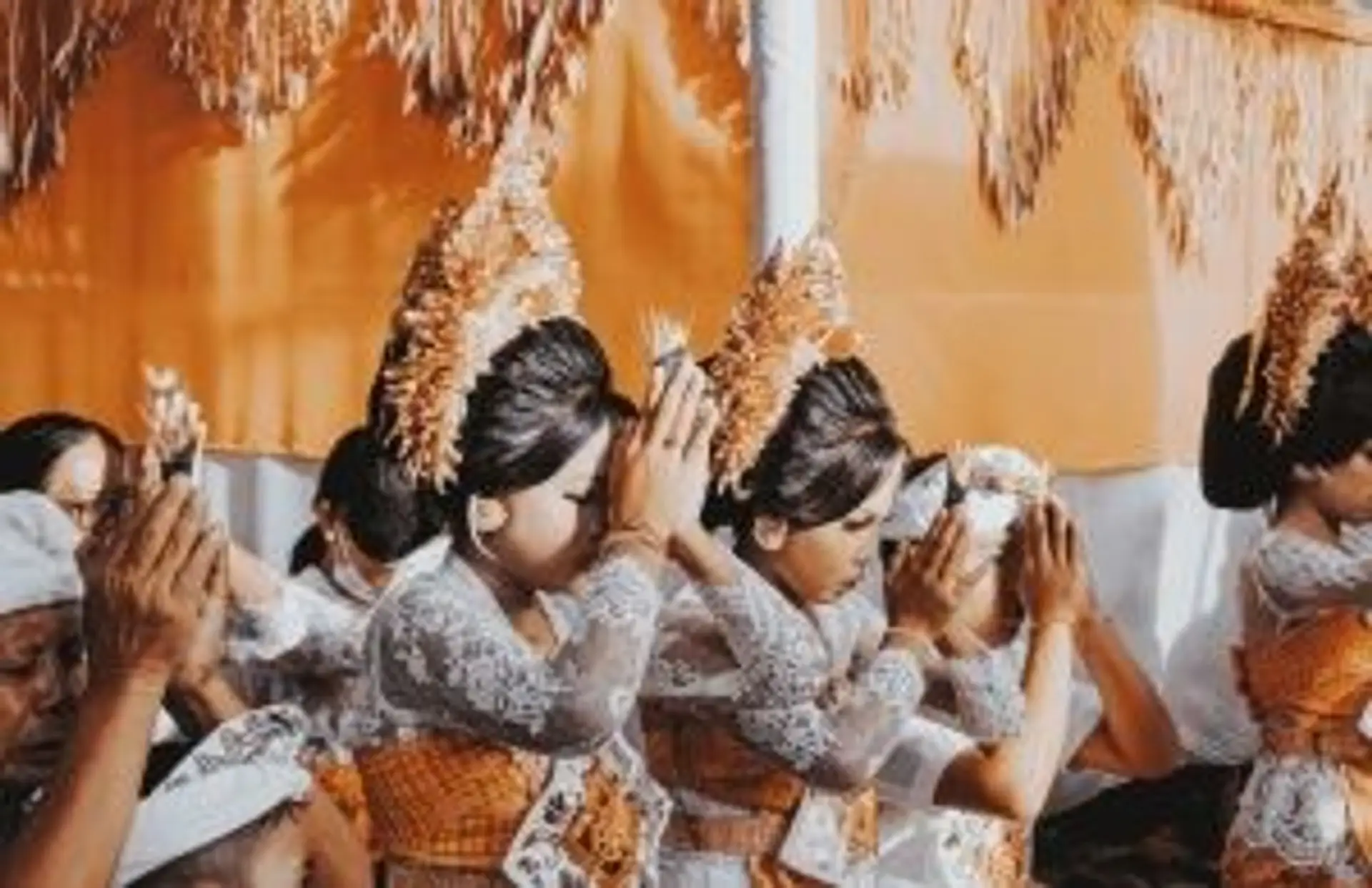
While Indonesia is majority Muslim, the population of the Island of the Gods is majority Hindu. On a trip to Bali, you explore a living museum of Hindu culture in Indonesia, at the heart of the country home to the largest Muslim population in the world. Hinduism first appeared in the archipelago in the 10th century via Indian traders, although traces of Hindu influence can be found in Bali as early as the 8th century. After an initial period of spread, Hinduism gradually became confined to Bali as Islam expanded, while retaining its fundamental importance on the island.
Today, Hinduism accounts for barely 1.7% of Indonesia's population, yet nearly 87 to 90% of Bali's inhabitants practise it, making it a true spiritual island. This uniqueness deeply shapes the cultural, religious and social identity of the Balinese. Since the Majapahit kingdom and the introduction of the caste system in the 15th century, Balinese religious tradition has been structured around codified rituals, respect for natural cycles and a constant balance between old and new. The contemporary desire to preserve the authenticity of practices in the face of modernity and tourism reinforces this sense of belonging, even as a cultural revival gets under way: today, Agama Hindu Dharma is opening up to globalisation while seeking to preserve its roots. Interfaith dialogue is conducted in a spirit of tolerance, alongside a gradual standardisation of rites to secure official recognition of Balinese Hinduism.
The distinctive character of Balinese religion comes from its unique syncretism: Balinese Hinduism blends ancestral animism, ancestor worship and a strong Buddhist influence. Tri Hita Karana, the founding philosophy, calls for harmony between people, nature and divine forces. This worldview is reflected in every aspect of daily life and in the sustainable management of resources, a challenge that remains highly relevant today.
The structuring caste system, far less rigid than in India, still shapes social organisation:
The sacredness of water (tirta) shapes the rhythm of life on the island, which is home to countless temples (pura). Each village has three essential temples: Pura Puseh (ancestors), Pura Desa (protective spirits) and Pura Dalem (linked to death). The great directional temples (Kahyangan Jagat) protect the island in each cardinal direction and host spectacular ceremonies. In Bali you'll find worship of the Hindu pantheon (Shiva, Brahma, Vishnu, Ganesh) as well as deities unique to the island, such as Barong, the symbolic guardian of villages.
Over the years, tourism and Balinese youth have encouraged a respectful modernisation of rites: today, ceremonies and offerings are taking a more sustainable, eco-friendly turn, with less plastic and greater attention to nature, showing the adaptability of Balinese culture.
While Hinduism dominates in Bali, the island stands out for its great religious diversity: Muslim communities (notably in Pegayaman), Buddhists, Christians and a few ancestral minorities all live side by side. Dialogue and mutual respect are encouraged through the concept of sharing (ngejot), joint celebrations and cultural integration. There is also an ongoing debate within Balinese Hinduism itself, between supporters of local traditions (adat) and those open to outside influences.
Balinese people live according to the duality of the world: spiritual/material, good/evil, visible/invisible. This constant search for universal balance is fully expressed in the philosophy of Rwa Bhineda.
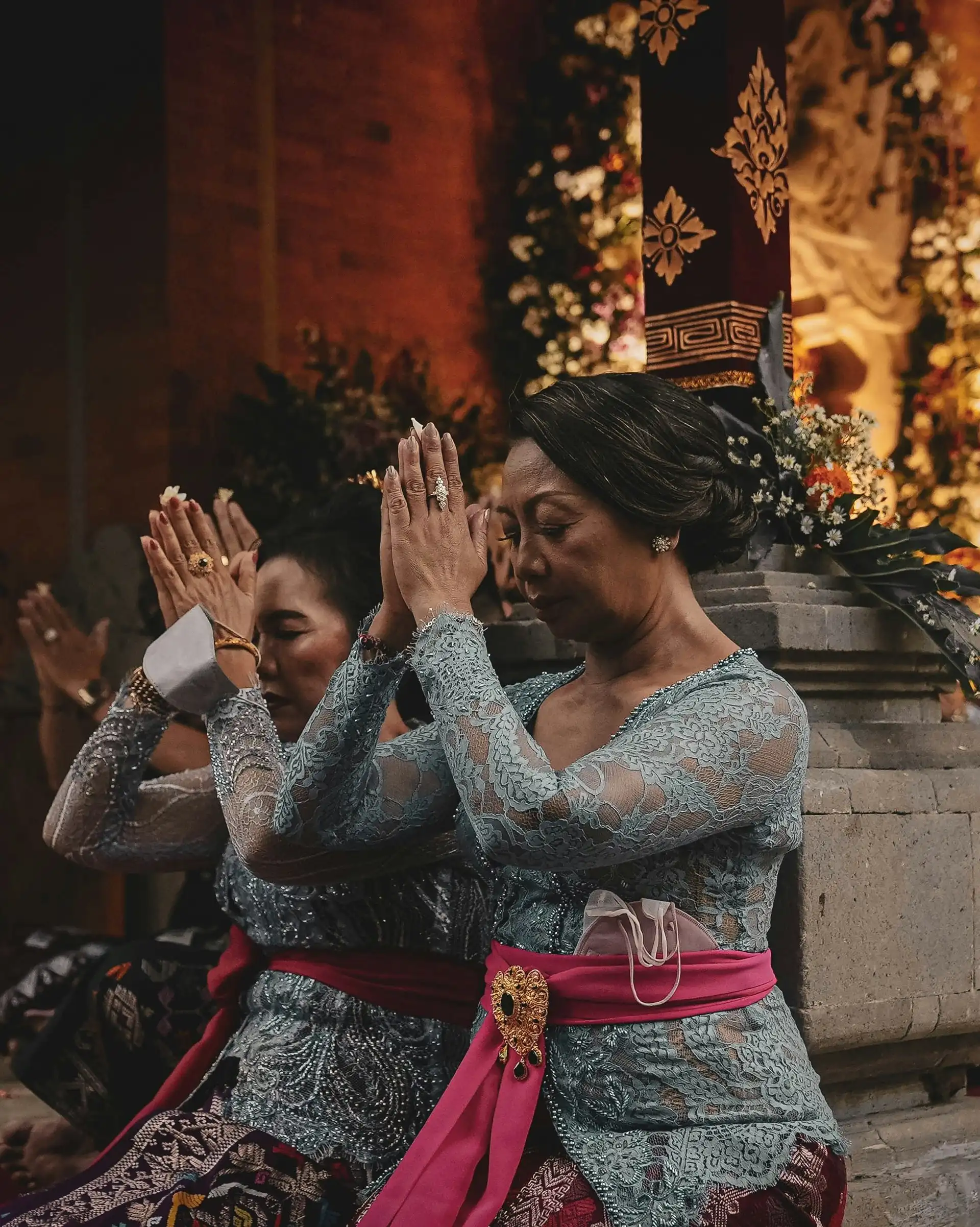
Daily offerings (canang sari) embody this need for harmony. At daybreak, families place these small baskets of leaves, flowers, rice and incense in front of household altars, temples, shops and places people pass through. These ever-present ritual gestures shape both the urban and rural landscape: every home has an altar, and every crossroads or vehicle becomes a focus of attention to the unseen world.
On the island, life follows a complex lunar calendar, with every day marked by rituals, offerings and prayers. Women spend two to three hours a day making offerings, keeping ancestral gestures alive while also strengthening the social fabric of the village.
Nyepi – the Day of Silence (March 2024): the whole island comes to a stop, the population meditates and purifies their spirit, lights are switched off, and traffic is banned. The day before, the parade of Ogoh-Ogoh (giant demon statues) fills the villages with a spectacular atmosphere, culminating in their burning to purify the community of negative energy.
Galungan and Kuningan (24 September and 5 October 2024): Galungan marks the victory of Dharma (good) over Adharma (evil): ancestral spirits descend to earth, and the streets are decorated with penjor, tall decorated bamboo poles. Kuningan, ten days later, celebrates their return to heaven with offerings of yellow rice and rites of gratitude.
Odalan: the anniversary of each temple, celebrated on varying dates, always accompanied by colourful processions, spectacular offerings and performing arts (dance, gamelan music).
Saraswati and Pagerwesi: Saraswati, the festival of sacred knowledge, and Pagerwesi, celebrating spiritual protection, mark out the intellectual life of the Balinese each year.
<!— Table of major annual ceremonies in Bali —>
| Festival | Period | Brief description |
|---|---|---|
| Nyepi | March (variable date) | Day of Silence, total halt to activity, introspection |
| Galungan | 24-26 Sept. 2024 | Victory of good over evil, return of the ancestors |
| Kuningan | 5 October 2024 | Departure of ancestral spirits, blessings, yellow rice |
| Odalan | Year-round/variable | Temple anniversary, community rites |
| Saraswati | According to lunar calendar | Worship of sacred knowledge |
| Pagerwesi | According to lunar calendar | Spiritual protection, strengthening the inner aura |
Visitors are asked to show careful respect:
With the growth of tourism and globalisation, Balinese religious traditions are reinventing themselves: offerings are being adapted to reduce their environmental impact, festivals blend modern arts with local customs, and young people are keeping the essence of worship alive while modernising it. Local communities work to maintain a harmonious balance between spiritual heritage, environmental protection and openness to the world, inviting travellers to a respectful, immersive discovery.
Contact your Bali travel expert for a list of Balinese ceremonies, festivals and celebrations, and discover, as you immerse yourself in Balinese culture, the precious balance between tradition, spirituality and conviviality that makes the island so unique.
Subscribe and receive our travel inspirations and practical advice twice a month.

Wanting to share your trip with a group?