Your expert on destination Bhutan
Bhutan culture is built on respect for elders, the monarchy and Buddhism, and it shows in daily manners: a bow with joined hands, shoes off at temples, covered shoulders and legs. This guide gives the do's and don'ts first, then the traditions behind them.
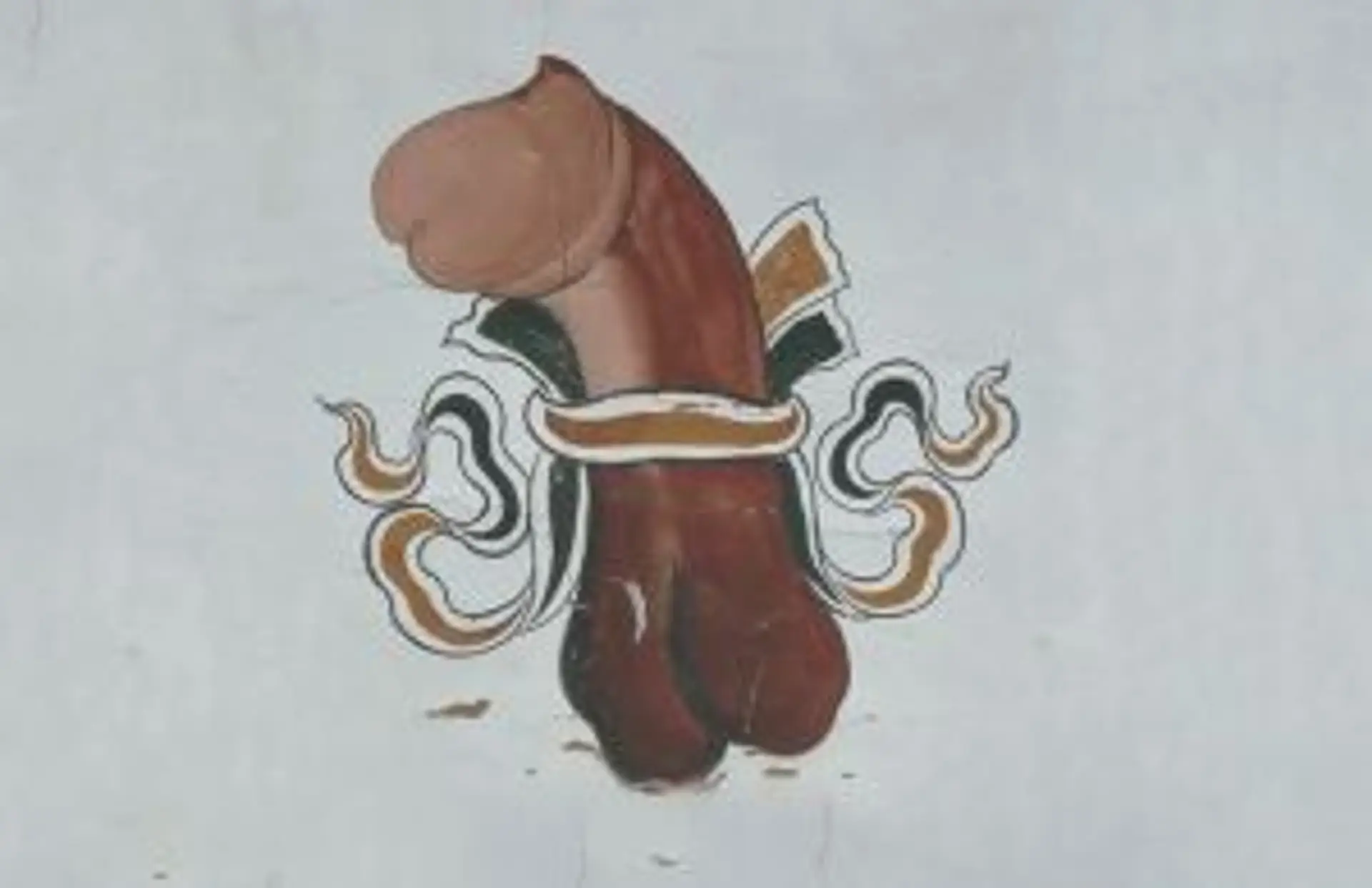
Bhutanese culture is easy to get wrong only if nobody explains the reasons. Once you know why feet are unclean, why a host won't open your gift, or why a painted phallus hangs above a front door, the rules stop feeling like rules. Use this page alongside our wider Bhutan travel guide.
Greet people with joined hands and a slight bow, cover your shoulders and legs, and take off shoes and hats before entering a temple. Keep affection discreet in public, and follow your licensed guide's instructions at every religious site.
| Do | Don't |
|---|---|
| Greet with palms joined against your chest | Kiss or hug in public |
| Add "la" after a name to show respect | Stretch your feet toward people or holy objects |
| Accept a drink at least twice when offered | Touch another person's head |
| Cover shoulders and legs | Wear tank tops, shorts or mini-skirts at temples |
| Leave an offering before you leave a temple | Open a gift in front of the person who gave it |
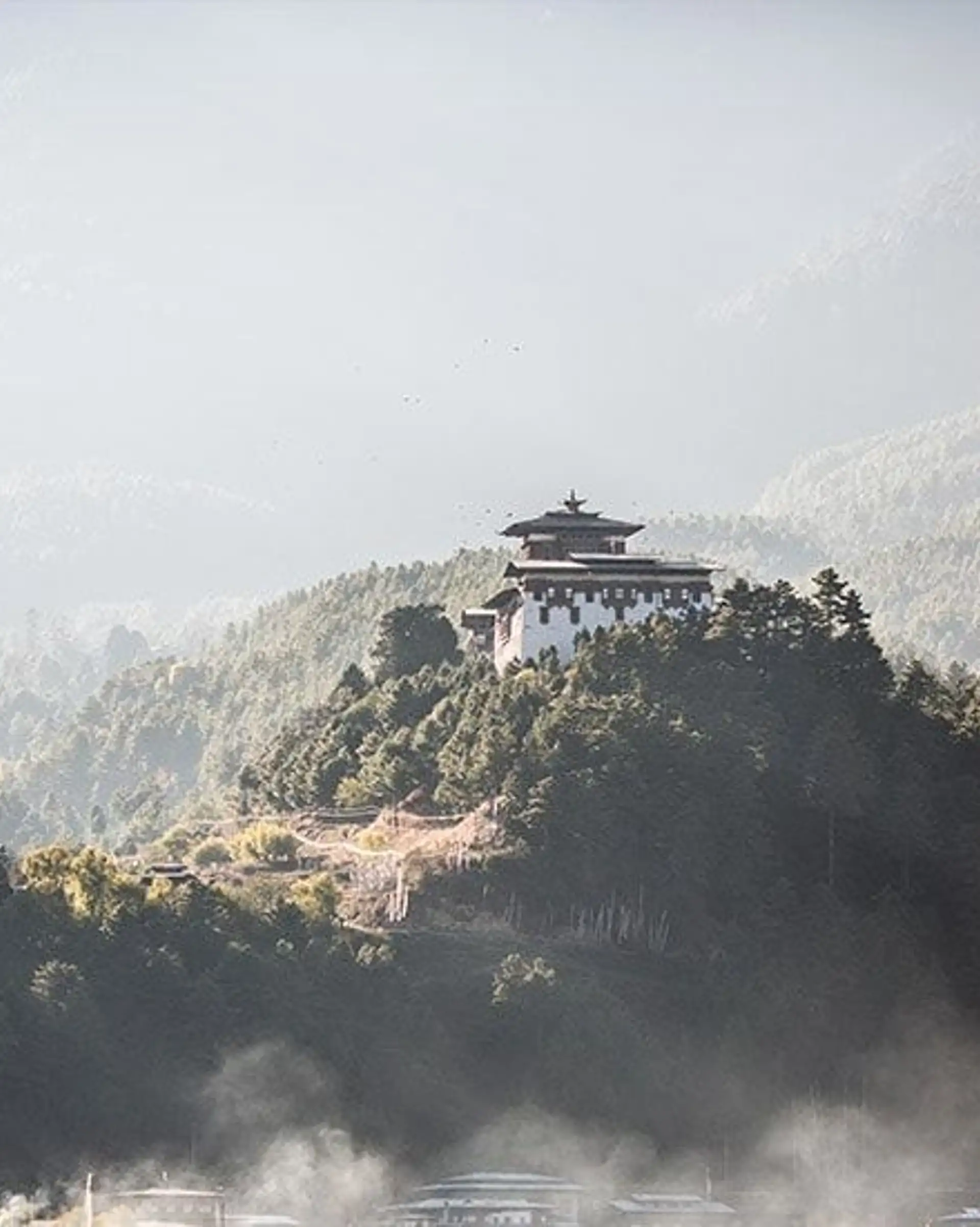
Visitors see the public parts of dzongs (the fortress-monasteries that house both government offices and monks) and temples with a licensed Bhutanese guide. Having a guide goes with the Sustainable Development Fee of USD 100 per person per night, as of September 2026; check the Tourism Council of Bhutan for the current fee and rules.
The formal tone of public life has a history. The official code of behaviour and dress, driglam namzha, was imposed on all citizens from 1990, according to the Culture of Bhutan entry on Wikipedia. That is one reason you will see officials, pupils and guides in traditional dress, and why manners feel formal.
To greet someone, join both hands against your chest and bow slightly forward. Add "la" to the end of a name to show respect: a driver called Tashi becomes "Tashi la". On arrival or departure you may be offered a white scarf called a kata, a symbol of good travels and luck.
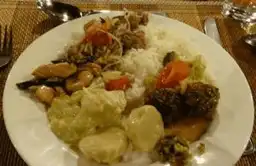
If you're invited into a home, accept the traditional drink, tea or ara, at least twice. Food works the other way round. The polite ritual is to refuse two or three times, hand in front of your mouth, saying "meshu meshu", and then accept after a few rounds of insistence. Your host expects this, so don't treat the offer as a one-time question. For a sense of what ends up on the table, see our guide to Bhutanese food.
Silence during a meal is valued. Nobody expects you to fill it with conversation. Hosts also won't open a gift in front of you, because doing so is considered impolite. If your present disappears unopened, it was received well.
One more habit surprises visitors. People often use the conditional or the word "maybe" as a courtesy, instead of a flat refusal. Listen for the softness and don't push.
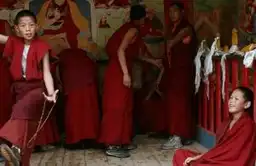
Remove your shoes and any head covering before you enter, keep your voice low, and cover your shoulders and legs. Leave a small offering before you go; it's an appreciated gesture. Feet are considered unclean and the head is sacred, so don't stretch your feet out in front of you when you sit, and never touch someone's head.
Tourists generally visit only the public parts of dzongs and temples, and always with a licensed guide. Some religious sites need special authorisation or are closed outside festival periods. Bhutanese people attach great importance to official norms, so be courteous and discreet with administration and security staff, and let your guide step in if a question comes up.
This page covers behaviour, not belief. For Mahayana and Vajrayana Buddhism, practised by roughly 75% of the population, read our page on religion in Bhutan.
Not sure what your itinerary will include? Our local experts in Bhutan can show you example Bhutan trips.
For temple and dzong visits, wear long trousers or a long skirt and a top with sleeves. Skip tank tops, shorts and mini-skirts. You don't need to wear Bhutanese dress as a visitor, and modest clothing suits every occasion, not only religious ones.
The rest of the Bhutan dress code is about the mountains. Pack sweaters, a scarf and warm layers, and bring sturdy walking shoes if you plan to hike. How many layers you need depends on the month, so check the best time to visit Bhutan before you pack.
Marriage in Bhutan is tied to family and religion, and monks often bless the couple with rituals and prayers. Arranged marriages still exist, though love marriages are gaining ground. Divorce is socially accepted. By one custom, if the woman asks for the divorce, her new partner pays compensation to the ex-husband.
In public, open affection is frowned upon. Kissing and hugging are best saved for private spaces, and a bow or a handshake is the safer way to greet someone you've just met.
You'll see them quickly: painted or carved phalluses on house walls, hanging from roofs and sold in markets. In Bhutan the phallus is an old symbol of fertility and protection against the evil eye.
The custom is mostly linked to Drukpa Kunley, the "Divine Madman", a non-conformist Buddhist monk of the 15th century. His temple, Chimi Lhakhang in the Punakha valley, has become a centre for fertility and the blessing of couples. Receiving a blessing with a wooden phallus during a visit is thought to bring luck.
Beyond the folklore, the images stand for vitality and spiritual protection, and for the wish to keep harmful influences away. At some festivals the phallus also appears in masked dances and rituals that celebrate fertility and abundance.
The term Gross National Happiness was coined by the Fourth King, Jigme Singye Wangchuck, in the late 1970s (one academic source dates it to 1979). It was later written into the Constitution, enacted on 18 July 2008. The Gross National Happiness index is described on the United Nations Sustainable Development Goals platform.
The monarchy dates from 1907, when Ugyen Wangchuck became the first king. Bhutan marks that accession on 17 December; the next one falls on 17 December 2026. The Fourth King stepped down and introduced democracy in 2008.
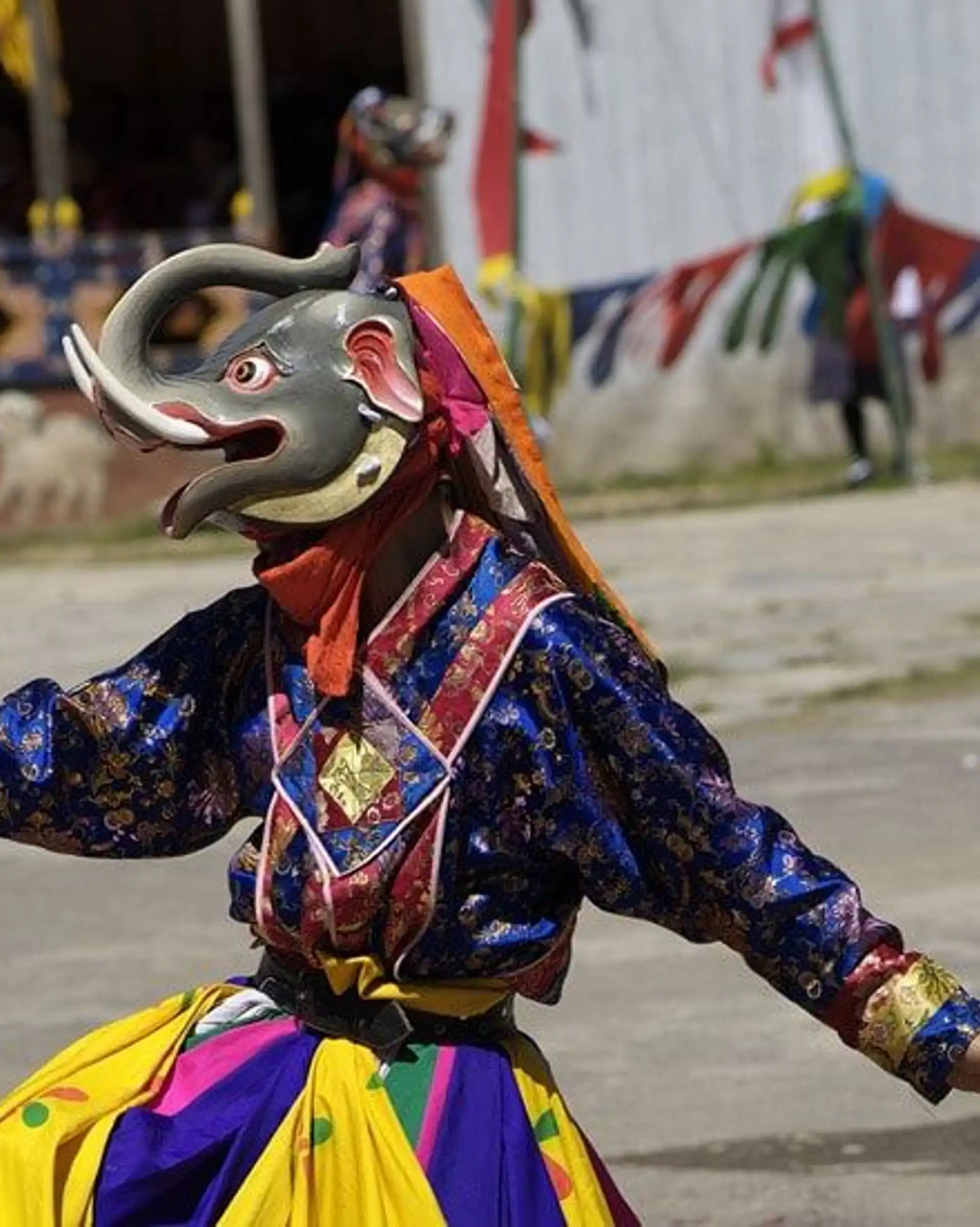
The tsechu are religious and cultural festivals, and the best single window onto Bhutan culture and traditions. Expect costumes, masked dances and Buddhist fervour, set in lively, colourful dzongs. Dates change every year, so plan around them with our best time to visit Bhutan page.
The pace of life follows spirituality and nature. Schedules are often flexible, especially during festivals and pilgrimages, and the unexpected is part of the trip. The best response is to go along with it.
Want to experience a tsechu or see the Punakha valley at your own pace? Tell us what you have in mind and a local expert in Bhutan will design a tailor-made trip with you. Our Bhutan trips page shows what's possible, and you can send us your trip request at any time.
Selling tobacco is banned in Bhutan, but visitors may bring 200 cigarettes (two cartons) or three tins of 50 g for their own use, and must declare them at customs. Smoking in public is forbidden, so keep it to private places such as your hotel room. Rules change, so check the current position with your guide and Bhutan customs before you travel.
No. The gho is the men's knee-length robe, held by a belt called a kera. The kira is the women's ankle-length dress, worn with a tego jacket and blouse. Visitors may wear them, for example at a festival, but nobody requires it. You can see both in markets as well.
Yes, tipping is customary in Bhutan, and the amount is scaled to the size of your group. When we plan your trip, our local experts can tell you the current norm for your guide and driver, so you aren't guessing on the last day.
Subscribe and receive our travel inspirations and practical advice twice a month.

Wanting to share your trip with a group?